How do we choose leading indicators for project problems?
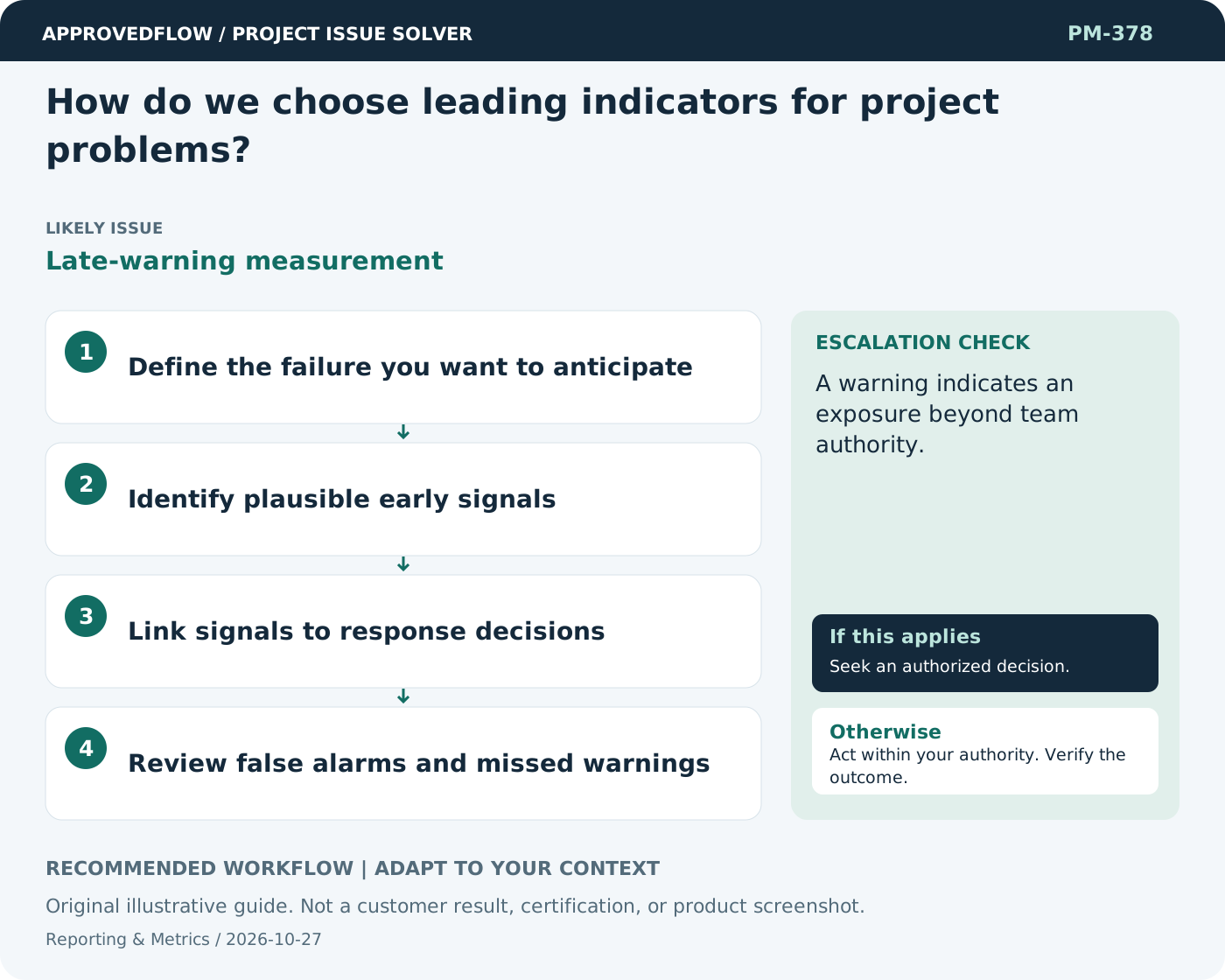
Late-warning measurementIdentify observable conditions that usually precede a consequential failure and can still trigger useful action. Validate their usefulness instead of treating correlation as certainty.
What to do now
- Define the failure you want to anticipate
- Identify plausible early signals
- Link signals to response decisions
- Review false alarms and missed warnings
When to escalate
Escalate when
A warning indicates an exposure beyond team authority.
Who decides
The metric owner and relevant decision maker
Example
A growing review queue is monitored before it causes delivery dates to slip.
Mistake to avoid
Calling a missed milestone an early warning indicator.
Prevent a repeat
Check data freshness and meaning, and verify that the measure improves decisions rather than encouraging cosmetic progress.
Suggested ApprovedFlow setup
- Projects
- Tasks
- Timesheets
- Documents
Use the underlying named records and evidence when explaining a metric; validate any dashboard behavior against the current implementation. See the platform
Related cases
- How do we prevent people from gaming project metrics?Incentive-driven measurement distortion
- How do we validate a new project dashboard before launch?Untested management information
- We discover integration problems only before release. How can we improve?Late integration feedback
- How do we recognize a risk early enough to act?Missing risk triggers