How do we prevent people from gaming project metrics?
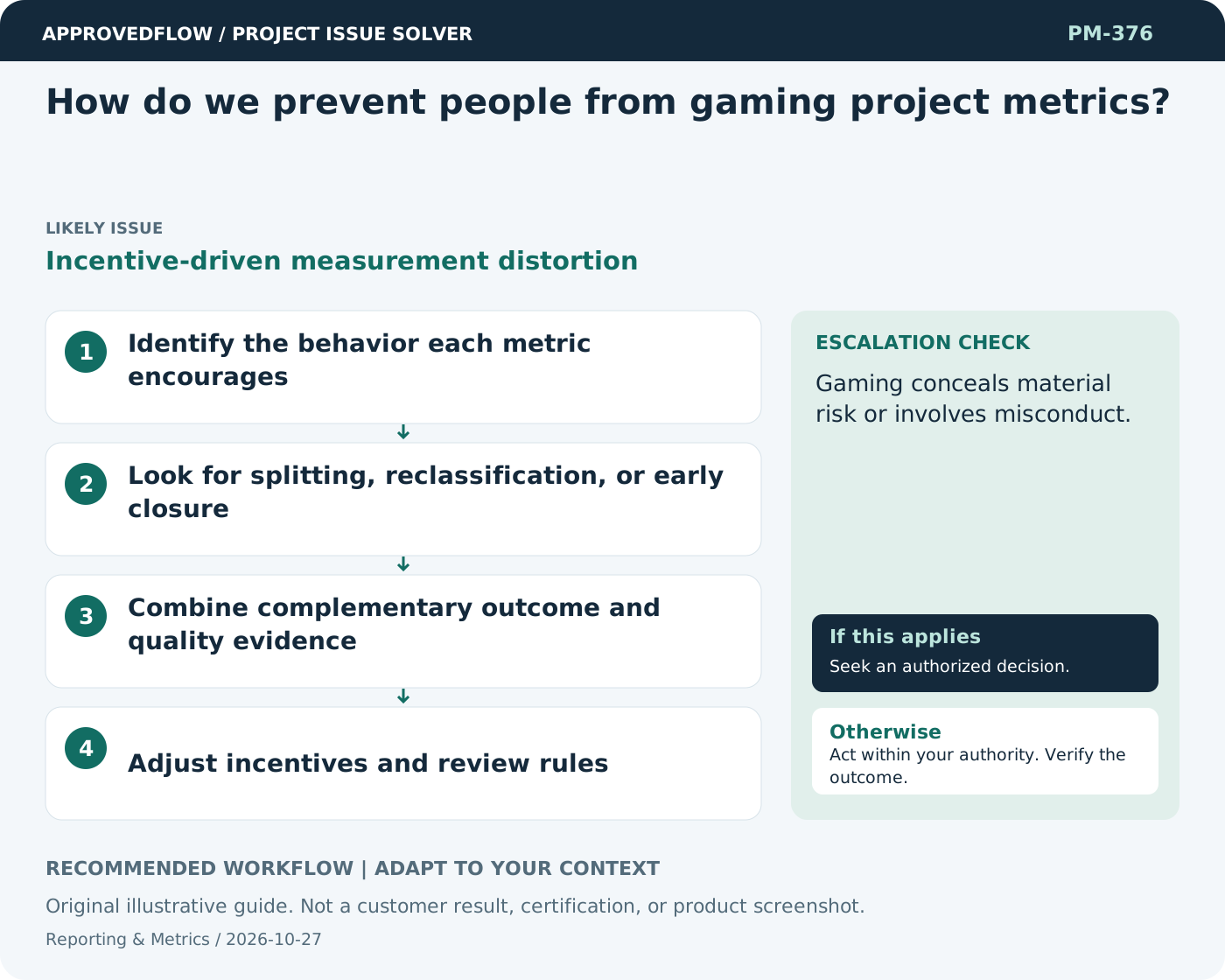
Incentive-driven measurement distortionUse balanced evidence, transparent definitions, and review of unintended behavior. Avoid tying rewards to a single easily manipulated measure.
What to do now
- Identify the behavior each metric encourages
- Look for splitting, reclassification, or early closure
- Combine complementary outcome and quality evidence
- Adjust incentives and review rules
When to escalate
Escalate when
Gaming conceals material risk or involves misconduct.
Who decides
The metric owner and relevant decision maker
Example
A closure target is balanced with reopened issues and verified acceptance.
Mistake to avoid
Demanding more closed tasks without checking their size or value.
Prevent a repeat
Check data freshness and meaning, and verify that the measure improves decisions rather than encouraging cosmetic progress.
Suggested ApprovedFlow setup
- Projects
- Tasks
- Timesheets
- Documents
Use the underlying named records and evidence when explaining a metric; validate any dashboard behavior against the current implementation. See the platform
Related cases
- The metric is accurate, but people interpret it differently. What should we add?Ambiguous metric meaning
- How do we detect vanity metrics in project reporting?Metrics without decision value
- Management wants an adoption percentage. What should I measure?Ambiguous adoption metric
- How should we handle a risk we cannot prevent?Unavoidable exposure