Users request a change during training. Should we implement it immediately?
Late adoption feedbackCapture the underlying need and determine whether it is a usability defect, training gap, or enhancement. Urgent learning is valuable, but it should not automatically destabilize a release.
What to do now
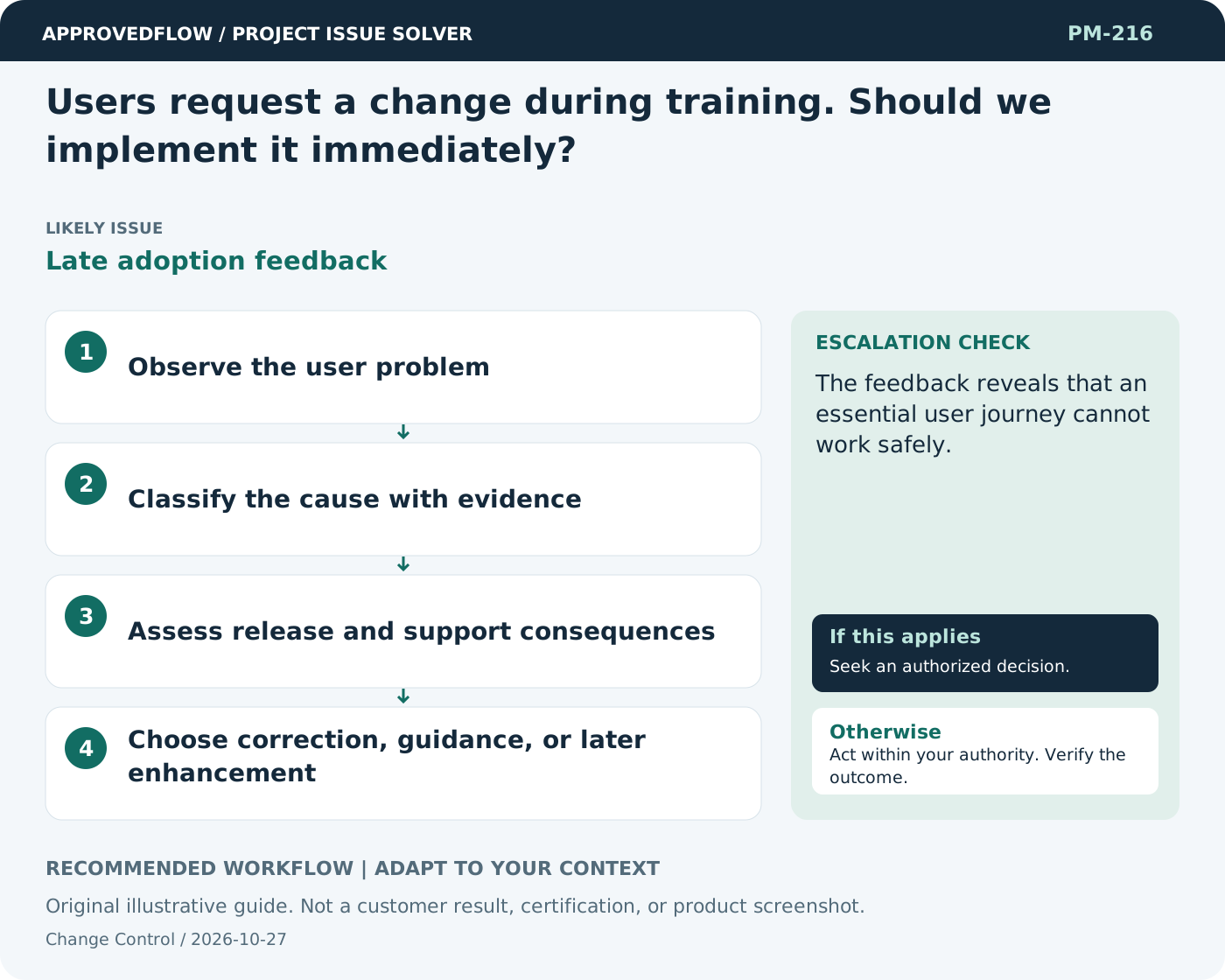
- Observe the user problem
- Classify the cause with evidence
- Assess release and support consequences
- Choose correction, guidance, or later enhancement
When to escalate
Escalate when
The feedback reveals that an essential user journey cannot work safely.
Who decides
The authorized change decision maker
Example
A confusing label is corrected through review while a new workflow branch is scheduled for later assessment.
Mistake to avoid
Implementing every training-room suggestion directly in production.
Prevent a repeat
Compare delivered changes with authorized decisions and keep the current baseline distinguishable from earlier versions.
Suggested ApprovedFlow setup
- Documents
- Approvals
- Tasks
Keep the change request, impact assessment and recorded decision together; update affected tasks only after the appropriate authorization. See the platform
Related cases
- Every change request is called urgent. How can we triage them?Uncontrolled change urgency
- People implement changes before approval. How do we regain control?Unauthorized baseline change
- Our training is in English, but many users work in Arabic. How should we plan it?Language mismatch in adoption support
- Users submit feedback, but never hear what happened. How do we fix that?Open-loop adoption feedback