People implement changes before approval. How do we regain control?
Unauthorized baseline changeMake the decision boundary clear and investigate why teams bypass it. Capture the actual change, assess its consequences, and obtain a legitimate resolution without fabricating prior approval.
What to do now
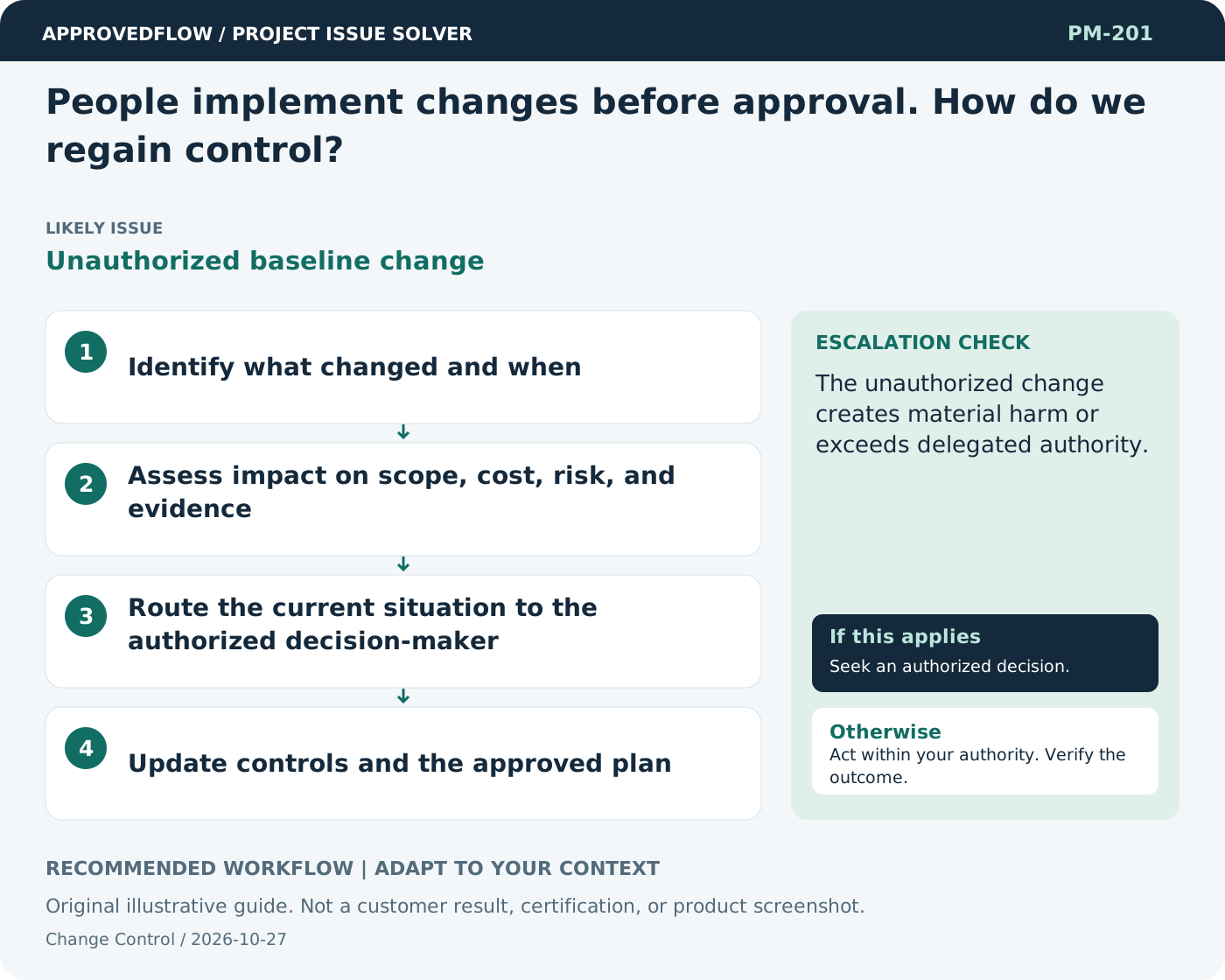
- Identify what changed and when
- Assess impact on scope, cost, risk, and evidence
- Route the current situation to the authorized decision-maker
- Update controls and the approved plan
When to escalate
Escalate when
The unauthorized change creates material harm or exceeds delegated authority.
Who decides
The authorized change decision maker
Example
A configuration change is reviewed after discovery, with its actual timing and corrective actions preserved.
Mistake to avoid
Backdating approval to make the change appear compliant.
Prevent a repeat
Compare delivered changes with authorized decisions and keep the current baseline distinguishable from earlier versions.
Suggested ApprovedFlow setup
- Documents
- Approvals
- Tasks
Keep the change request, impact assessment and recorded decision together; update affected tasks only after the appropriate authorization. See the platform
Related cases
- We approved a change, but the team still uses the old plan. Why?Approval-to-execution gap
- How do we manage changes in a fixed-price contract?Commercial change boundary
- Requirements are scattered across emails and meetings. How do we regain control?Fragmented requirements record
- We keep approving expenses without project context. What should change?Uncontrolled expense attribution