Every change request is called urgent. How can we triage them?
Uncontrolled change urgencyDefine urgency by consequences of delay and the available decision window. Separate genuine emergency changes from requests that are merely important or late.
What to do now
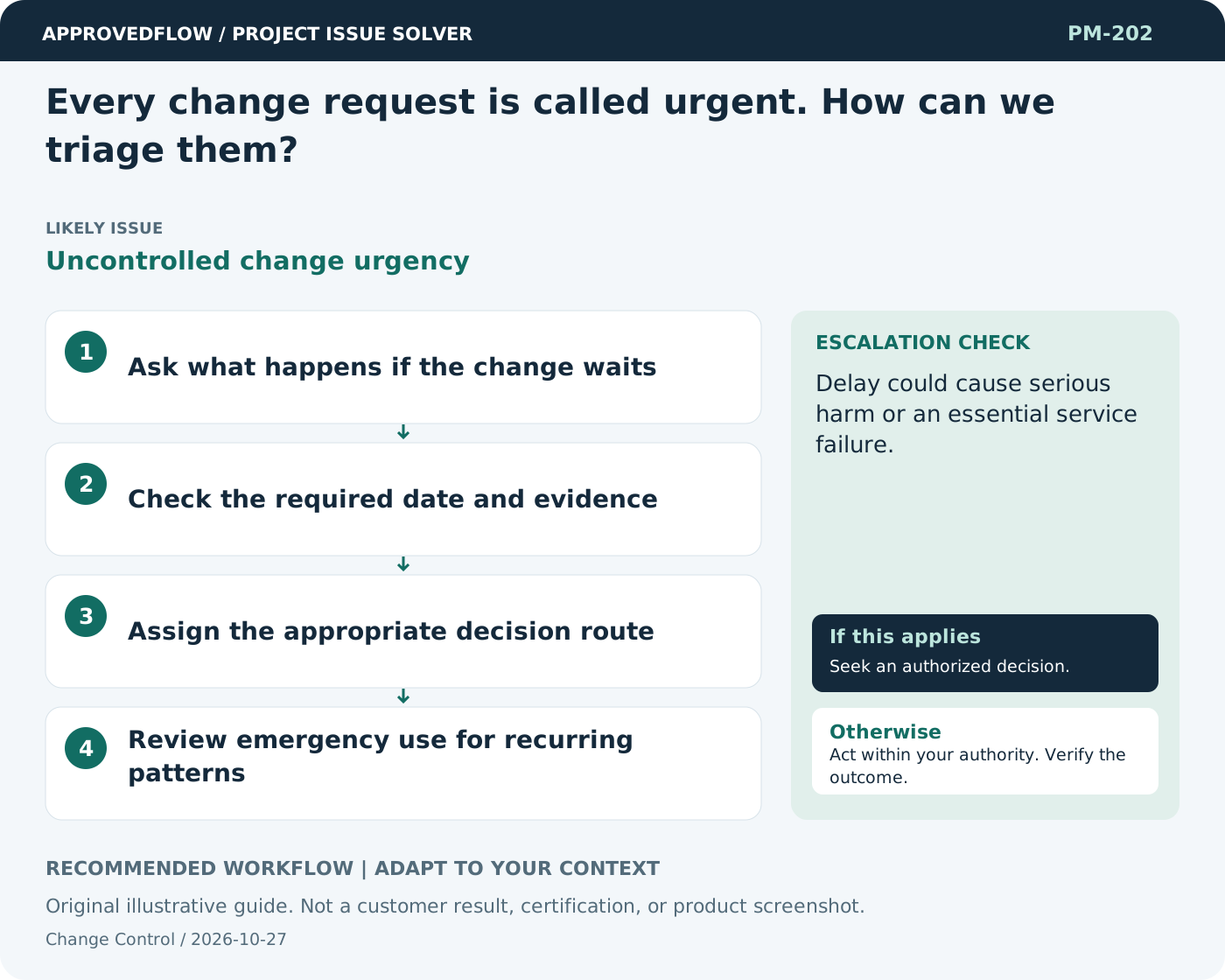
- Ask what happens if the change waits
- Check the required date and evidence
- Assign the appropriate decision route
- Review emergency use for recurring patterns
When to escalate
Escalate when
Delay could cause serious harm or an essential service failure.
Who decides
The authorized change decision maker
Example
A cosmetic request follows the normal queue while a critical service-restoration change uses the authorized emergency route.
Mistake to avoid
Allowing urgent labels to bypass all assessment.
Prevent a repeat
Compare delivered changes with authorized decisions and keep the current baseline distinguishable from earlier versions.
Suggested ApprovedFlow setup
- Documents
- Approvals
- Tasks
Keep the change request, impact assessment and recorded decision together; update affected tasks only after the appropriate authorization. See the platform
Related cases
- Users request a change during training. Should we implement it immediately?Late adoption feedback
- How do we assess the impact of a change properly?Incomplete change analysis
- The client wants every request treated as a defect. How do we distinguish changes?Defect-versus-change ambiguity
- The team rates every risk as high. How can we prioritize?Undifferentiated risk assessment