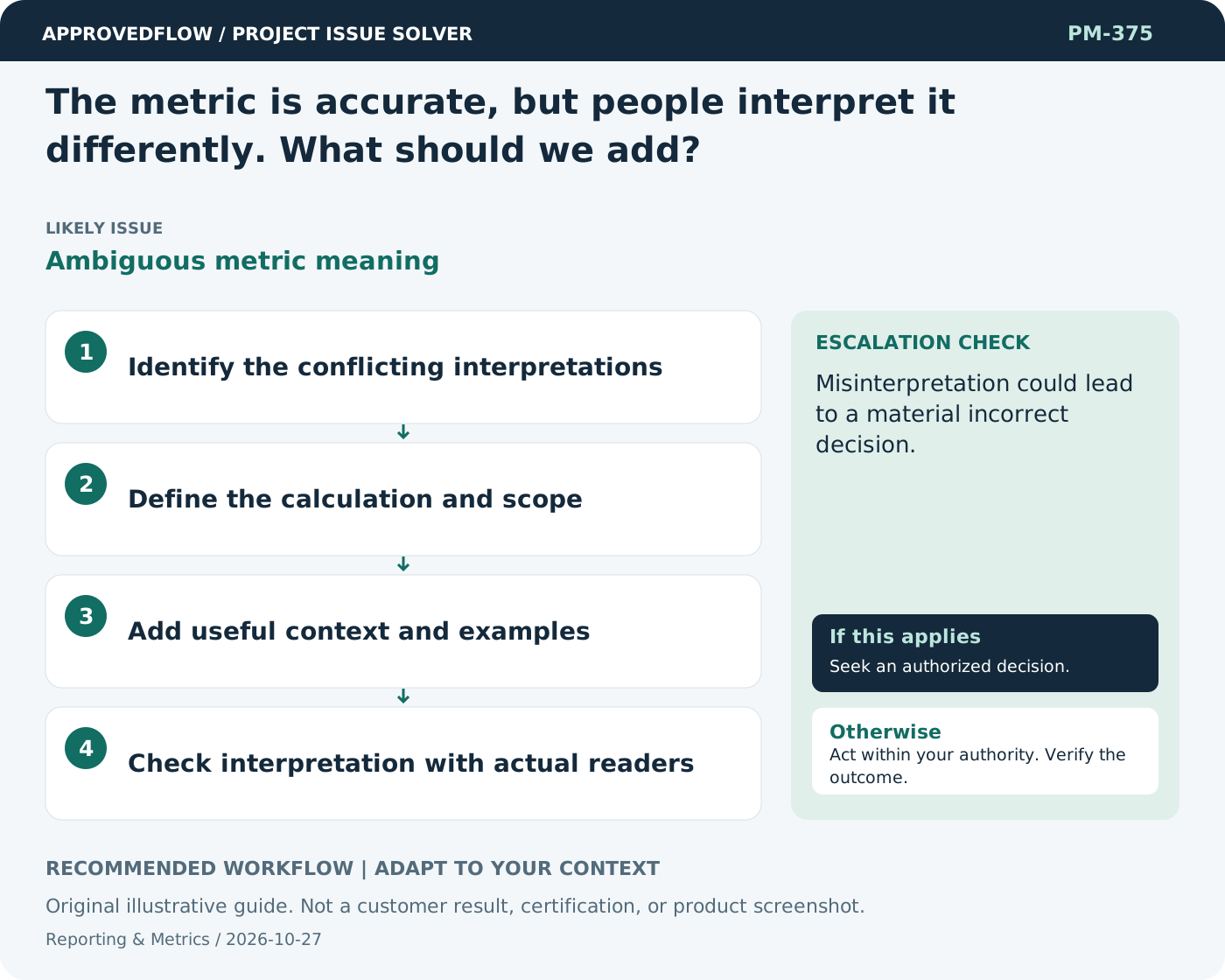
The metric is accurate, but people interpret it differently. What should we add?
Ambiguous metric meaningProvide a concise definition, scope, units, date, and limitation near the measure. Use examples where a familiar label hides a non-obvious calculation.
What to do now
- Identify the conflicting interpretations
- Define the calculation and scope
- Add useful context and examples
- Check interpretation with actual readers
When to escalate
Escalate when
Misinterpretation could lead to a material incorrect decision.
Who decides
The metric owner and relevant decision maker
Example
Budget remaining is clarified as excluding unapproved requests but including confirmed commitments.
Mistake to avoid
Assuming a short label explains a complex calculation.
Prevent a repeat
Check data freshness and meaning, and verify that the measure improves decisions rather than encouraging cosmetic progress.
Suggested ApprovedFlow setup
- Projects
- Tasks
- Timesheets
- Documents
Use the underlying named records and evidence when explaining a metric; validate any dashboard behavior against the current implementation. See the platform
Related cases
- How do we prevent people from gaming project metrics?Incentive-driven measurement distortion
- How many project KPIs should we track?Metric overload
- Management wants an adoption percentage. What should I measure?Ambiguous adoption metric
- Should we add more people to finish a late task faster?Unproven schedule compression