We need to reverse an approved change. What is the right process?
Change reversalAssess reversal as a new controlled decision, including its effect on data, users, dependencies, and previous commitments. Returning to an earlier state may not be technically or operationally simple.
What to do now
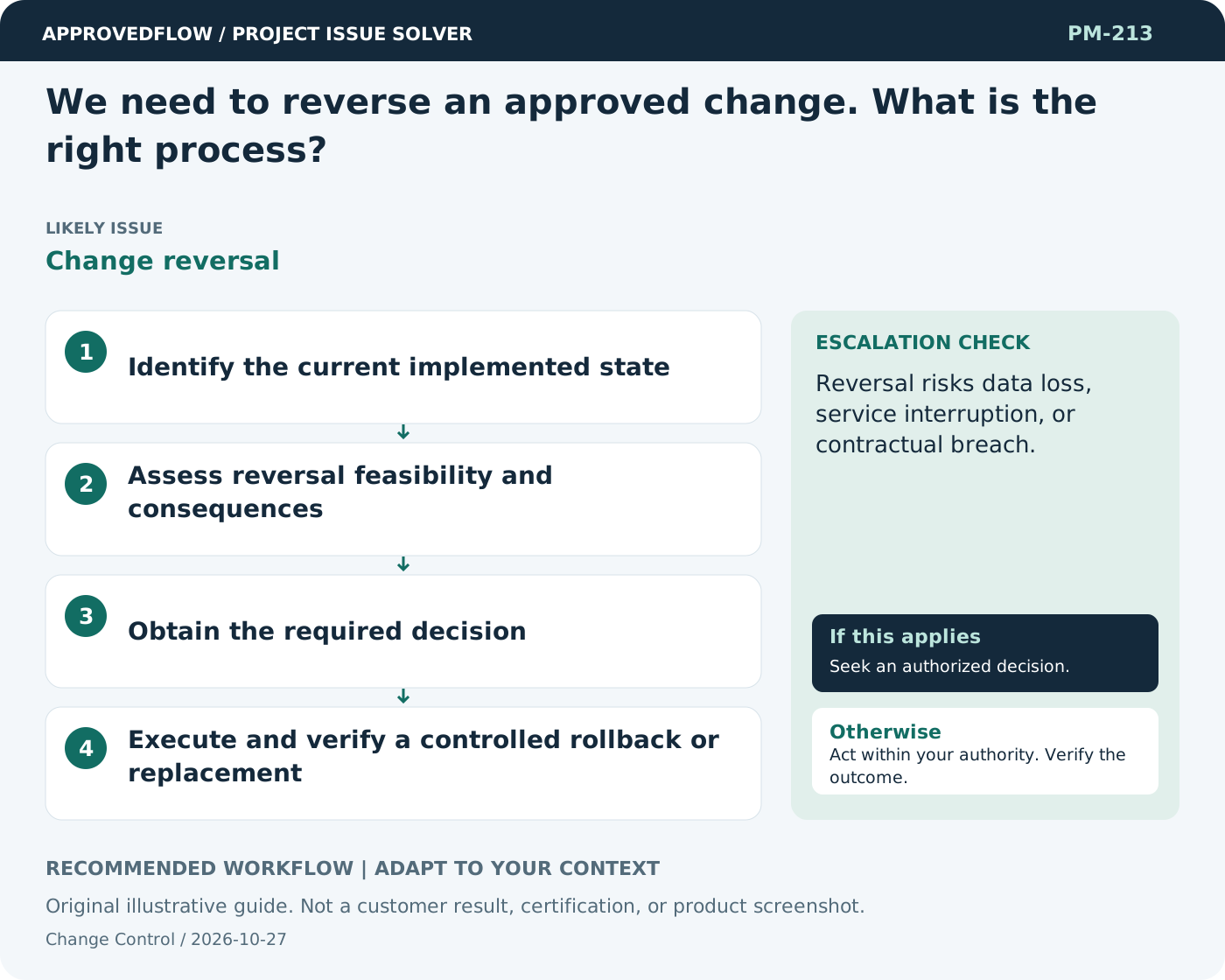
- Identify the current implemented state
- Assess reversal feasibility and consequences
- Obtain the required decision
- Execute and verify a controlled rollback or replacement
When to escalate
Escalate when
Reversal risks data loss, service interruption, or contractual breach.
Who decides
The authorized change decision maker
Example
A workflow reversal includes handling records already processed under the new rule.
Mistake to avoid
Assuming undoing a change requires no assessment.
Prevent a repeat
Compare delivered changes with authorized decisions and keep the current baseline distinguishable from earlier versions.
Suggested ApprovedFlow setup
- Documents
- Approvals
- Tasks
Keep the change request, impact assessment and recorded decision together; update affected tasks only after the appropriate authorization. See the platform
Related cases
- How do we verify that an approved change solved the original problem?Change effectiveness verification
- We approved a change, but the team still uses the old plan. Why?Approval-to-execution gap
- Different reports show different completion percentages. Which one is right?Inconsistent progress definitions
- Our release process has no monitoring after deployment. What is missing?Unobserved production change