How do we verify that an approved change solved the original problem?
Change effectiveness verificationCheck the intended outcome after implementation, not only that the new configuration exists. Use evidence linked to the original problem and watch for unintended effects.
What to do now
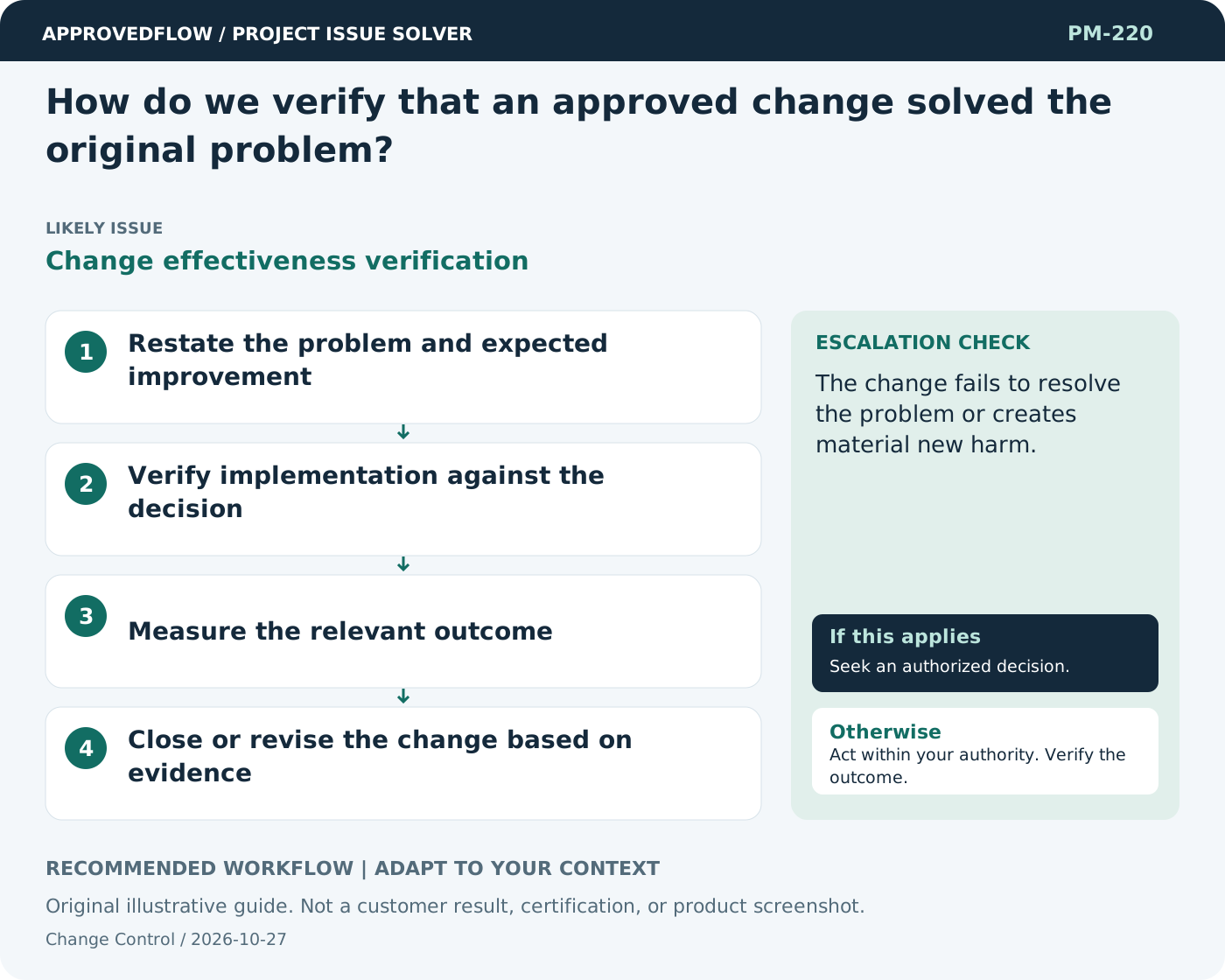
- Restate the problem and expected improvement
- Verify implementation against the decision
- Measure the relevant outcome
- Close or revise the change based on evidence
When to escalate
Escalate when
The change fails to resolve the problem or creates material new harm.
Who decides
The authorized change decision maker
Example
A notification change is checked for timely user action, not just successful message generation.
Mistake to avoid
Closing the change when deployment finishes without checking results.
Prevent a repeat
Compare delivered changes with authorized decisions and keep the current baseline distinguishable from earlier versions.
Suggested ApprovedFlow setup
- Documents
- Approvals
- Tasks
Keep the change request, impact assessment and recorded decision together; update affected tasks only after the appropriate authorization. See the platform
Related cases
- We need to reverse an approved change. What is the right process?Change reversal
- We approved a change, but the team still uses the old plan. Why?Approval-to-execution gap
- The same project failure happened again. How do we check whether lessons worked?Unverified effectiveness of improvements
- Our stage gates are automatic approvals. What should change?Ceremonial stage gates