A pilot succeeded, so management wants immediate rollout. What is missing?
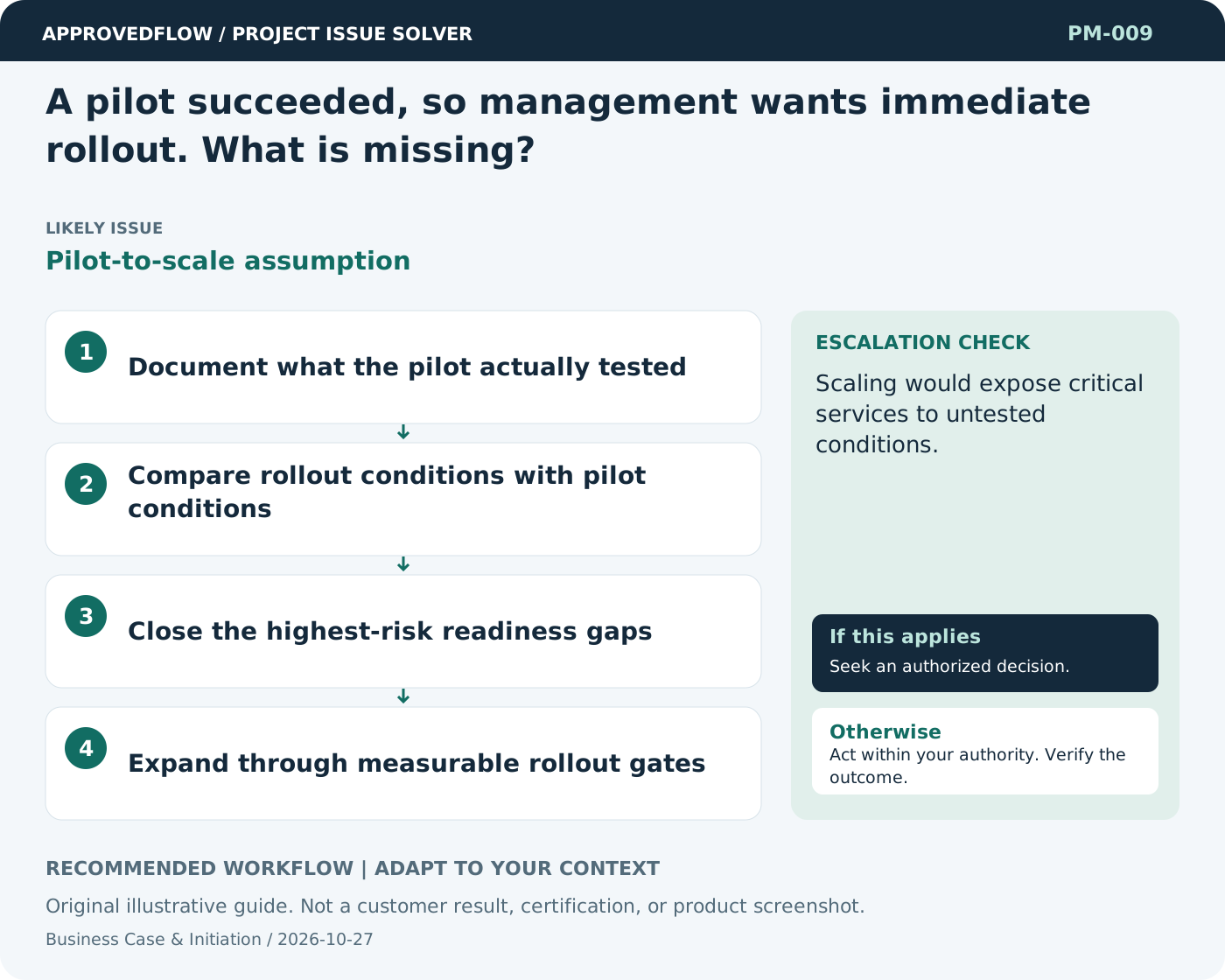
Pilot-to-scale assumptionA successful pilot demonstrates performance in its tested conditions, not readiness everywhere. Check differences in users, volumes, support, integration, and failure consequences before scaling.
What to do now
- Document what the pilot actually tested
- Compare rollout conditions with pilot conditions
- Close the highest-risk readiness gaps
- Expand through measurable rollout gates
When to escalate
Escalate when
Scaling would expose critical services to untested conditions.
Who decides
The accountable sponsor
Example
A five-user pilot is followed by a larger mixed-skill cohort before organization-wide adoption.
Mistake to avoid
Treating enthusiastic pilot users as a representative population.
Prevent a repeat
At each stage decision, check that the expected outcome, owner and justification remain valid.
Suggested ApprovedFlow setup
- Projects
- Documents
- Approvals
Keep the decision brief with the project and request a recorded sponsor decision before the next commitment. See the platform
Related cases
- The sponsor wants a solution before we understand the problem. What do I do?Solution-first initiation
- We inherited a project with no charter. Can we continue?Missing project mandate
- How do I know whether a department is ready for rollout?Unmeasured business readiness
- We have no owner after the AI pilot succeeds. What should happen before launch?Missing AI service ownership