How do we manage a critical dependency reaching end of support?
Technology lifecycle exposureConfirm the vendor's current support position and assess security, compatibility, and migration consequences with technical owners. Plan a tested transition rather than waiting for an urgent failure.
What to do now
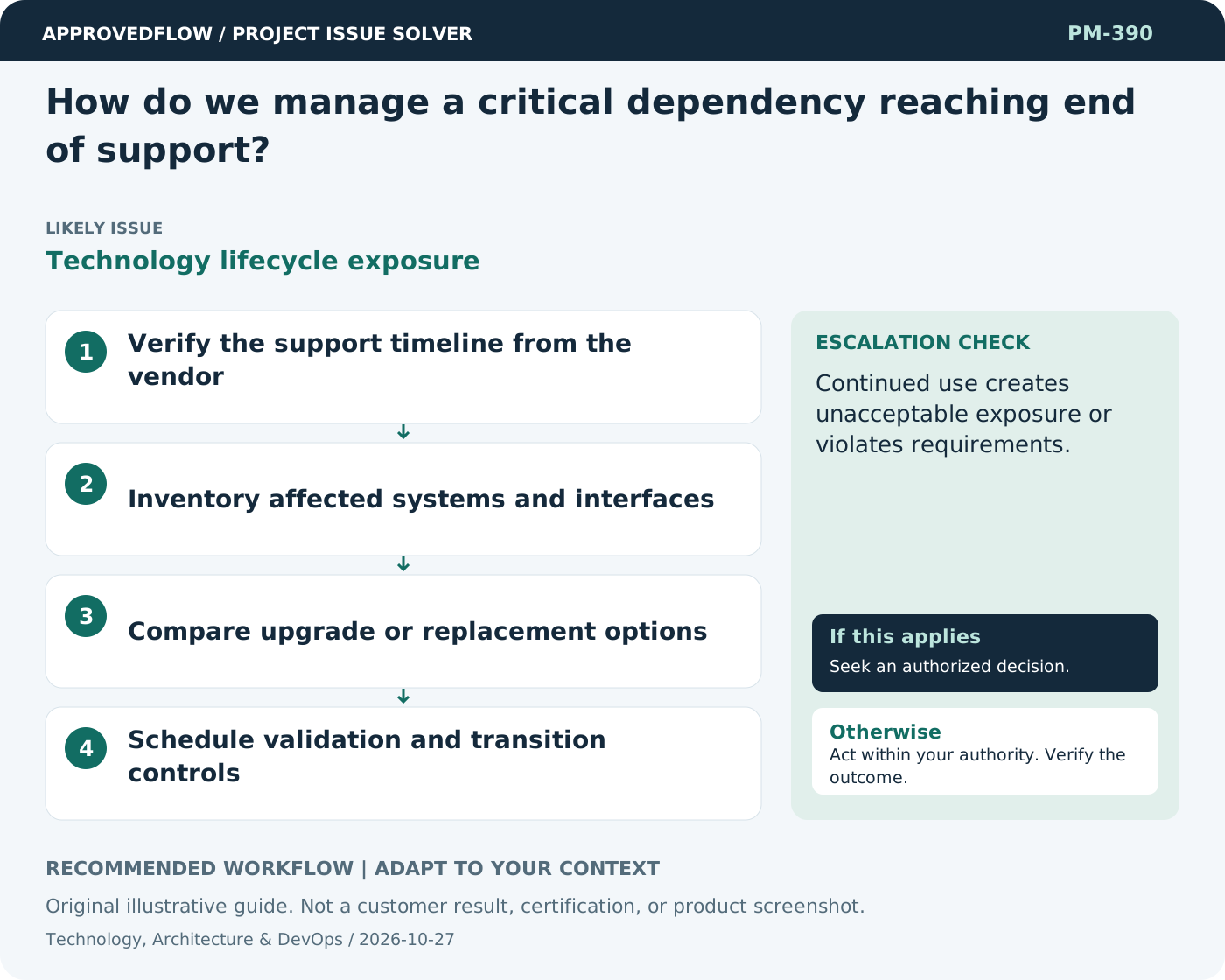
- Verify the support timeline from the vendor
- Inventory affected systems and interfaces
- Compare upgrade or replacement options
- Schedule validation and transition controls
When to escalate
Continued use creates unacceptable exposure or violates requirements.
The technical owner and authorized release decision maker
Example
A platform dependency receives a tested upgrade path before its support coverage ends.
Mistake to avoid
Assuming an unsupported component is safe because it still runs.
Prevent a repeat
Review real execution evidence and maintainability alongside feature completion; do not treat an unrun test as passed.
Suggested ApprovedFlow setup
- Tasks
- Documents
- Approvals
Track delivery tasks and attach engineering evidence; keep source control, build execution and technical controls in their actual engineering systems. See the platform
Related cases
- The team chooses a technology nobody can support. How should we decide?Operational capability mismatch
- Developers keep adding new libraries. What should we control?Unmanaged software dependencies
- The team forgot recurring software and support costs. How do we correct the business case?Missing lifecycle costs
- One expert is the only person who understands a critical component. What should we do?Single-person dependency