Nobody volunteers bad news during meetings. How can I change that?
Low reporting safetyMake it safe to raise uncertainty and mistakes early while maintaining accountability for action. Model factual discussion and respond to problems with support and decisions rather than humiliation.
What to do now
- Ask about obstacles before status colors
- Thank people for timely evidence
- Separate learning from blame
- Track corrective actions consistently
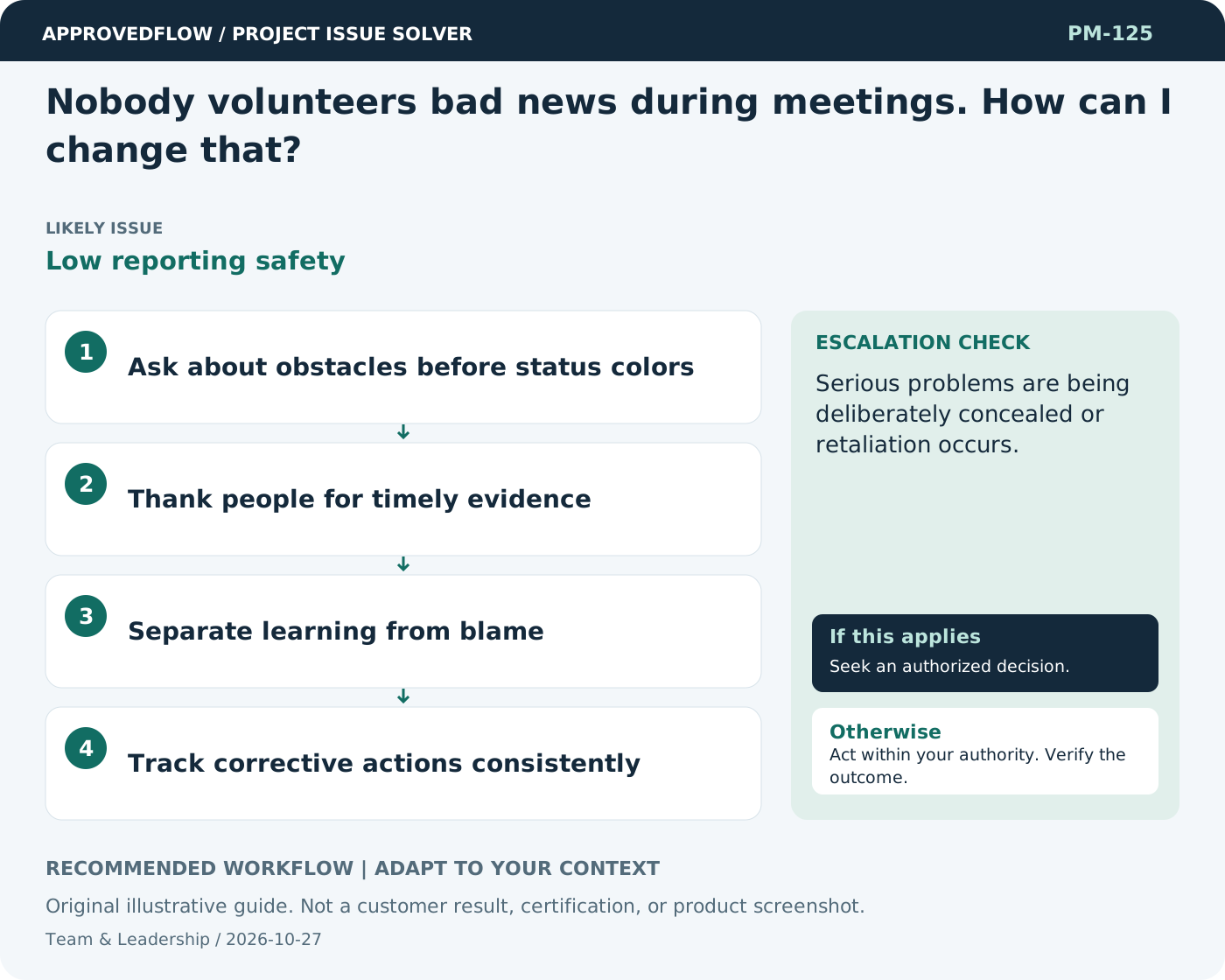
When to escalate
Escalate when
Serious problems are being deliberately concealed or retaliation occurs.
Who decides
The team lead and appropriate line manager
Example
A team starts each review with newly discovered constraints and the help needed to address them.
Mistake to avoid
Demanding honesty while punishing the first person who provides it.
Prevent a repeat
Review whether working agreements improve delivery and raise people concerns through the appropriate channels.
Suggested ApprovedFlow setup
- Tasks
- Resources
- Documents
Make agreed responsibilities and follow-up tasks visible while keeping sensitive people matters in the authorized confidential process. See the platform
Related cases
- Meetings leave no time for focused work. What can we remove?Coordination overload
- Junior staff agree in meetings but struggle afterward. How can we support them?Hidden understanding gap
- We need bad news from suppliers earlier. How can communication improve?Delayed exception reporting
- Our closure report hides major problems because the project eventually delivered. What should it say?Misleading retrospective reporting