Junior staff agree in meetings but struggle afterward. How can we support them?
Hidden understanding gapCheck understanding through concrete examples and safe questions rather than asking whether everyone understands. Provide bounded assignments and timely feedback without publicly exposing uncertainty.
What to do now
- Ask people to explain the next step
- Identify missing context or skills
- Pair on an initial example
- Review the first result before expanding scope
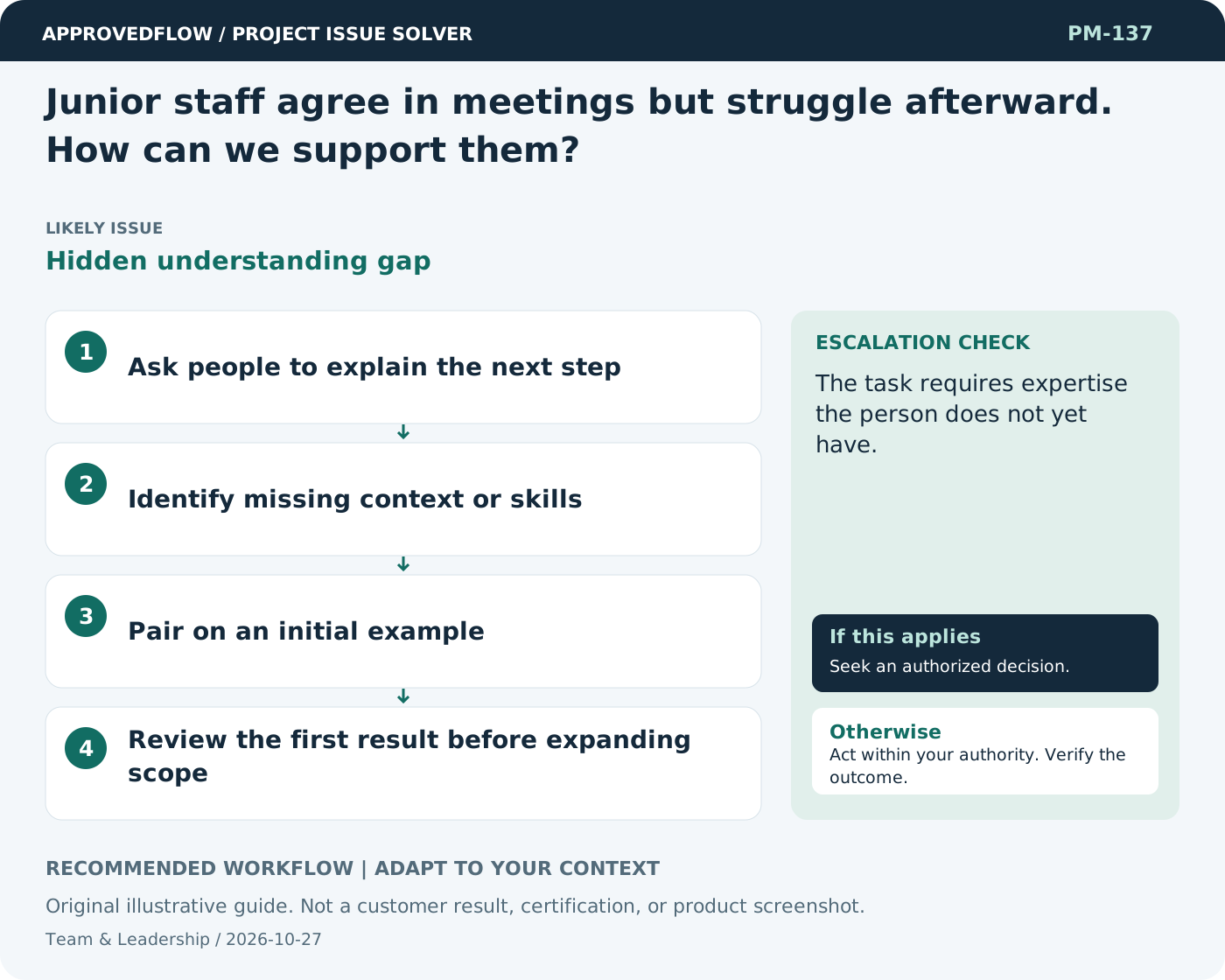
When to escalate
Escalate when
The task requires expertise the person does not yet have.
Who decides
The team lead and appropriate line manager
Example
A junior analyst walks through one complete test case with a reviewer before preparing the remaining set.
Mistake to avoid
Interpreting silence or agreement as proof of competence.
Prevent a repeat
Review whether working agreements improve delivery and raise people concerns through the appropriate channels.
Suggested ApprovedFlow setup
- Tasks
- Resources
- Documents
Make agreed responsibilities and follow-up tasks visible while keeping sensitive people matters in the authorized confidential process. See the platform
Related cases
- Two team members are in constant conflict. How should I intervene?Unresolved working conflict
- Meetings leave no time for focused work. What can we remove?Coordination overload
- Vendor support excludes the integration we depend on. What should we do?Support boundary gap
- The team estimates stories before understanding them. What should happen?Premature backlog estimation