Our closure report hides major problems because the project eventually delivered. What should it say?
Misleading retrospective reportingReport outcomes against the relevant baseline, including approved changes, unresolved obligations, and significant lessons. Distinguish final delivery from the path taken and benefits actually measured. A useful closure report supports future decisions rather than rewriting the project as an uninterrupted success.
What to do now
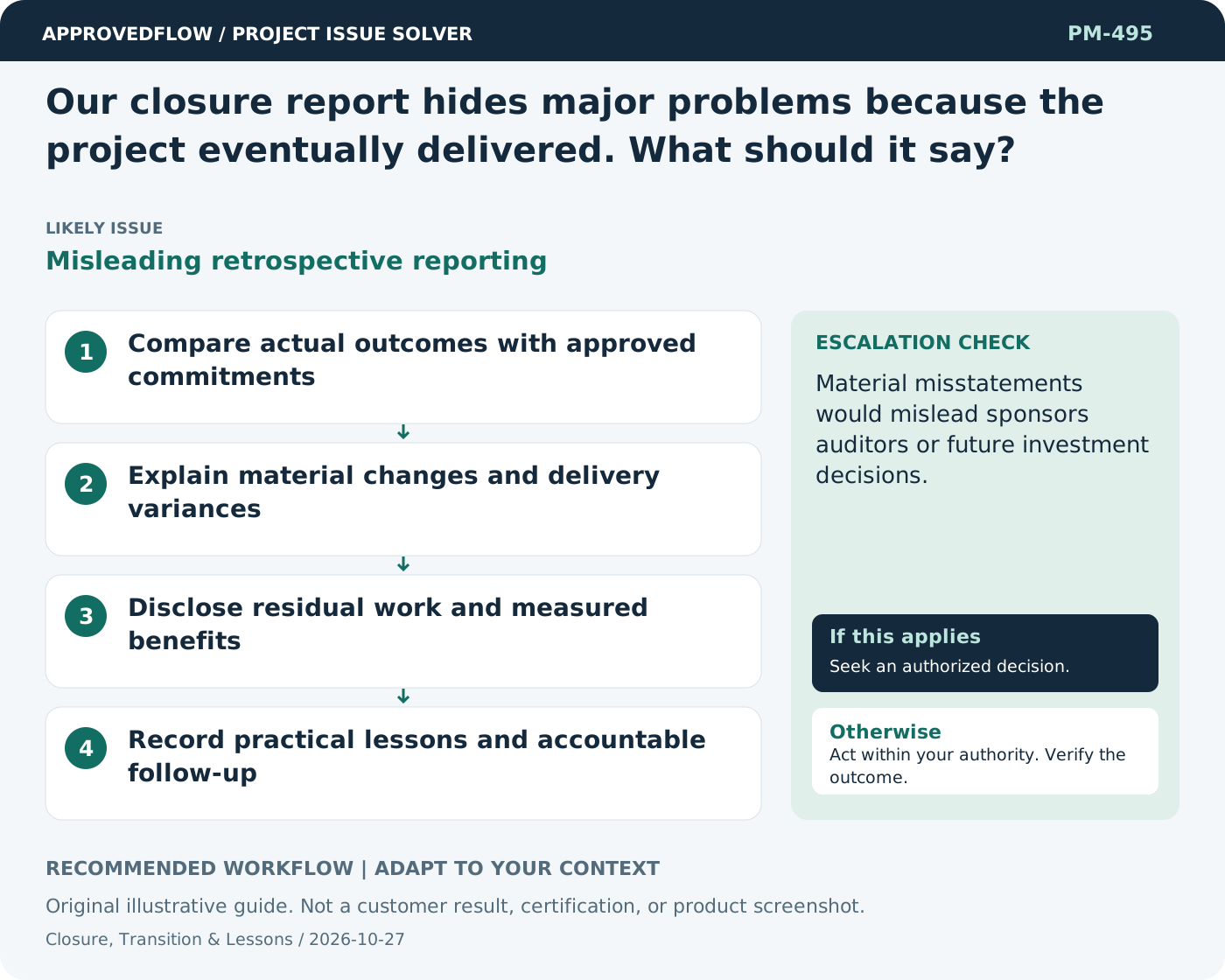
- Compare actual outcomes with approved commitments
- Explain material changes and delivery variances
- Disclose residual work and measured benefits
- Record practical lessons and accountable follow-up
When to escalate
Material misstatements would mislead sponsors auditors or future investment decisions.
The sponsor and accepting business or service owner
Example
The report records successful delivery alongside the rebaseline and the procurement issue that caused it.
Mistake to avoid
Removing major delays from the report because the final launch succeeded.
Prevent a repeat
Verify that transferred obligations and important lesson actions are completed after the project closes.
Suggested ApprovedFlow setup
- Projects
- Documents
- Tasks
- Approvals
Keep the closure decision and final evidence with the project and transfer accepted residual actions to named ongoing owners. See the platform
Related cases
- The retrospective becomes a blame session. How should I run it?Unsafe and unproductive learning review
- When should I release team members from a closing project?Unplanned resource release
- Nobody volunteers bad news during meetings. How can I change that?Low reporting safety
- Should we report tasks completed or outcomes delivered?Activity-outcome confusion