A new executive joins halfway through and challenges the direction. What should we do?
Leadership transition misalignmentProvide a compact evidence-based briefing on objectives, decisions, commitments, and current options. Treat new strategic input seriously while making the consequences of changing direction explicit.
What to do now
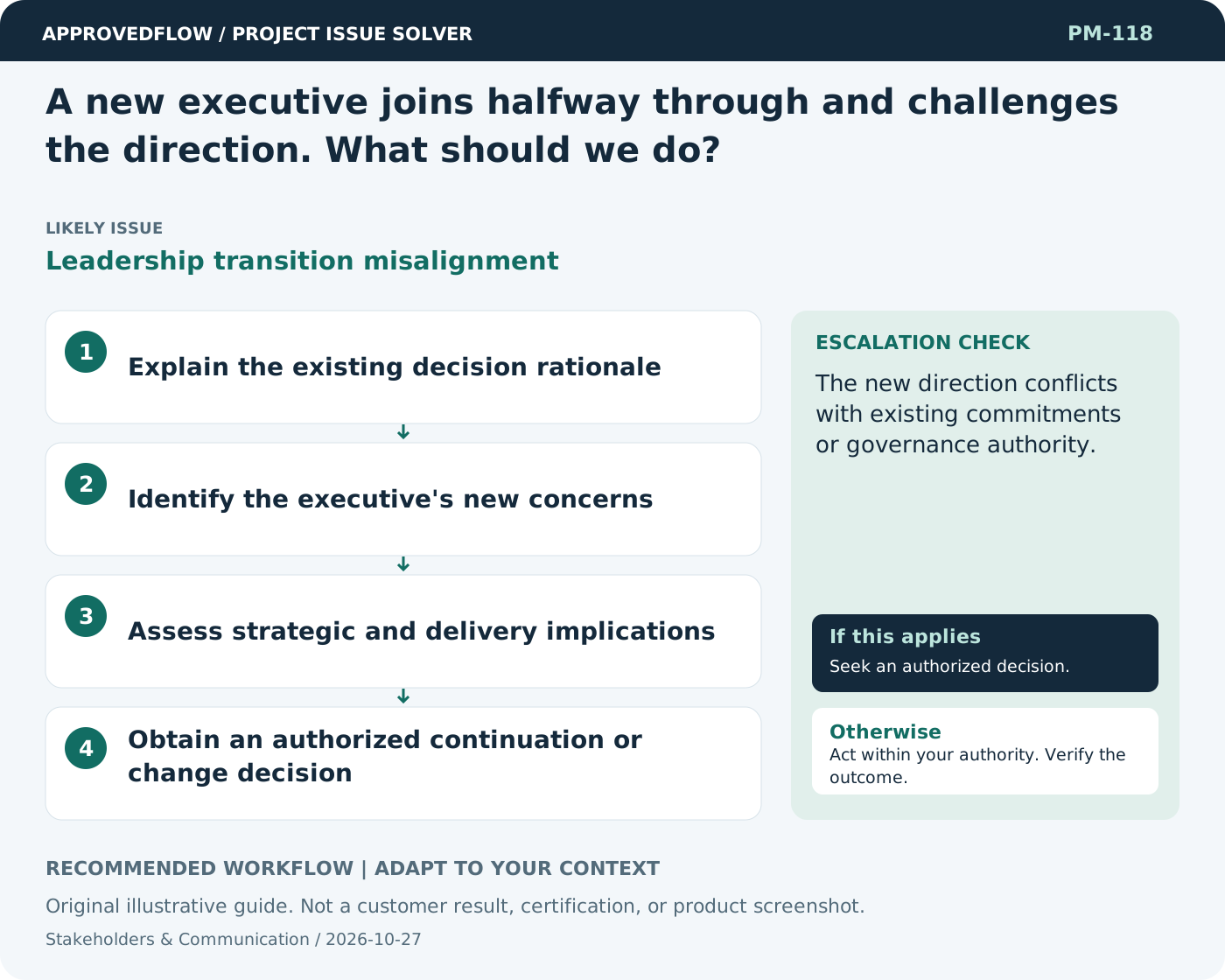
- Explain the existing decision rationale
- Identify the executive's new concerns
- Assess strategic and delivery implications
- Obtain an authorized continuation or change decision
When to escalate
Escalate when
The new direction conflicts with existing commitments or governance authority.
Who decides
The stakeholder decision owner and project sponsor
Example
A new executive reviews the business case and chooses a narrower rollout with its costs and effects recorded.
Mistake to avoid
Assuming prior approvals eliminate the need for strategic reassessment.
Prevent a repeat
Check stakeholder understanding at important decisions rather than counting messages sent.
Suggested ApprovedFlow setup
- Projects
- Documents
- Approvals
Keep stakeholder decisions and supporting records with the project and assign follow-up actions to named owners. See the platform
Related cases
- We communicate changes, but people say they did not know. What is missing?Broadcast without confirmation
- How can we tell whether stakeholder engagement is working?Activity-focused engagement measures
- The new system changes people's responsibilities, but nobody told them. What now?Unmanaged role transition
- What happens when the new system is unavailable during transition?Missing business continuity practice