What happens when the new system is unavailable during transition?
Missing business continuity practiceAgree a controlled fallback for critical work with the business and service owners. Define when it is activated, how records are protected, and how transactions are reconciled after recovery. Practice the fallback rather than assuming users will improvise consistently.
What to do now
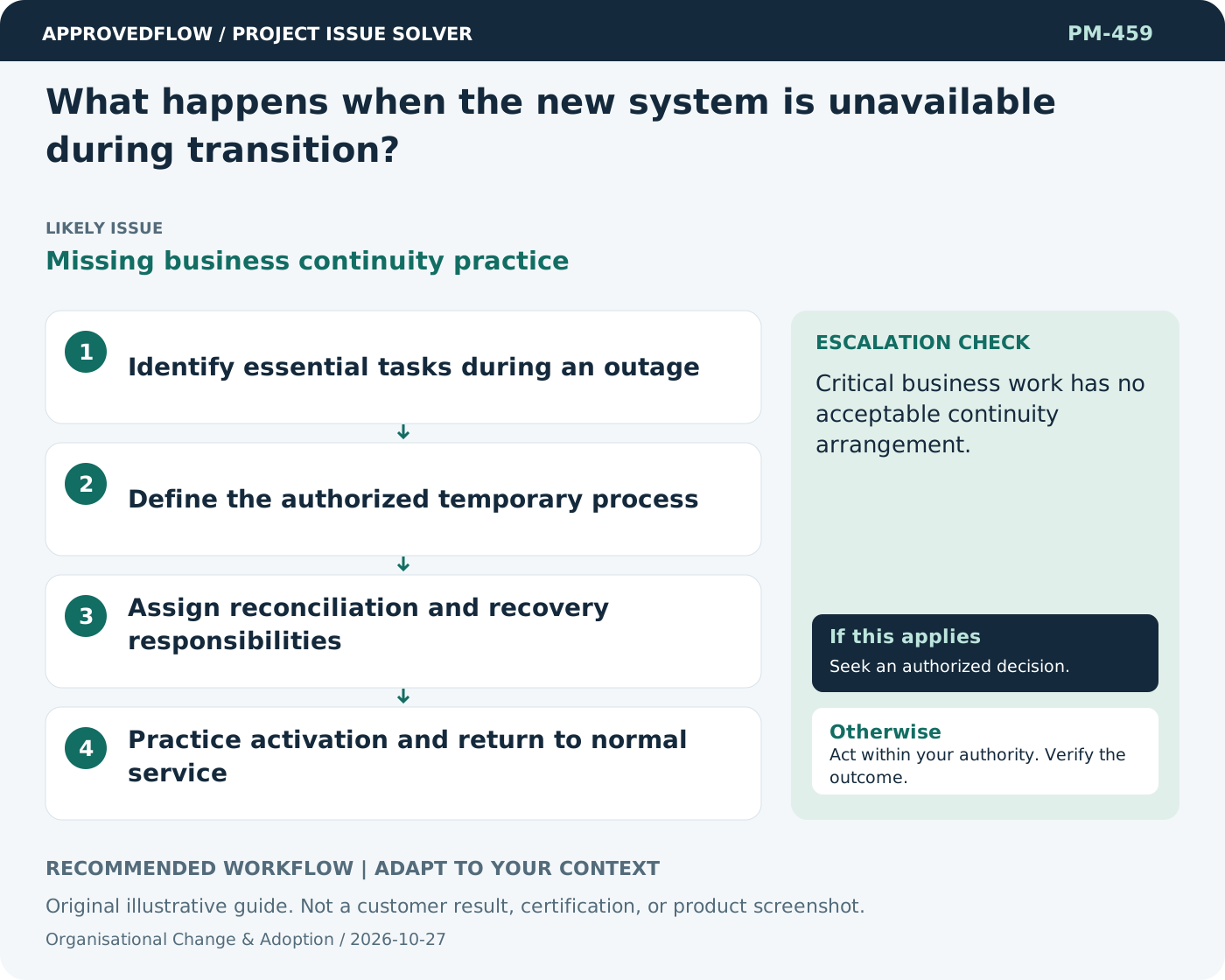
- Identify essential tasks during an outage
- Define the authorized temporary process
- Assign reconciliation and recovery responsibilities
- Practice activation and return to normal service
When to escalate
Critical business work has no acceptable continuity arrangement.
The business process owner and change sponsor
Example
Urgent requests use a controlled log during an outage and are reconciled after the service returns.
Mistake to avoid
Allowing unlimited informal transactions with no reconciliation record.
Prevent a repeat
Measure successful use of the intended workflow and resolve recurring barriers instead of relying only on attendance or logins.
Suggested ApprovedFlow setup
- Tasks
- Documents
- Resources
Assign role-specific readiness and feedback actions, keep reviewed job aids with the project, and record accepted operating responsibilities. See the platform
Related cases
- The new system changes people's responsibilities, but nobody told them. What now?Unmanaged role transition
- Our policy still describes the old workflow. Can training solve that?Policy and operating process mismatch
- Our supplier may be unable to continue. How should we prepare?Supplier continuity concern
- A shared environment is unavailable during our test window. What are the options?Environment capacity conflict