The new system changes people's responsibilities, but nobody told them. What now?
Unmanaged role transitionDocument how responsibilities and decision rights change for each affected role. Discuss impacts with people and their managers, update procedures and access, and confirm the new handoffs before transition. A software demonstration does not explain an organizational change.
What to do now
- Map current and future responsibilities
- Discuss impacts with affected roles and managers
- Update procedures access and handoffs
- Confirm readiness for the changed responsibilities
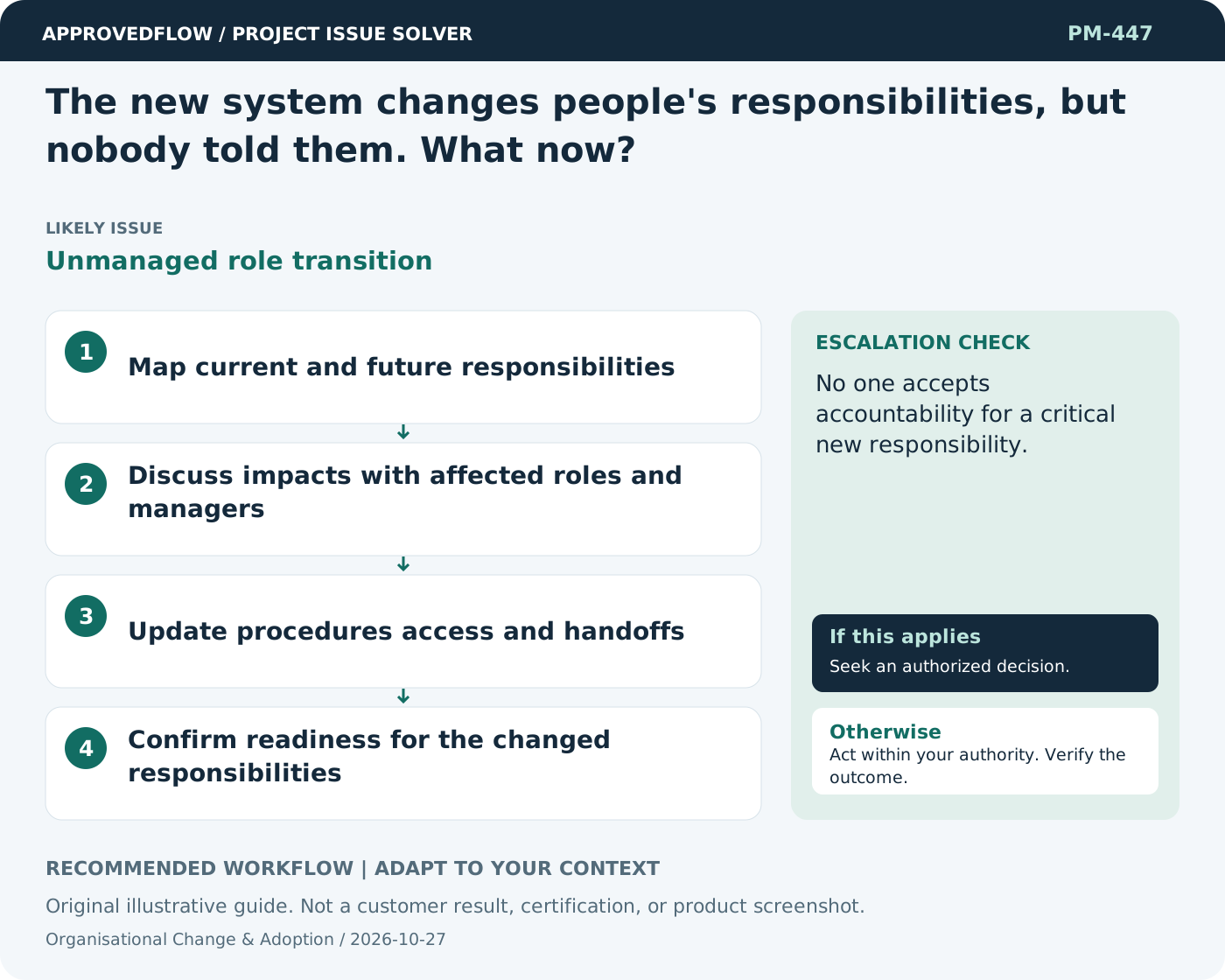
When to escalate
No one accepts accountability for a critical new responsibility.
The business process owner and change sponsor
Example
A new approver role is accompanied by training and a documented delegation arrangement.
Mistake to avoid
Assuming a new permission automatically makes someone the process owner.
Prevent a repeat
Measure successful use of the intended workflow and resolve recurring barriers instead of relying only on attendance or logins.
Suggested ApprovedFlow setup
- Tasks
- Documents
- Resources
Assign role-specific readiness and feedback actions, keep reviewed job aids with the project, and record accepted operating responsibilities. See the platform
Related cases
- What happens when the new system is unavailable during transition?Missing business continuity practice
- The organization rewards the old behavior while asking for a new one. What should change?Misaligned incentives
- A privacy assessment is requested after requirements are frozen. What now?Late privacy impact assessment
- How do we assess the impact of a change properly?Incomplete change analysis