How do we plan capacity for unpredictable incidents?
Variable demand planningUse historical demand and explicit reserve capacity where appropriate, then define how unused capacity is used. Avoid pretending unpredictable work has disappeared because it cannot be scheduled precisely.
What to do now
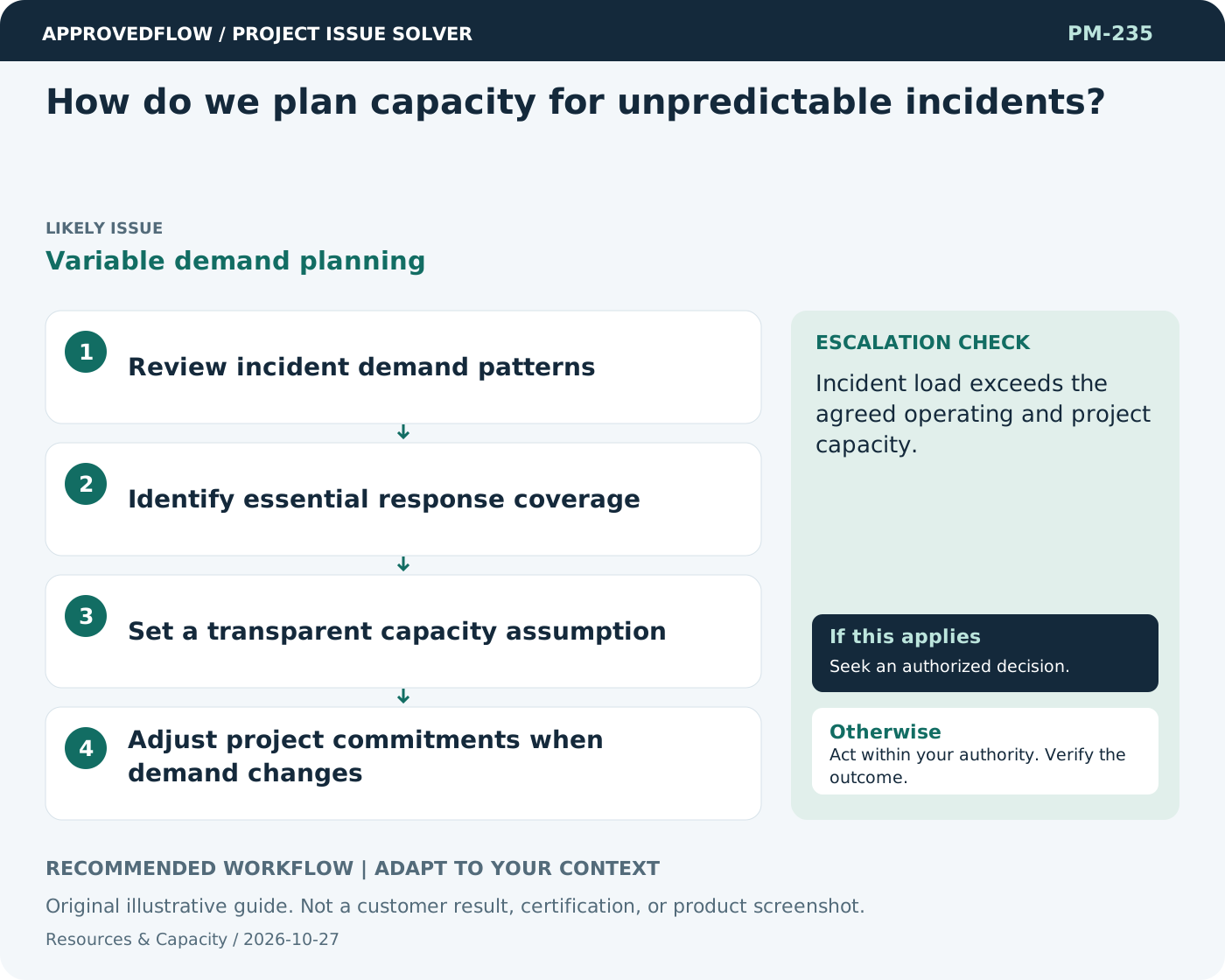
- Review incident demand patterns
- Identify essential response coverage
- Set a transparent capacity assumption
- Adjust project commitments when demand changes
When to escalate
Escalate when
Incident load exceeds the agreed operating and project capacity.
Who decides
The resource owner and project manager
Example
A service team reserves capacity for support and pulls optional project work when that capacity is not needed.
Mistake to avoid
Booking all available time and expecting incidents to be handled after hours.
Prevent a repeat
Review overload and bottlenecks at the person or skill level before adding more commitments.
Suggested ApprovedFlow setup
- Resources
- Tasks
- Timesheets
Compare available capacity, assigned task work and actual recorded effort using the enabled resource and timesheet views. See the platform
Related cases
- Our resource plan ignores support work. What should change?Missing operational demand
- How do we plan for leave without invading privacy?Availability visibility gap
- Demand is growing faster than the capacity plan. What should we review?Unmanaged service scaling risk
- The team has too much unplanned work for stable iterations. What can we do?Delivery model-demand mismatch