Our reports are always a week old. How should we show that?
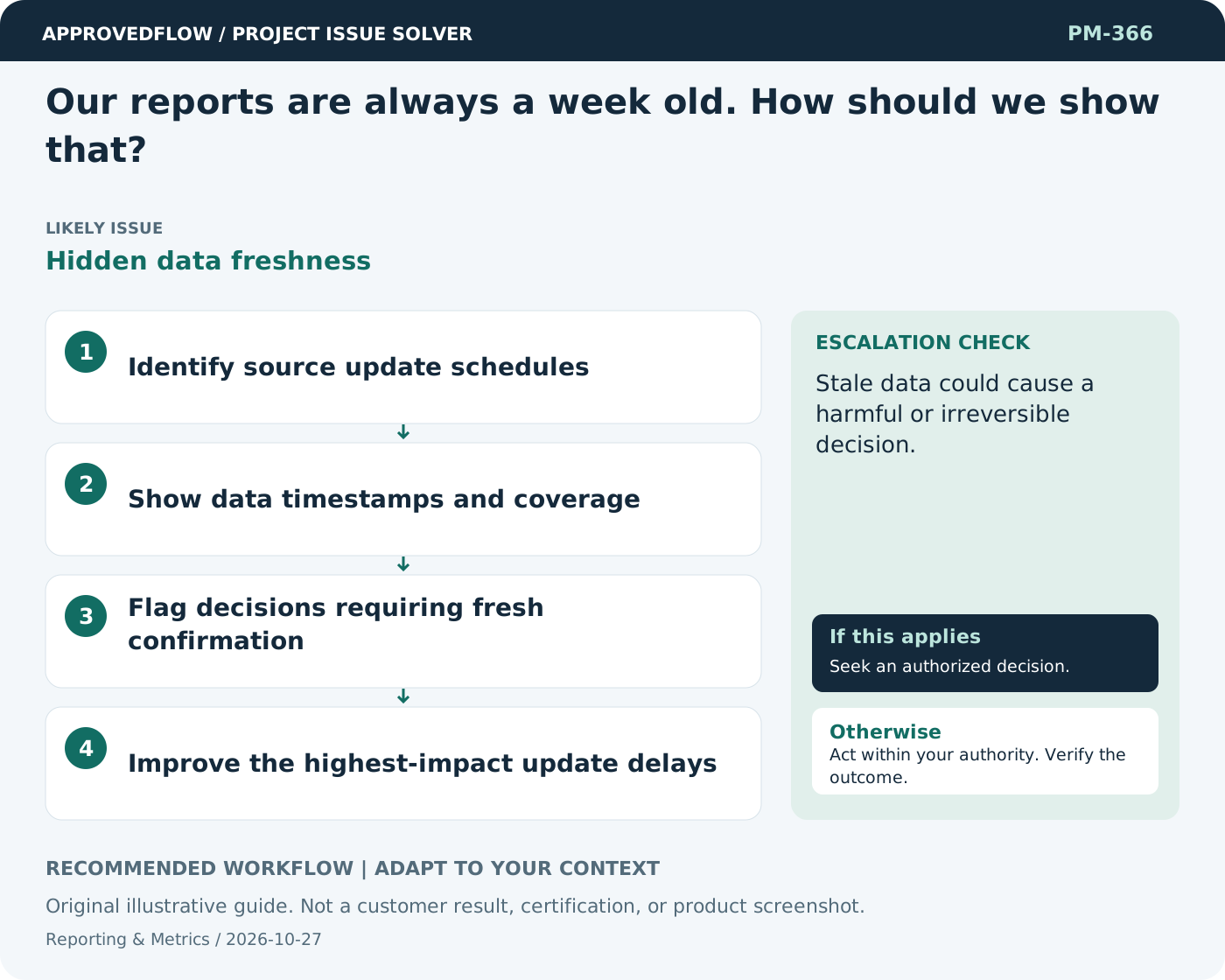
Hidden data freshnessDisplay the reporting period and refresh time, and identify which decisions require more current evidence. Old data can still be useful when its age is explicit and appropriate.
What to do now
- Identify source update schedules
- Show data timestamps and coverage
- Flag decisions requiring fresh confirmation
- Improve the highest-impact update delays
When to escalate
Escalate when
Stale data could cause a harmful or irreversible decision.
Who decides
The metric owner and relevant decision maker
Example
A dashboard shows the last reconciliation time and requires a fresh readiness check before release.
Mistake to avoid
Labeling a weekly snapshot as real-time.
Prevent a repeat
Check data freshness and meaning, and verify that the measure improves decisions rather than encouraging cosmetic progress.
Suggested ApprovedFlow setup
- Projects
- Tasks
- Timesheets
- Documents
Use the underlying named records and evidence when explaining a metric; validate any dashboard behavior against the current implementation. See the platform
Related cases
- How do we show uncertainty in a dashboard?False precision
- Our reports hide missing data by showing zero. What should change?Unknown mistaken for none
- The scope includes a result but not the data cleanup it needs. Who owns it?Hidden enabling scope
- We discovered a dependency late in the project. How do we assess it?Hidden dependency