We rely on one supplier for everything. How do we reduce dependency?
Supplier concentration riskIdentify critical dependencies, exit barriers, knowledge gaps, and feasible alternatives. Reduce exposure proportionately through documentation, access, transfer arrangements, and tested contingency.
What to do now
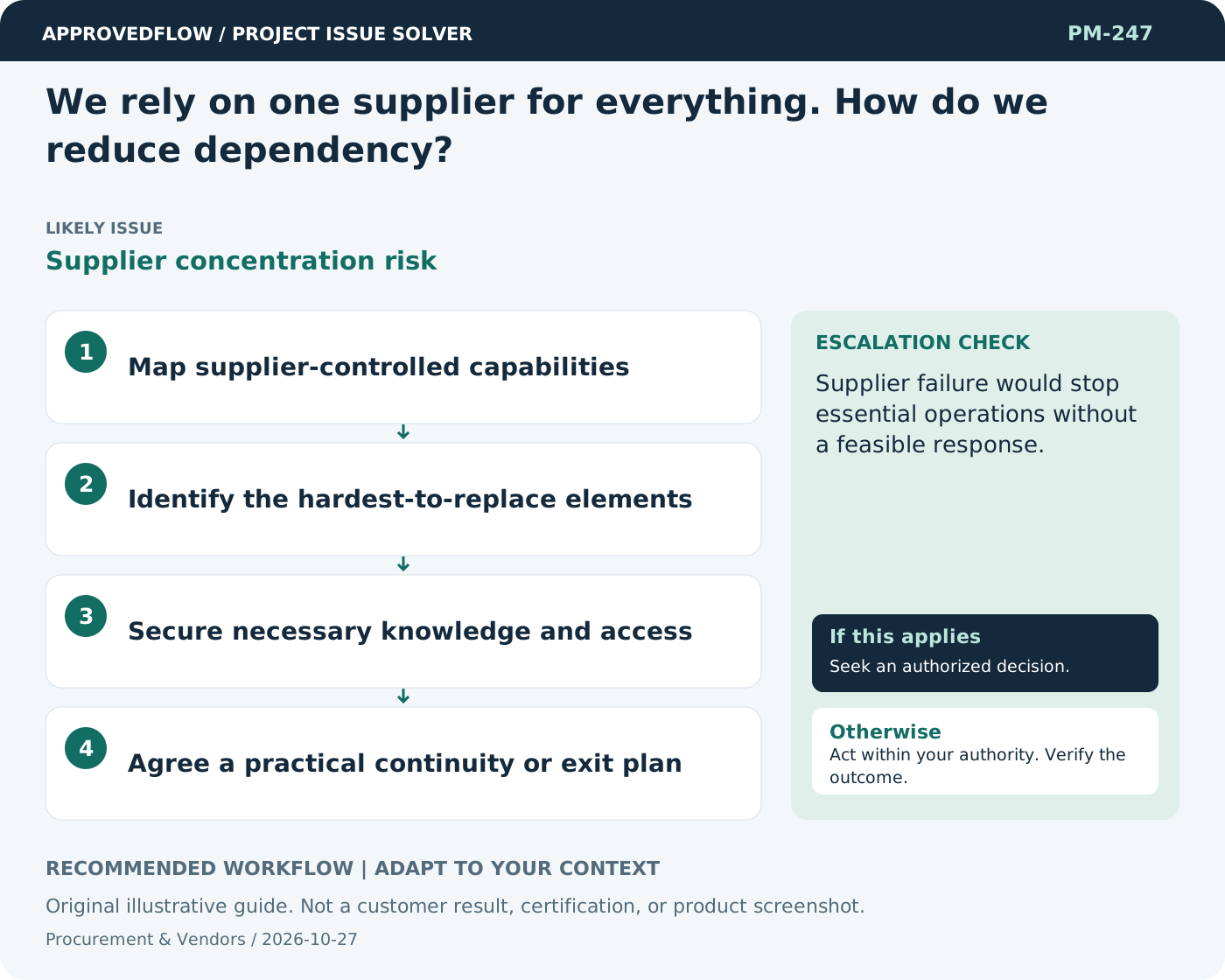
- Map supplier-controlled capabilities
- Identify the hardest-to-replace elements
- Secure necessary knowledge and access
- Agree a practical continuity or exit plan
When to escalate
Escalate when
Supplier failure would stop essential operations without a feasible response.
Who decides
The authorized procurement or commercial owner
Example
The institution retains configuration knowledge and export access even while using one implementation partner.
Mistake to avoid
Assuming a contract alone guarantees continuity.
Prevent a repeat
Compare supplier evidence with agreed obligations; refer contract interpretation and remedies to qualified owners.
Suggested ApprovedFlow setup
- Vendors
- Documents
- Tasks
- Approvals
Keep supplier commitments and evidence linked to the project, assign follow-up work, and route commercial decisions to authorized owners. See the platform
Related cases
- How do we manage multiple vendors on one project?Supplier interface ambiguity
- Our supplier may be unable to continue. How should we prepare?Supplier continuity concern
- One expert is the only person who understands a critical component. What should we do?Single-person dependency
- Testing is scheduled only at the end. How can we reduce risk now?Late quality feedback