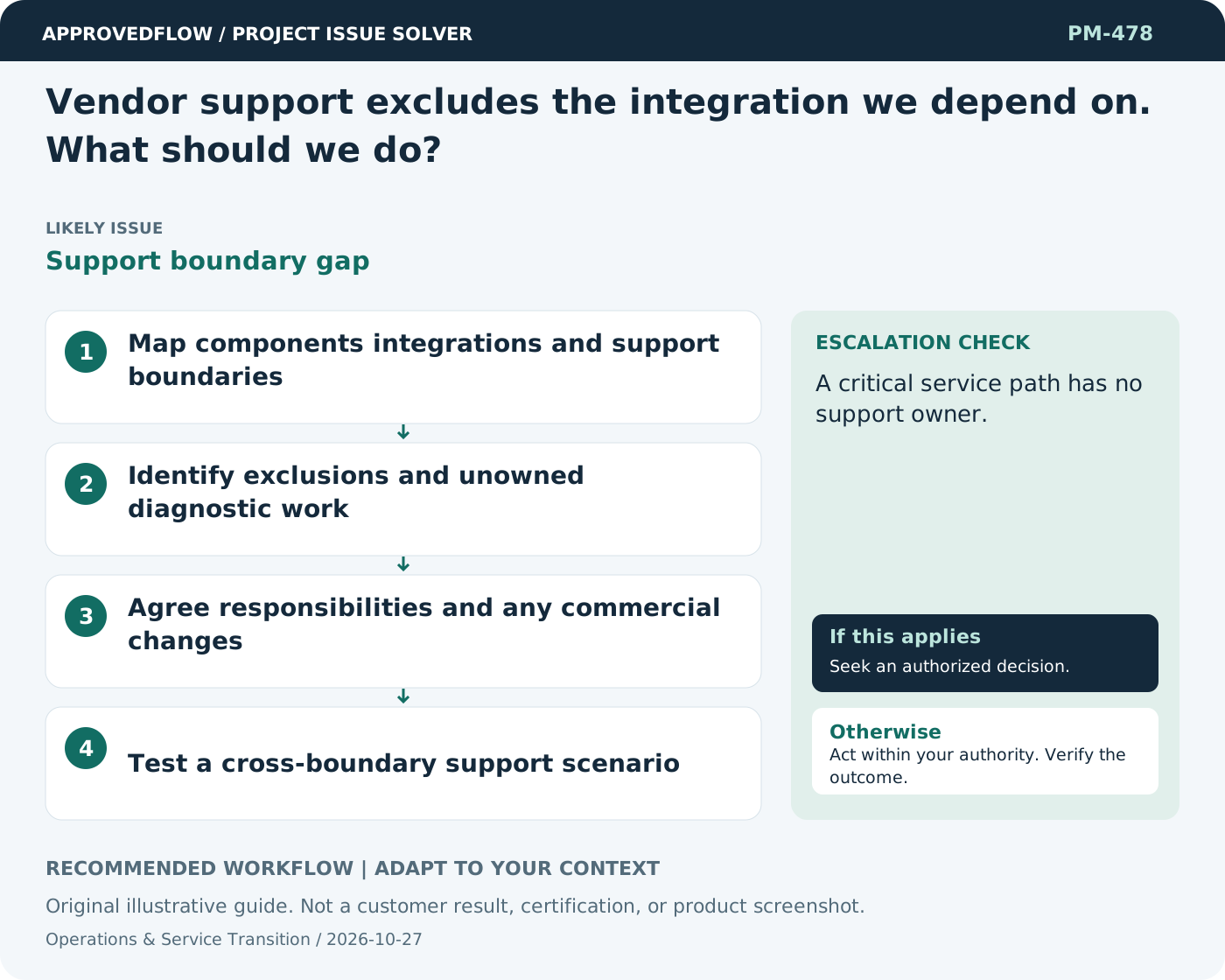
Vendor support excludes the integration we depend on. What should we do?
Support boundary gapMap which party supports each component and the interaction between them. Clarify exclusions, diagnostic cooperation, and escalation arrangements before an incident occurs. Obtain a documented solution for the gap rather than assuming separate support agreements cover the whole service.
What to do now
- Map components integrations and support boundaries
- Identify exclusions and unowned diagnostic work
- Agree responsibilities and any commercial changes
- Test a cross-boundary support scenario
When to escalate
A critical service path has no support owner.
The service owner and authorized operational decision maker
Example
The internal integration team accepts ownership of the connector that neither software vendor supports.
Mistake to avoid
Assuming two supported products automatically create a supported integration.
Prevent a repeat
Test whether receiving teams can operate and recover the service without depending on informal project-team support.
Suggested ApprovedFlow setup
- Tasks
- Documents
- Approvals
Keep handover tasks, operating evidence and the acceptance decision linked to the project while retaining monitoring and incident control in the actual service tools. See the platform
Related cases
- The project goes live next week, but there is no support model. Can we proceed?Incomplete service transition
- Our service is used at night, but support ends at five. What should happen?Support coverage mismatch
- Our resource plan ignores support work. What should change?Missing operational demand
- Junior staff agree in meetings but struggle afterward. How can we support them?Hidden understanding gap