Our service is used at night, but support ends at five. What should happen?
Support coverage mismatchCompare actual business-critical usage with the agreed service and support commitments. Define which incidents need after-hours response and fund or limit coverage accordingly. Do not imply continuous support where only daytime help is available.
What to do now
- Map critical usage periods and impact
- Compare them with support commitments
- Agree coverage or service limitations
- Publish the escalation and communication arrangements
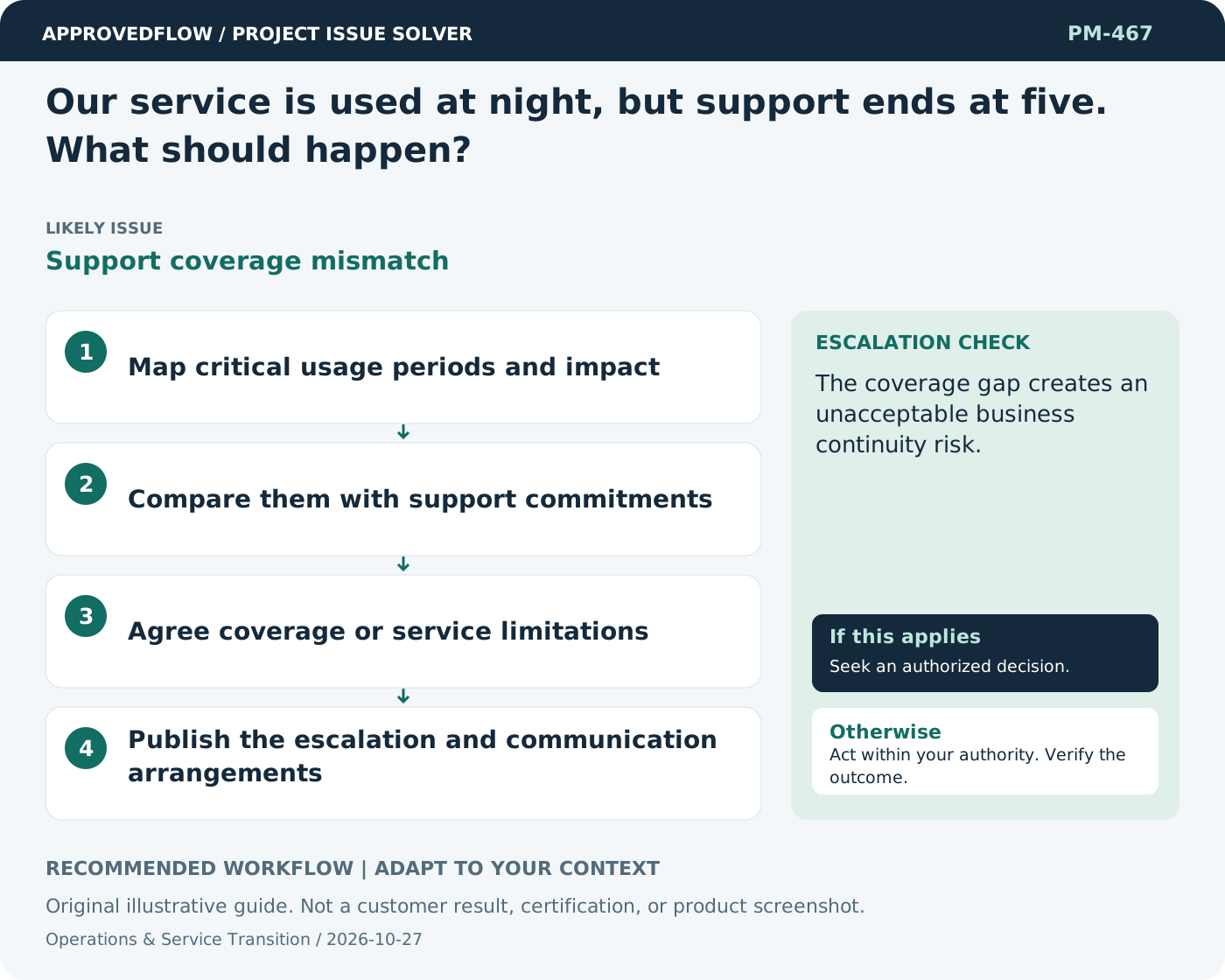
When to escalate
The coverage gap creates an unacceptable business continuity risk.
The service owner and authorized operational decision maker
Example
A weekend training portal receives a defined on-call escalation for critical access failures.
Mistake to avoid
Using the phrase always available while no responder is assigned after hours.
Prevent a repeat
Test whether receiving teams can operate and recover the service without depending on informal project-team support.
Suggested ApprovedFlow setup
- Tasks
- Documents
- Approvals
Keep handover tasks, operating evidence and the acceptance decision linked to the project while retaining monitoring and incident control in the actual service tools. See the platform
Related cases
- The project goes live next week, but there is no support model. Can we proceed?Incomplete service transition
- Vendor support excludes the integration we depend on. What should we do?Support boundary gap
- A supplier support contract uses hours, but the team thinks it uses days. What should we do?Contract unit misunderstanding
- We have no owner after the AI pilot succeeds. What should happen before launch?Missing AI service ownership