The fallback procedure creates duplicate transactions. How do we avoid that?
Uncontrolled outage reconciliationDesign the fallback and recovery process together. Use identifiable records, clear ownership, and reconciliation checks to prevent duplicate or missing entries when service resumes. Ask the business owner to approve how conflicts and uncertain transactions are resolved.
What to do now
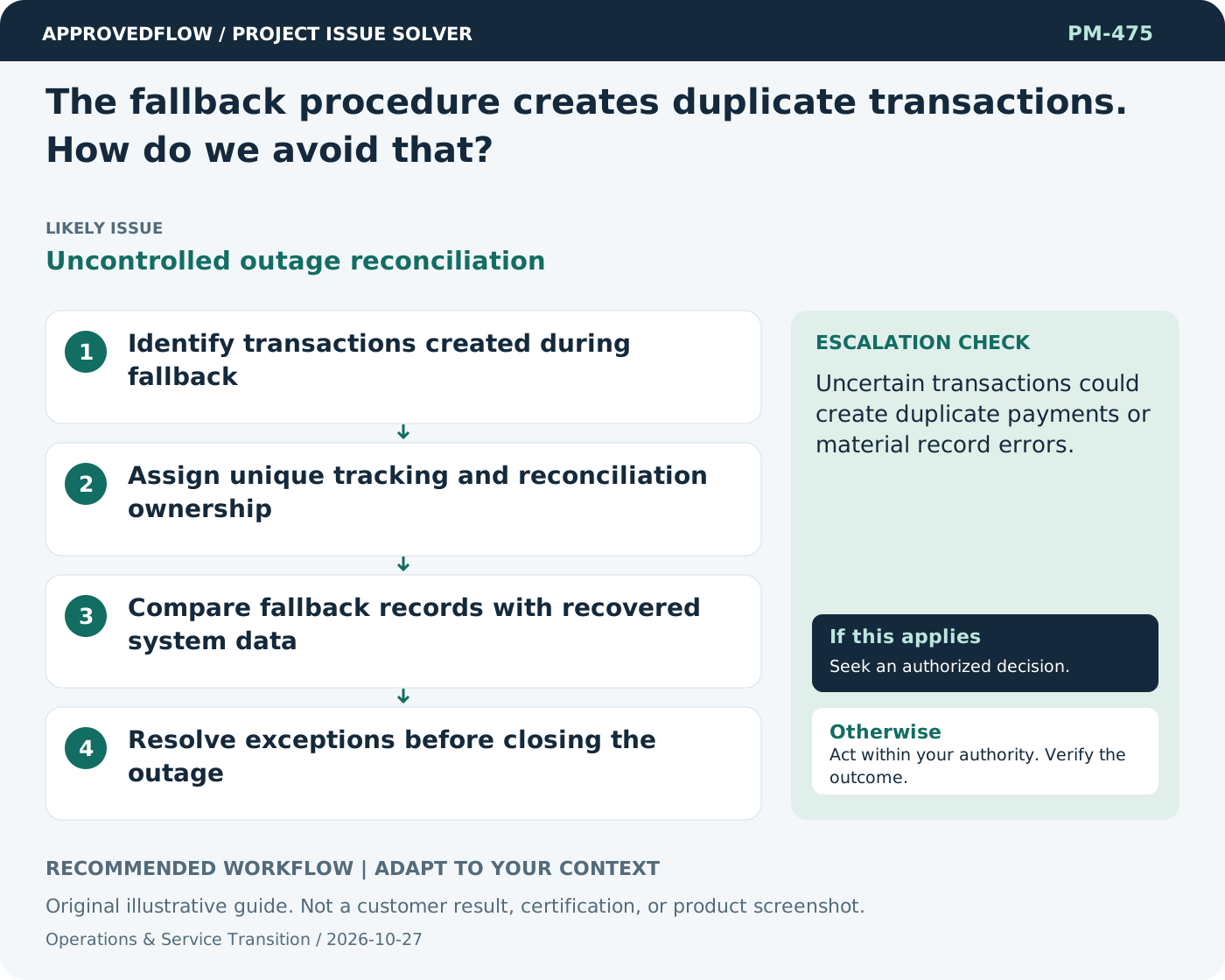
- Identify transactions created during fallback
- Assign unique tracking and reconciliation ownership
- Compare fallback records with recovered system data
- Resolve exceptions before closing the outage
When to escalate
Uncertain transactions could create duplicate payments or material record errors.
The service owner and authorized operational decision maker
Example
The team verifies each queued request before resubmitting it after connectivity returns.
Mistake to avoid
Re-entering every outage-period transaction without checking whether it already succeeded.
Prevent a repeat
Test whether receiving teams can operate and recover the service without depending on informal project-team support.
Suggested ApprovedFlow setup
- Tasks
- Documents
- Approvals
Keep handover tasks, operating evidence and the acceptance decision linked to the project while retaining monitoring and incident control in the actual service tools. See the platform
Related cases
- Monitoring shows servers are healthy, but users cannot complete transactions. Why?Infrastructure-only service monitoring
- We are replacing an old service. When can we switch it off?Unverified retirement readiness
- Several projects claim the same savings. How do we avoid double counting?Duplicate benefit attribution
- The risk response itself creates a new risk. What should we record?Secondary risk