We are replacing an old service. When can we switch it off?
Unverified retirement readinessConfirm that required users, records, integrations, and support responsibilities have moved or have an approved alternative. Consider retention, access, communication, and recovery requirements with the appropriate owners. Retire the service through a documented decision, not merely because the replacement launched.
What to do now
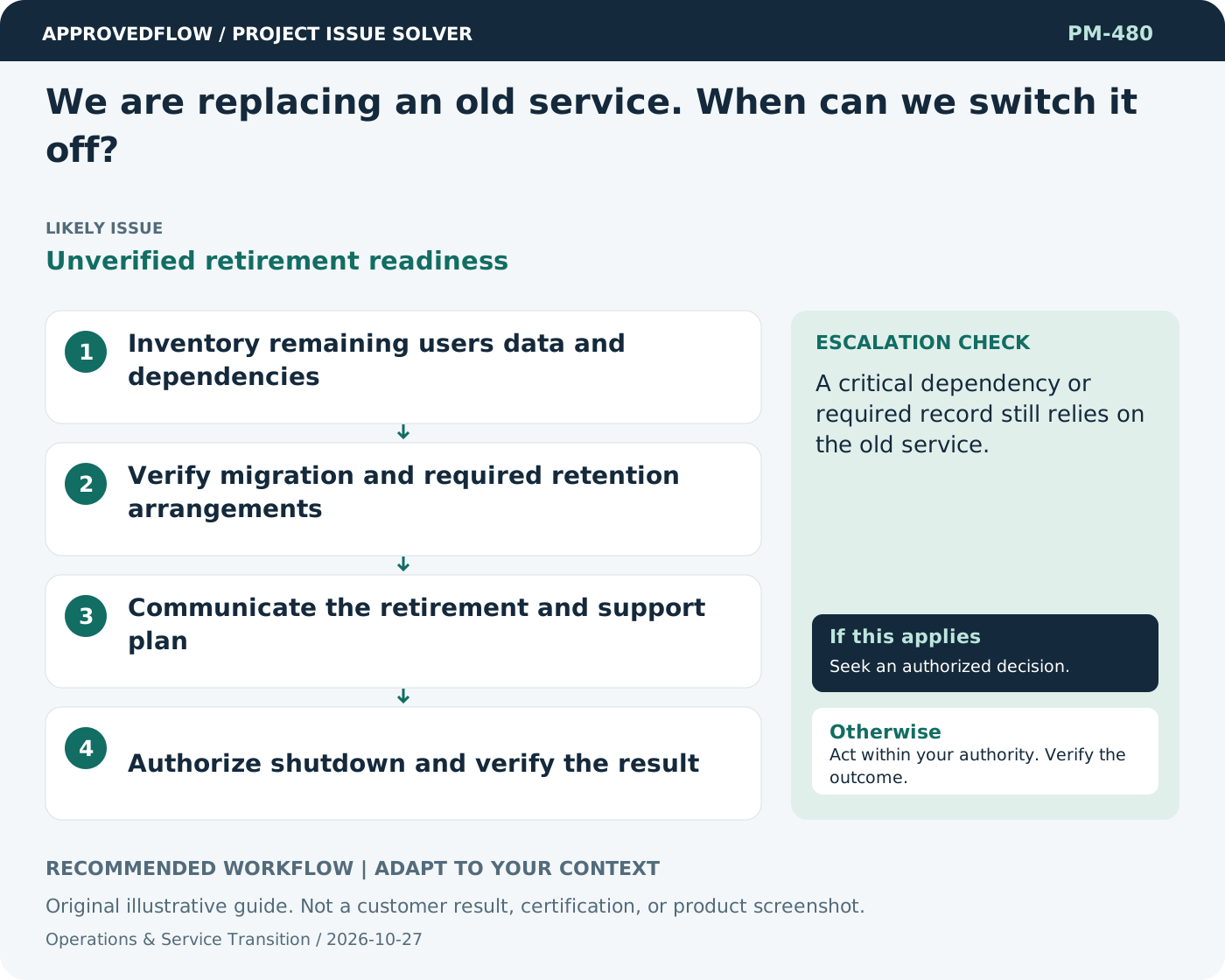
- Inventory remaining users data and dependencies
- Verify migration and required retention arrangements
- Communicate the retirement and support plan
- Authorize shutdown and verify the result
When to escalate
A critical dependency or required record still relies on the old service.
The service owner and authorized operational decision maker
Example
A legacy portal remains read-only until record access and downstream exports are verified.
Mistake to avoid
Deleting the old environment immediately after the new launch announcement.
Prevent a repeat
Test whether receiving teams can operate and recover the service without depending on informal project-team support.
Suggested ApprovedFlow setup
- Tasks
- Documents
- Approvals
Keep handover tasks, operating evidence and the acceptance decision linked to the project while retaining monitoring and incident control in the actual service tools. See the platform
Related cases
- The recovery exercise was skipped to save time. How should I report readiness?Unverified recovery readiness
- New employees cannot get access without contacting the old project team. What is missing?Incomplete access-service transition
- We are replacing a system. Must we reproduce every old feature?Uncritical legacy scope
- Users say the old way was better. How should I investigate?Unverified loss of practical value