Users say the old way was better. How should I investigate?
Unverified loss of practical valueAsk users to demonstrate the old and new versions of the same task. Compare completion time, errors, visibility, and exceptions, then determine which differences matter. Some resistance may reflect familiarity, but some may reveal a genuine regression that deserves correction.
What to do now
- Observe a representative task both ways
- Compare outcomes and points of friction
- Separate learning needs from real regressions
- Fix the important gaps and retest
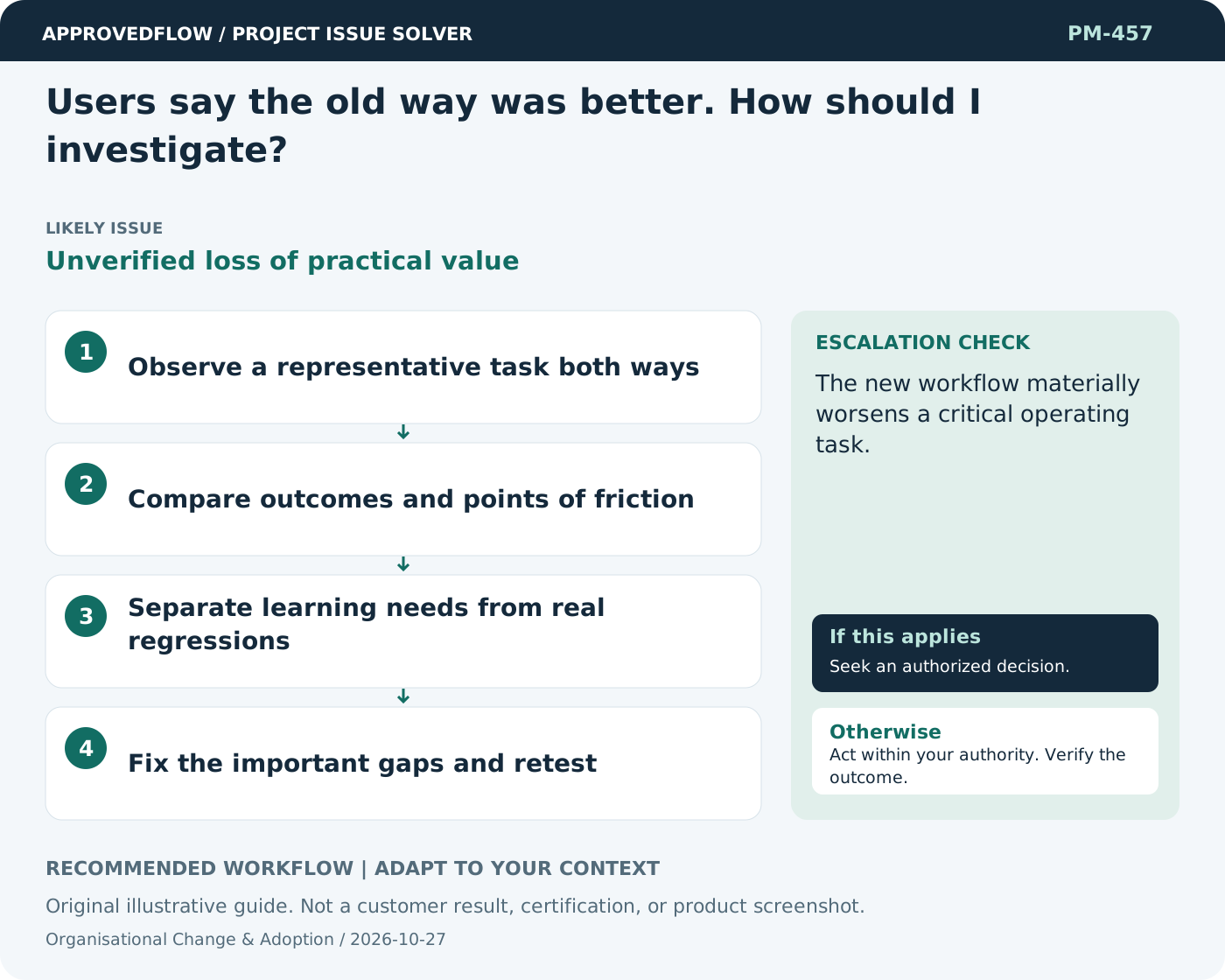
When to escalate
The new workflow materially worsens a critical operating task.
The business process owner and change sponsor
Example
The new screen requires extra navigation to locate pending approvals, so the team restores a direct list.
Mistake to avoid
Dismissing every comparison with the old system as nostalgia.
Prevent a repeat
Measure successful use of the intended workflow and resolve recurring barriers instead of relying only on attendance or logins.
Suggested ApprovedFlow setup
- Tasks
- Documents
- Resources
Assign role-specific readiness and feedback actions, keep reviewed job aids with the project, and record accepted operating responsibilities. See the platform
Related cases
- We launched the system, but staff still use spreadsheets. Why?Unresolved adoption barriers
- Training attendance was high, but users still cannot finish tasks. What now?Training activity mistaken for readiness
- We are replacing an old service. When can we switch it off?Unverified retirement readiness
- The requirements say the system must be user friendly. How can we test that?Untestable requirement