Our issue priorities change depending on who complains. How can we be fair?
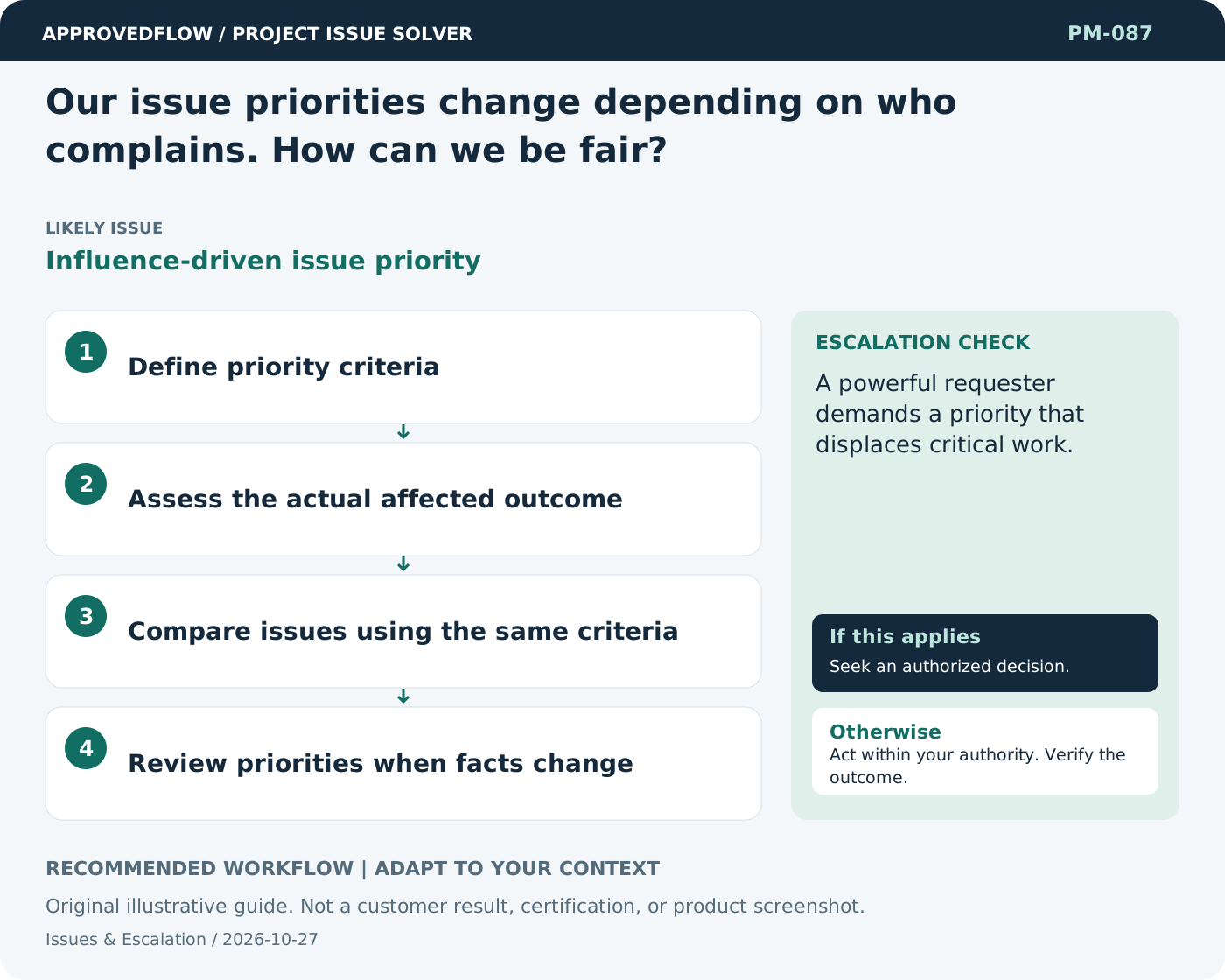
Influence-driven issue priorityUse a shared assessment of impact, urgency, affected users, and recovery options. Keep the evidence visible so priority reflects consequences rather than the loudest stakeholder.
What to do now
- Define priority criteria
- Assess the actual affected outcome
- Compare issues using the same criteria
- Review priorities when facts change
When to escalate
Escalate when
A powerful requester demands a priority that displaces critical work.
Who decides
The issue owner or delegated decision authority
Example
A widespread transaction failure takes precedence over a senior user's cosmetic display request.
Mistake to avoid
Equating seniority of the complainant with severity of the problem.
Prevent a repeat
Track unresolved decision age and verify the outcome before treating an issue as closed.
Suggested ApprovedFlow setup
- Tasks
- Documents
- Approvals
Record the issue and next action on an owned task, attach evidence, and route the unresolved decision to the proper authority. See the platform
Related cases
- How do we distinguish an issue from a change request?Resolution-versus-baseline decision
- We log issues, but none get closed. What should change?Issue tracking without resolution
- A feature is popular with executives but not users. How do we evaluate it?Influence-driven product value
- How do we decide which tests to automate first?Automation priority