How do we distinguish an issue from a change request?
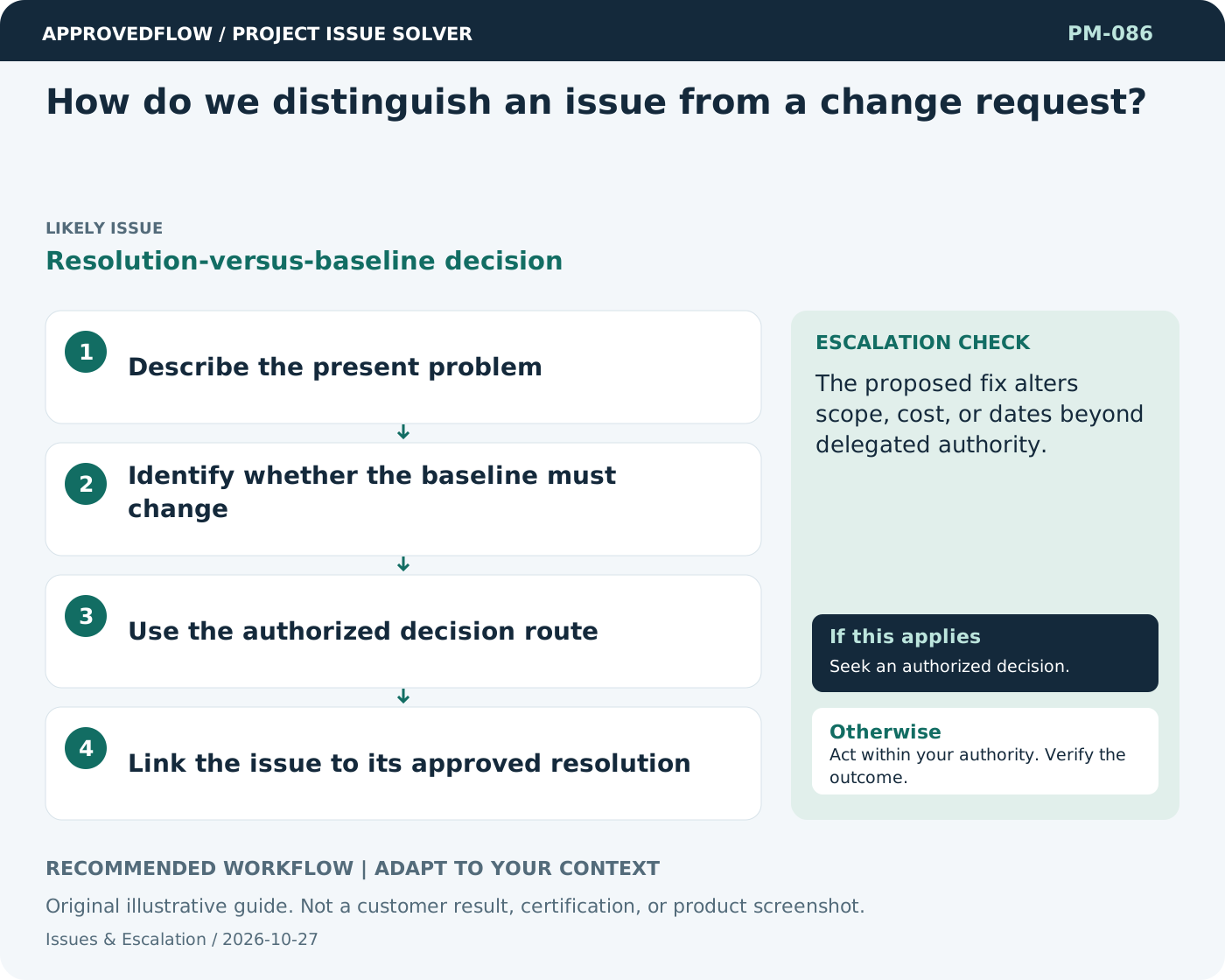
Resolution-versus-baseline decisionAn issue describes a current problem; a change request proposes altering an agreed baseline. Resolving an issue may require a change, so link the records without treating them as interchangeable.
What to do now
- Describe the present problem
- Identify whether the baseline must change
- Use the authorized decision route
- Link the issue to its approved resolution
When to escalate
Escalate when
The proposed fix alters scope, cost, or dates beyond delegated authority.
Who decides
The issue owner or delegated decision authority
Example
A failed test is an issue; adopting a different design to resolve it may require an approved change.
Mistake to avoid
Implementing a baseline change under the label of issue resolution.
Prevent a repeat
Track unresolved decision age and verify the outcome before treating an issue as closed.
Suggested ApprovedFlow setup
- Tasks
- Documents
- Approvals
Record the issue and next action on an owned task, attach evidence, and route the unresolved decision to the proper authority. See the platform
Related cases
- We log issues, but none get closed. What should change?Issue tracking without resolution
- The same issue keeps reopening. What are we doing wrong?Symptom-only resolution
- The client wants every request treated as a defect. How do we distinguish changes?Defect-versus-change ambiguity
- How do we distinguish a clarification from a scope change?Requirement interpretation boundary