A fixed-scope contract conflicts with continuous user feedback. How do we manage it?
Commercial-learning mismatchUse feedback to validate delivery and identify changes, while preserving the contract's agreed boundaries. Involve commercial owners in any change to how scope, price, or acceptance is managed.
What to do now
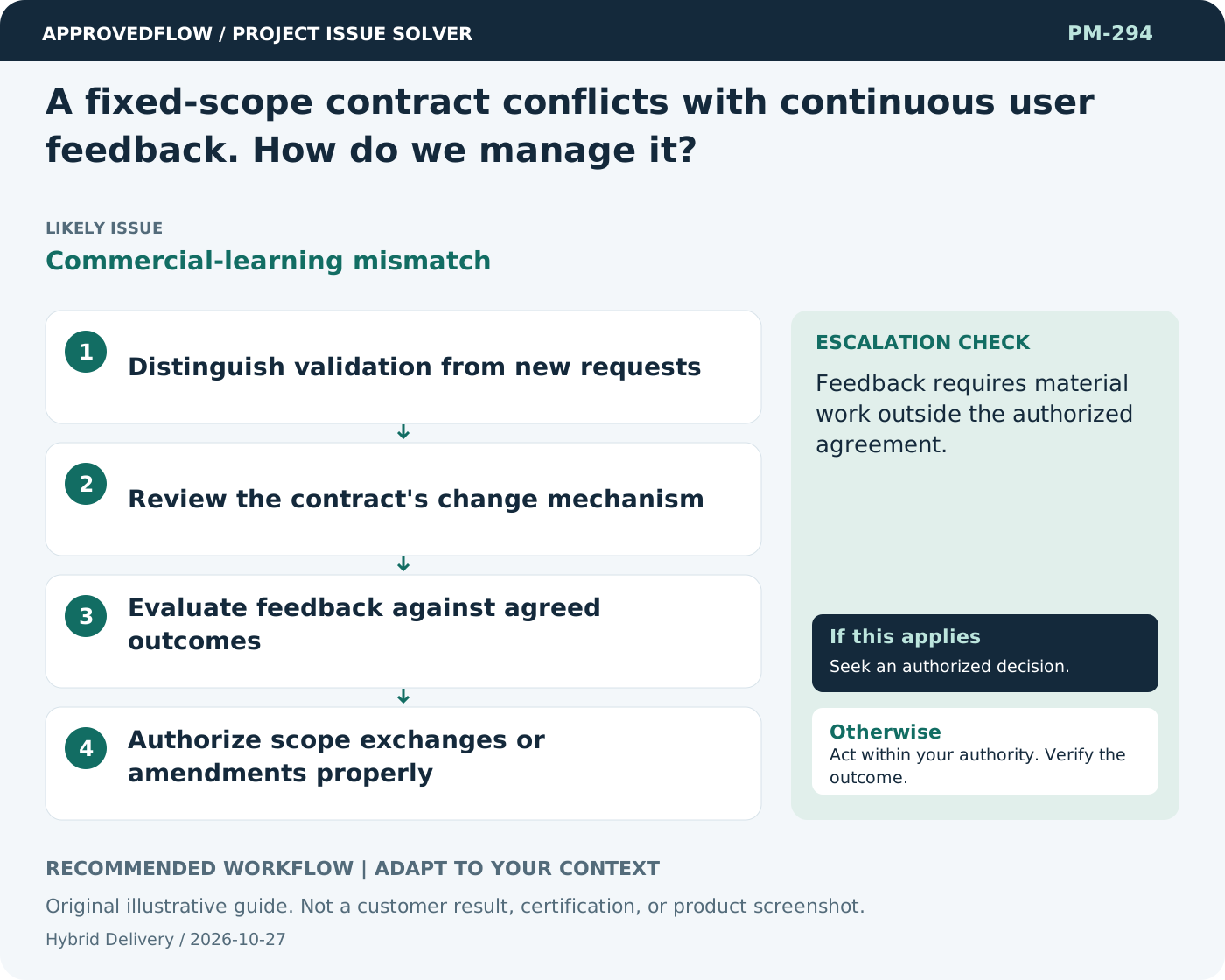
- Distinguish validation from new requests
- Review the contract's change mechanism
- Evaluate feedback against agreed outcomes
- Authorize scope exchanges or amendments properly
When to escalate
Escalate when
Feedback requires material work outside the authorized agreement.
Who decides
The delivery owner and relevant governance authority
Example
A usability finding corrects an agreed workflow, while a new module follows a separate commercial decision.
Mistake to avoid
Assuming agile workshops override contractual scope.
Prevent a repeat
Check whether governance decisions use real delivery evidence rather than forcing incompatible reporting rituals.
Suggested ApprovedFlow setup
- Projects
- Tasks
- Documents
- Approvals
Keep decision milestones and iterative task work connected, with explicit evidence required at each approved gate. See the platform
Related cases
- How do we manage fixed regulatory dates with iterative delivery?Fixed-date adaptive planning
- Agile teams work iteratively, but governance demands a fixed detailed plan. How can both work?Planning-level mismatch
- How do we manage changes in a fixed-price contract?Commercial change boundary
- The vendor contract is still open after delivery. Who should close it?Unfinished commercial closeout