Agile teams work iteratively, but governance demands a fixed detailed plan. How can both work?
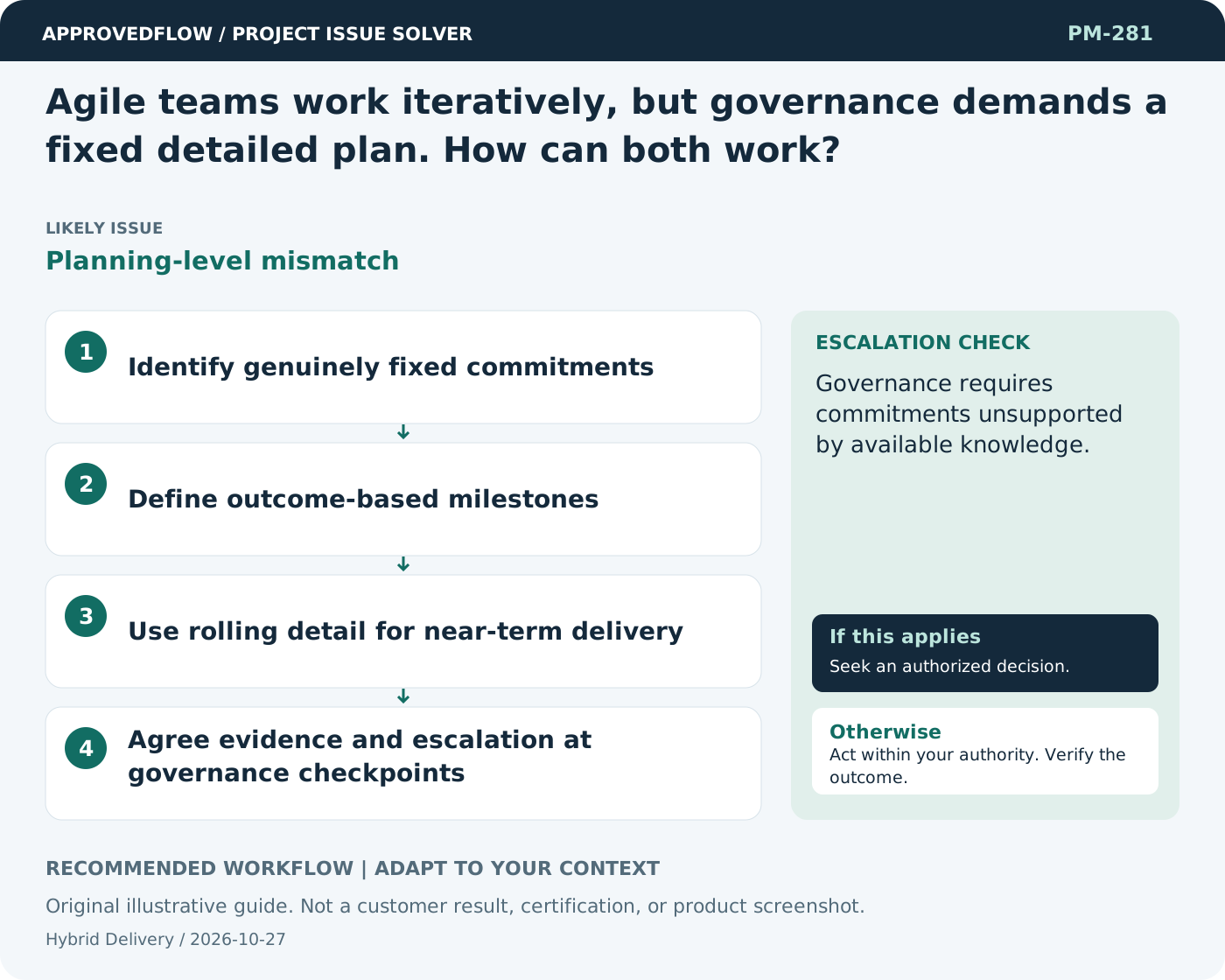
Planning-level mismatchSeparate stable outcomes and investment boundaries from evolving delivery detail. Governance can review evidence and forecasts without pretending every future task is known at the start.
What to do now
- Identify genuinely fixed commitments
- Define outcome-based milestones
- Use rolling detail for near-term delivery
- Agree evidence and escalation at governance checkpoints
When to escalate
Escalate when
Governance requires commitments unsupported by available knowledge.
Who decides
The delivery owner and relevant governance authority
Example
A program tracks approved release outcomes while teams refine the work needed for the next delivery period.
Mistake to avoid
Maintaining a fictional detailed plan solely for approval meetings.
Prevent a repeat
Check whether governance decisions use real delivery evidence rather than forcing incompatible reporting rituals.
Suggested ApprovedFlow setup
- Projects
- Tasks
- Documents
- Approvals
Keep decision milestones and iterative task work connected, with explicit evidence required at each approved gate. See the platform
Related cases
- How do we manage fixed regulatory dates with iterative delivery?Fixed-date adaptive planning
- A fixed-scope contract conflicts with continuous user feedback. How do we manage it?Commercial-learning mismatch
- How do we plan capacity for unpredictable incidents?Variable demand planning
- The resource plan is monthly, but tasks change daily. How should they connect?Planning-granularity mismatch