How do we manage changes in a fixed-price contract?
Commercial change boundaryKeep delivery impact and contractual authorization aligned. Involve the authorized commercial owner before committing to additional work, and avoid interpreting disputed terms without qualified advice.
What to do now
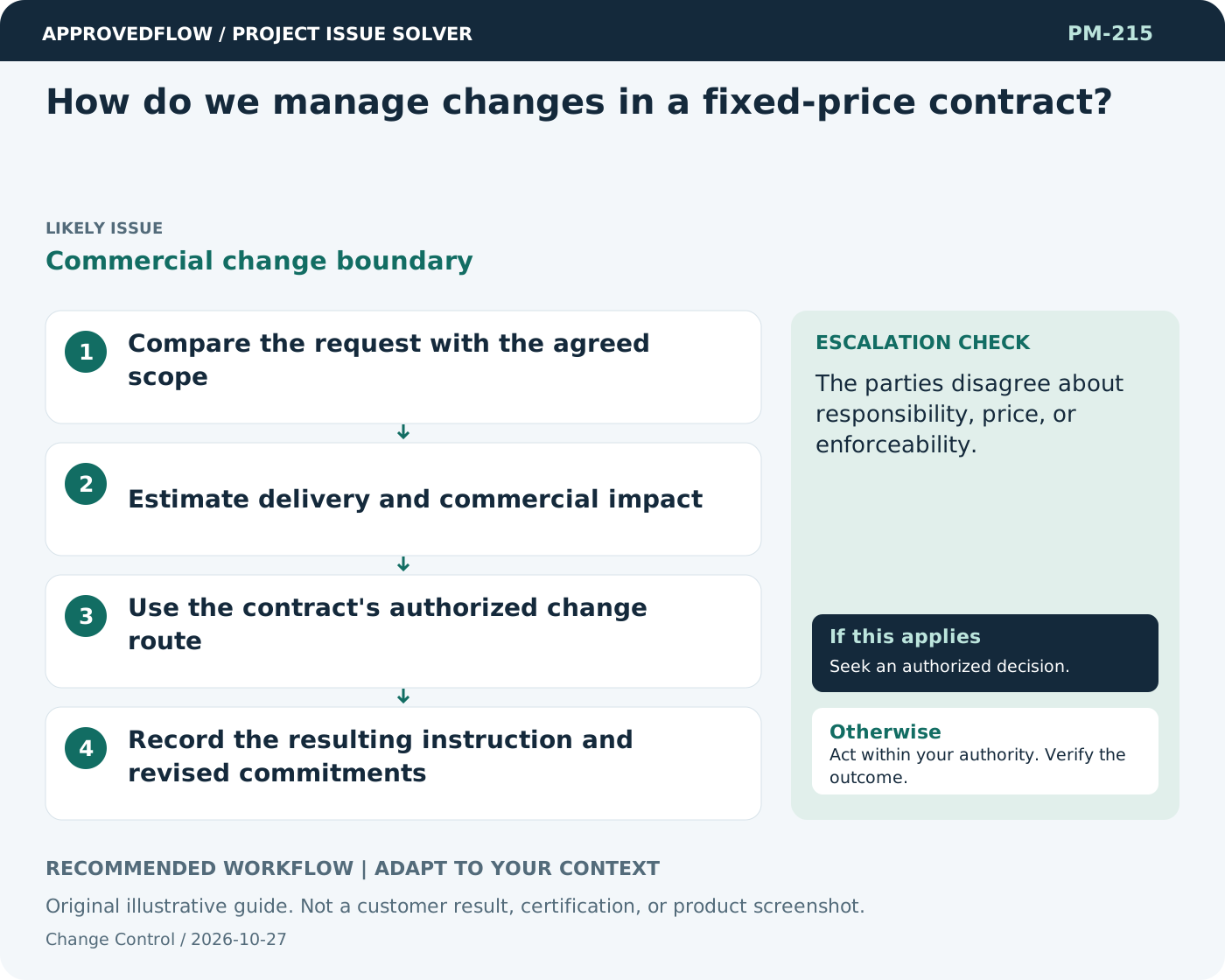
- Compare the request with the agreed scope
- Estimate delivery and commercial impact
- Use the contract's authorized change route
- Record the resulting instruction and revised commitments
When to escalate
Escalate when
The parties disagree about responsibility, price, or enforceability.
Who decides
The authorized change decision maker
Example
A requested extra workshop is costed and authorized through the agreed contract-change process.
Mistake to avoid
Relying on informal technical agreement as a commercial amendment.
Prevent a repeat
Compare delivered changes with authorized decisions and keep the current baseline distinguishable from earlier versions.
Suggested ApprovedFlow setup
- Documents
- Approvals
- Tasks
Keep the change request, impact assessment and recorded decision together; update affected tasks only after the appropriate authorization. See the platform
Related cases
- People implement changes before approval. How do we regain control?Unauthorized baseline change
- How do we distinguish a clarification from a scope change?Requirement interpretation boundary
- A fixed-scope contract conflicts with continuous user feedback. How do we manage it?Commercial-learning mismatch
- The vendor contract is still open after delivery. Who should close it?Unfinished commercial closeout