How do we keep change control lightweight for a small team?
Proportionate change recordingUse a compact record and clear delegated boundaries instead of eliminating control. The team still needs to know what changed, why, who decided, and what work was displaced.
What to do now
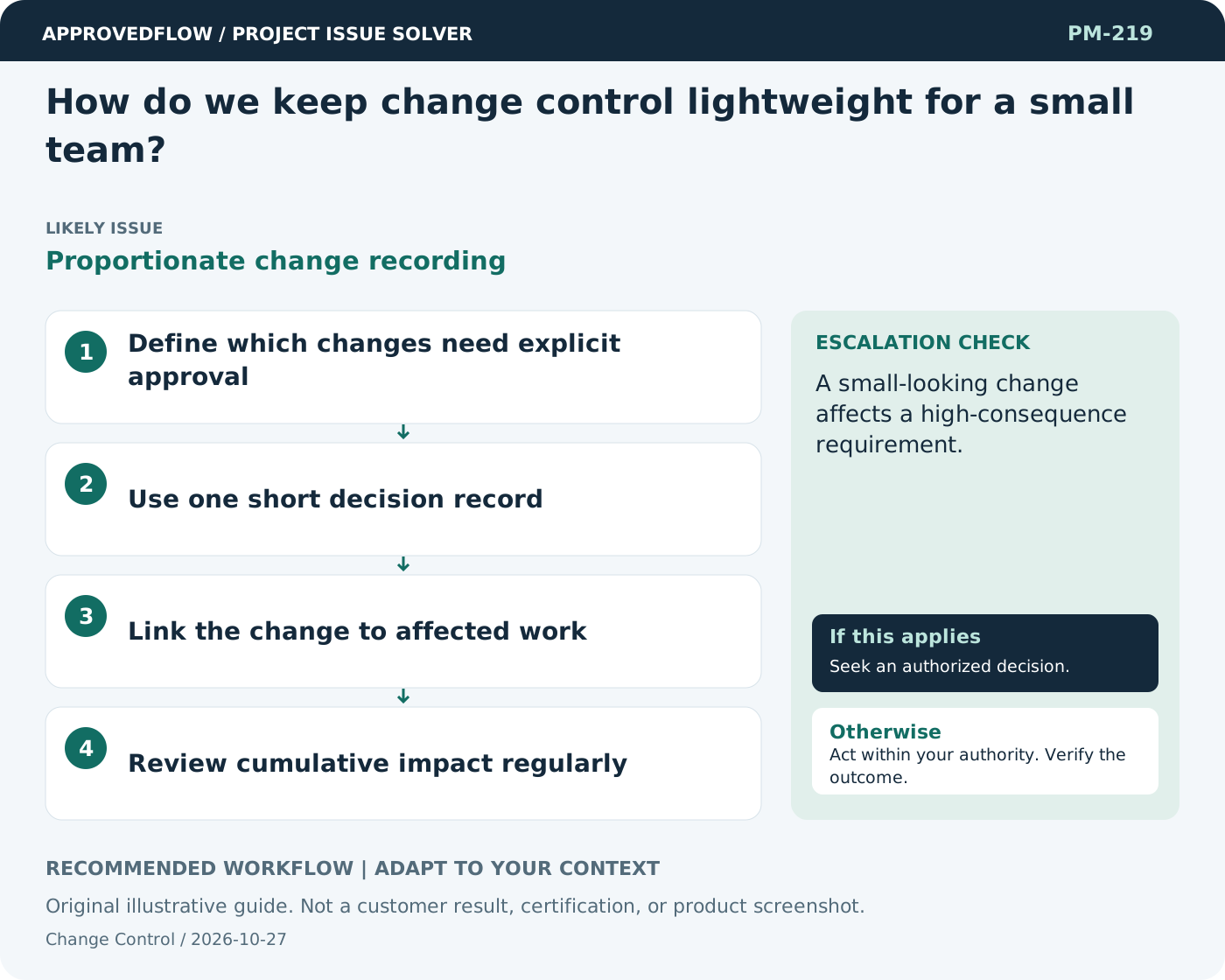
- Define which changes need explicit approval
- Use one short decision record
- Link the change to affected work
- Review cumulative impact regularly
When to escalate
Escalate when
A small-looking change affects a high-consequence requirement.
Who decides
The authorized change decision maker
Example
A two-person team records scope exchanges in a shared decision log rather than creating a committee.
Mistake to avoid
Assuming a small team cannot create a large uncontrolled commitment.
Prevent a repeat
Compare delivered changes with authorized decisions and keep the current baseline distinguishable from earlier versions.
Suggested ApprovedFlow setup
- Documents
- Approvals
- Tasks
Keep the change request, impact assessment and recorded decision together; update affected tasks only after the appropriate authorization. See the platform
Related cases
- How do we manage changes in a fixed-price contract?Commercial change boundary
- A change affects another project. Who coordinates it?Cross-project change impact
- How can a small organization get value from a PMO without hiring a large team?Lightweight portfolio coordination
- We keep approving expenses without project context. What should change?Uncontrolled expense attribution