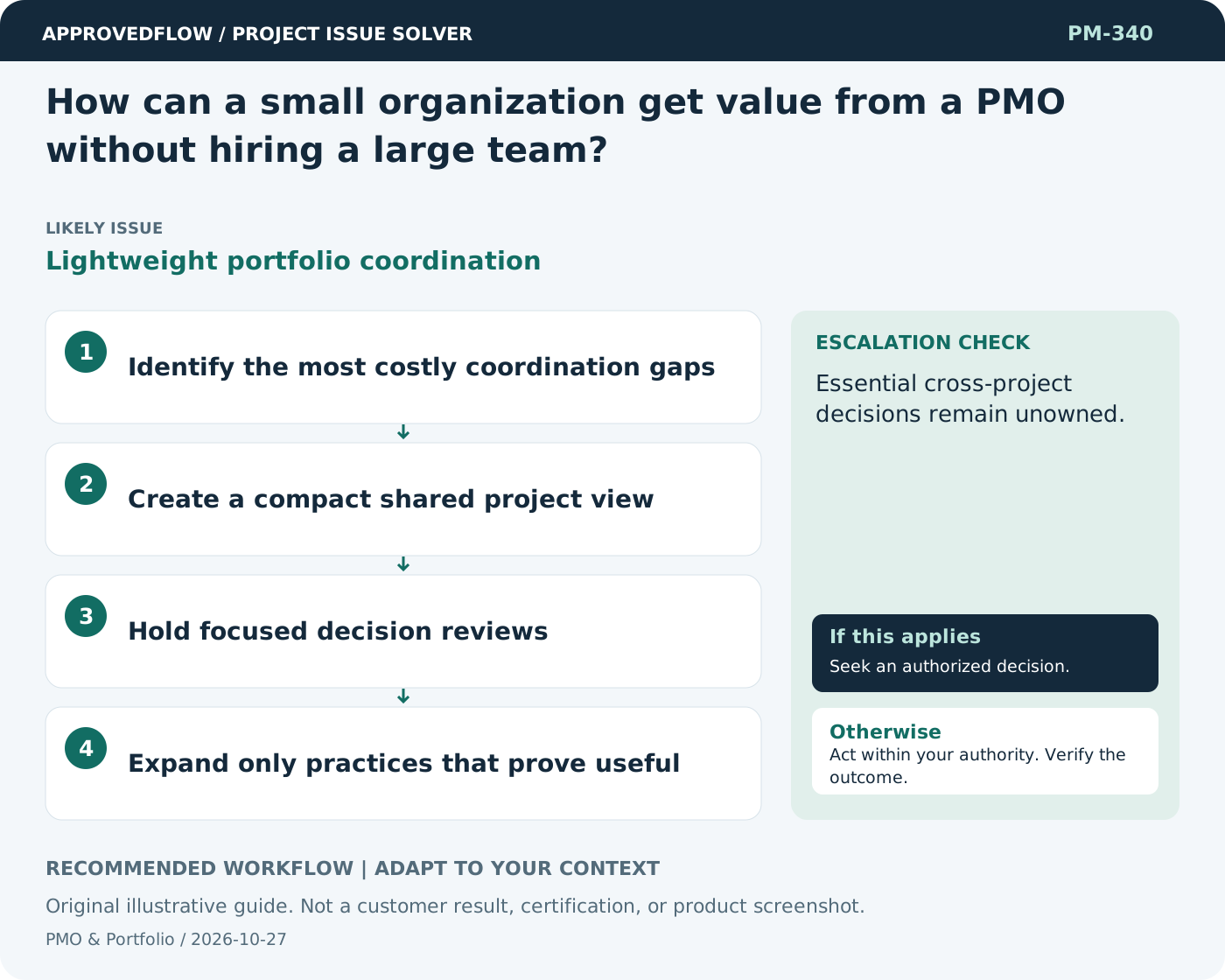
How can a small organization get value from a PMO without hiring a large team?
Lightweight portfolio coordinationStart with a few useful shared practices: visible intake, priorities, ownership, capacity, and decisions. Assign responsibility within the existing structure rather than creating an administrative layer first.
What to do now
- Identify the most costly coordination gaps
- Create a compact shared project view
- Hold focused decision reviews
- Expand only practices that prove useful
When to escalate
Escalate when
Essential cross-project decisions remain unowned.
Who decides
The portfolio decision authority
Example
A small organization uses one monthly portfolio review and a maintained project register.
Mistake to avoid
Buying a complex PMO tool before agreeing how decisions will be made.
Prevent a repeat
Review whether active commitments fit available capacity and current priorities rather than just tracking project counts.
Suggested ApprovedFlow setup
- Projects
- Resources
- Documents
- Approvals
Use project and capacity records to support portfolio decisions, then record approved priorities and consequences explicitly. See the platform
Related cases
- A small project blocks a major program. How should priority change?Dependency-based portfolio priority
- Our PMO collects reports but adds little value. What should it focus on?Administrative PMO without decisions
- How do we keep change control lightweight for a small team?Proportionate change recording
- The PMO asks for earned value on an evolving backlog. What should we consider?Measurement-method mismatch