The change board is a bottleneck. What should we delegate?
Overcentralized change authorityDelegate bounded low-risk decisions where the organization permits it, while retaining review for consequential changes. Define eligibility and evidence clearly so delegation does not become uncontrolled approval.
What to do now
- Analyze common change types and delays
- Identify reversible low-consequence changes
- Agree delegated limits and evidence
- Audit exceptions and adjust the boundary
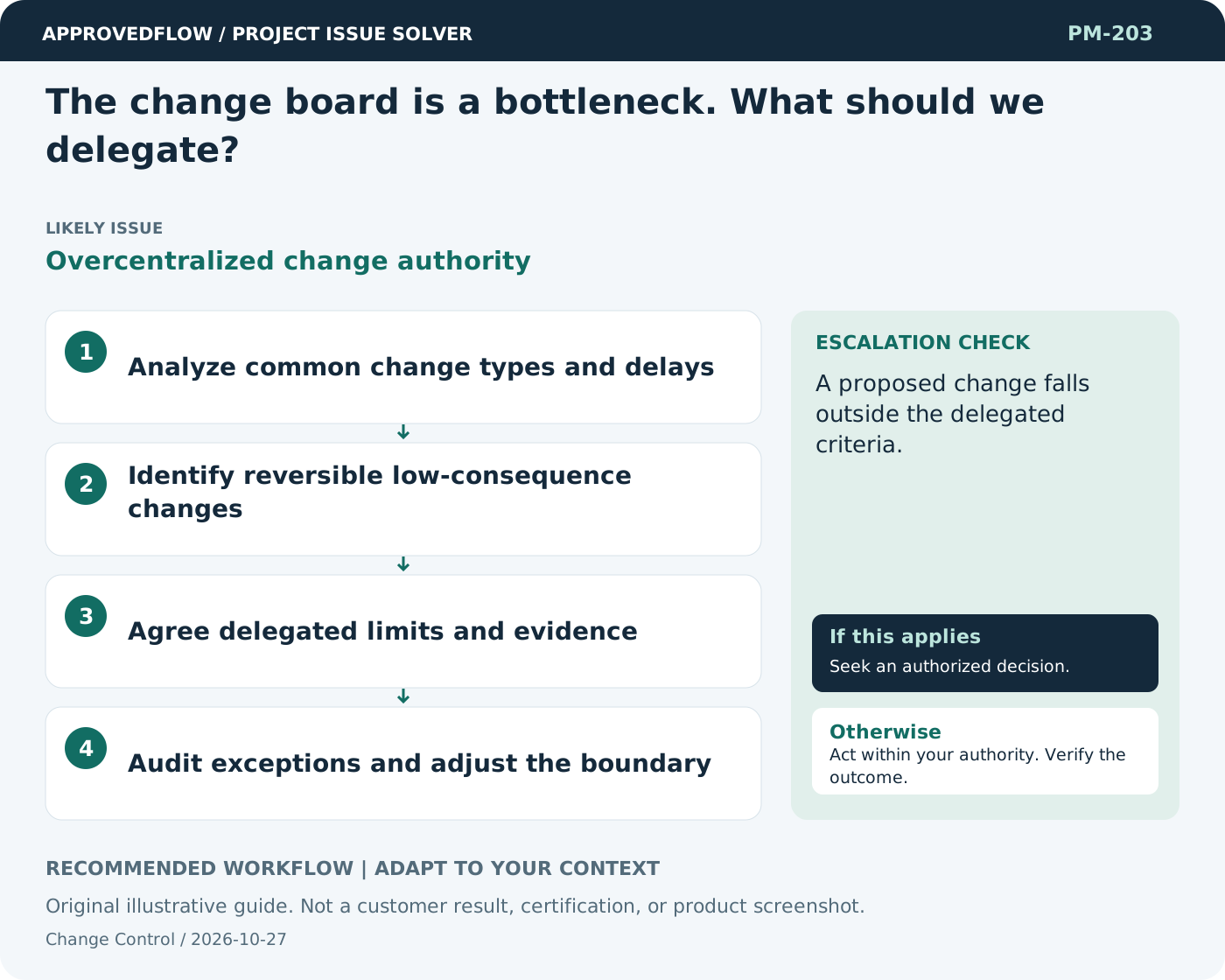
When to escalate
A proposed change falls outside the delegated criteria.
The authorized change decision maker
Example
Routine text corrections use a simple delegated route, while workflow changes affecting financial controls receive fuller review.
Mistake to avoid
Giving blanket approval to all small-looking changes.
Prevent a repeat
Compare delivered changes with authorized decisions and keep the current baseline distinguishable from earlier versions.
Suggested ApprovedFlow setup
- Documents
- Approvals
- Tasks
Keep the change request, impact assessment and recorded decision together; update affected tasks only after the appropriate authorization. See the platform
Related cases
- A sponsor approves scope but not the extra budget. What should we do?Unfunded change approval
- The change request has no owner after approval. Who is responsible?Unassigned change implementation
- The sponsor is unavailable when we need approval. What should we establish?Unavailable decision authority
- How should delegated approval authority be reviewed?Stale delegation