Training attendance was high, but users still cannot finish tasks. What now?
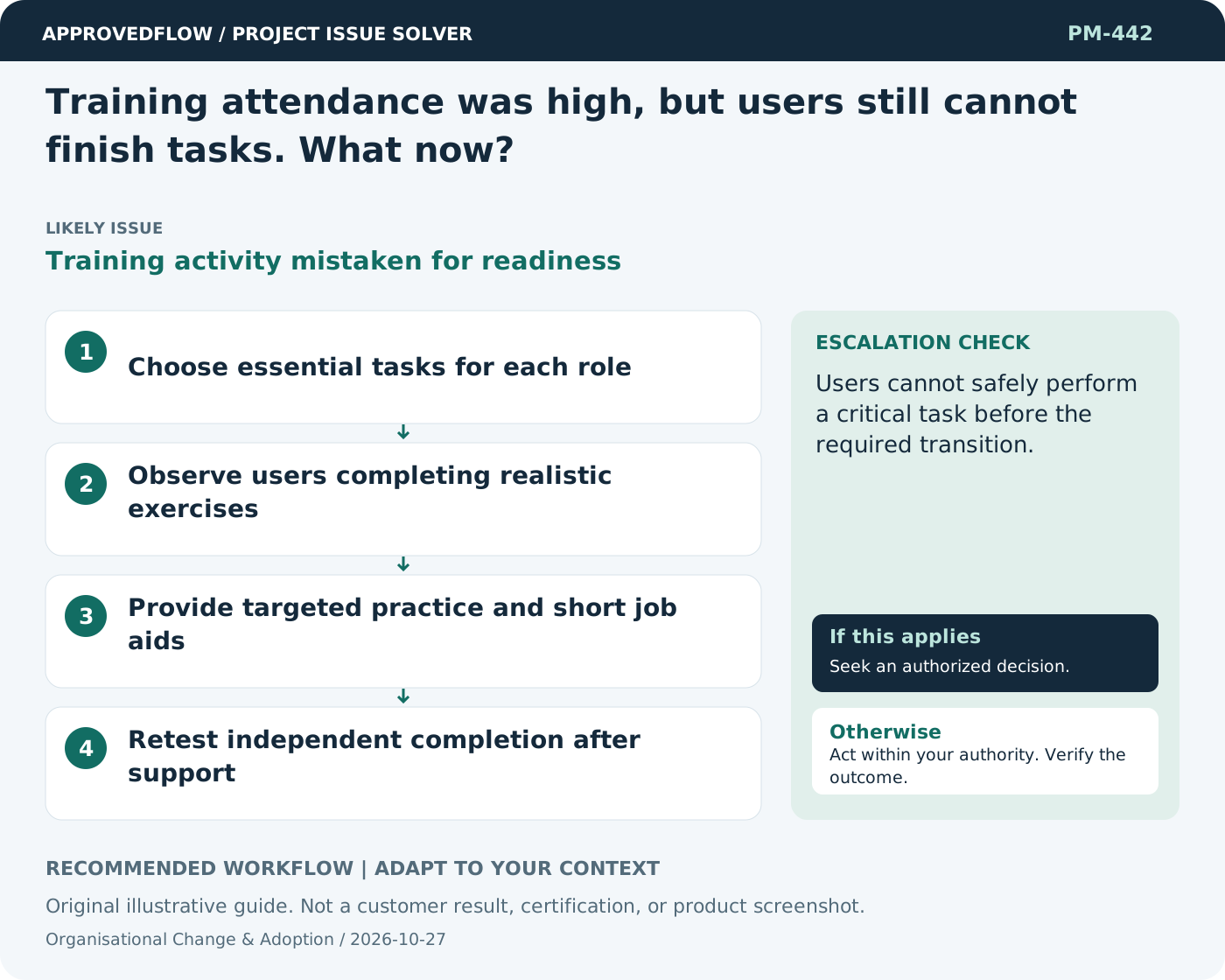
Training activity mistaken for readinessAssess whether users can complete their role's real tasks, including exceptions. Replace passive demonstrations with guided practice and usable help. Track task completion and recurring errors so the training changes address actual gaps rather than increasing attendance numbers.
What to do now
- Choose essential tasks for each role
- Observe users completing realistic exercises
- Provide targeted practice and short job aids
- Retest independent completion after support
When to escalate
Users cannot safely perform a critical task before the required transition.
The business process owner and change sponsor
Example
Approvers practice returning an incomplete request instead of only watching a slide presentation.
Mistake to avoid
Reporting attendance as proof of competence.
Prevent a repeat
Measure successful use of the intended workflow and resolve recurring barriers instead of relying only on attendance or logins.
Suggested ApprovedFlow setup
- Tasks
- Documents
- Resources
Assign role-specific readiness and feedback actions, keep reviewed job aids with the project, and record accepted operating responsibilities. See the platform
Related cases
- Our policy still describes the old workflow. Can training solve that?Policy and operating process mismatch
- Our training is in English, but many users work in Arabic. How should we plan it?Language mismatch in adoption support
- How do we measure PMO effectiveness?PMO activity-versus-outcome confusion
- How can we tell whether stakeholder engagement is working?Activity-focused engagement measures