A stakeholder resists the project but will not explain why. What should I do?
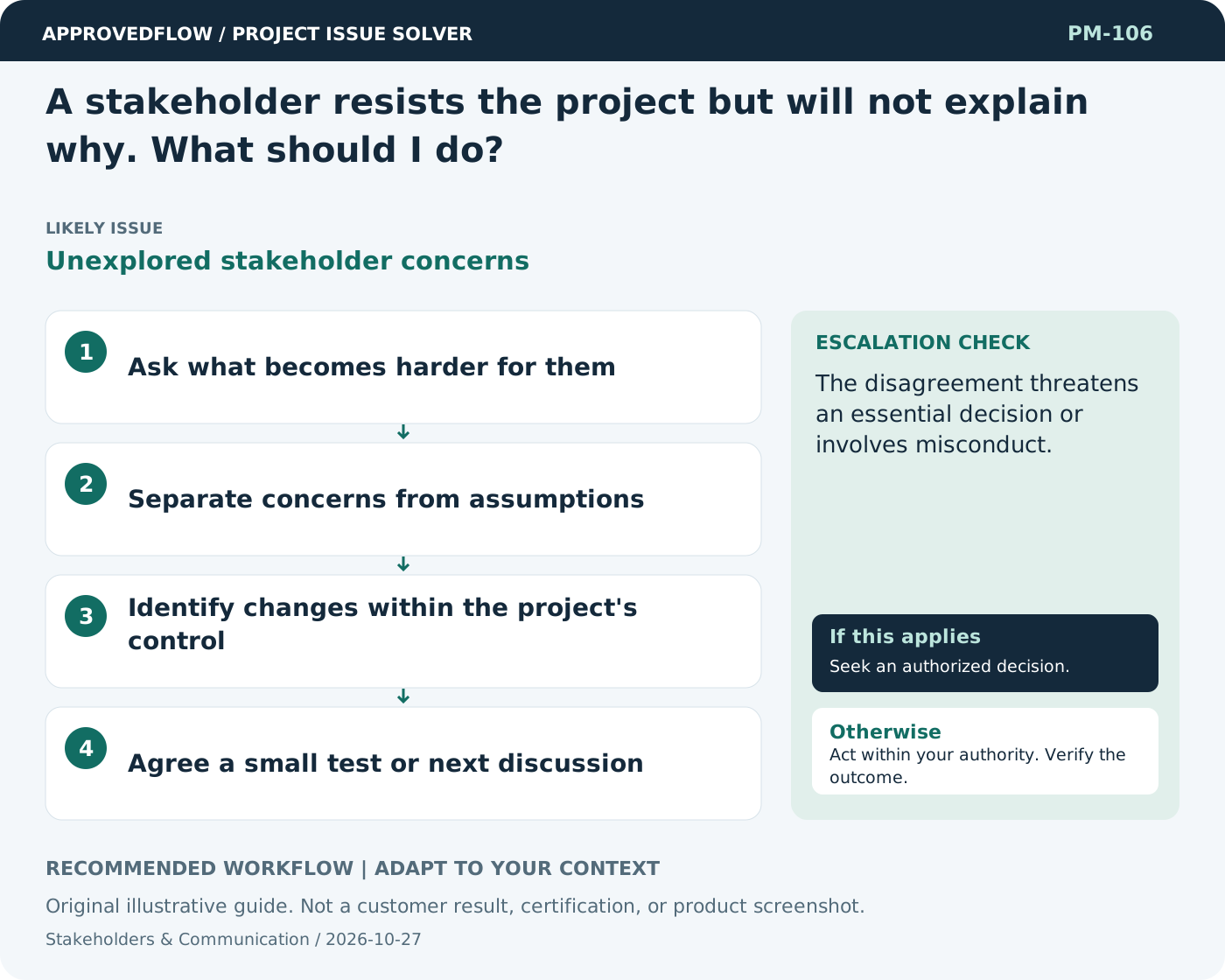
Unexplored stakeholder concernsSeek a private, non-defensive conversation about impact, incentives, and practical barriers. Resistance may reveal a valid concern, competing workload, or loss of control rather than simple unwillingness.
What to do now
- Ask what becomes harder for them
- Separate concerns from assumptions
- Identify changes within the project's control
- Agree a small test or next discussion
When to escalate
Escalate when
The disagreement threatens an essential decision or involves misconduct.
Who decides
The stakeholder decision owner and project sponsor
Example
A manager's resistance reduces after the team addresses an unplanned support workload created by the new process.
Mistake to avoid
Labeling the person difficult before understanding the consequences for them.
Prevent a repeat
Check stakeholder understanding at important decisions rather than counting messages sent.
Suggested ApprovedFlow setup
- Projects
- Documents
- Approvals
Keep stakeholder decisions and supporting records with the project and assign follow-up actions to named owners. See the platform
Related cases
- A key stakeholder says they were never consulted. How should I respond?Stakeholder engagement gap
- How can we tell whether stakeholder engagement is working?Activity-focused engagement measures
- A department manager refuses to adopt the new process. How should I respond?Unresolved local accountability concerns
- Our business case assumes savings that nobody can explain. Should we accept it?Unsupported benefit assumptions