We have many defects but no severity agreement. How do we prioritize?
Inconsistent defect severityAgree severity according to impact on users, data, safety, and required outcomes, and distinguish it from scheduling priority. Apply the criteria consistently with appropriate specialists.
What to do now
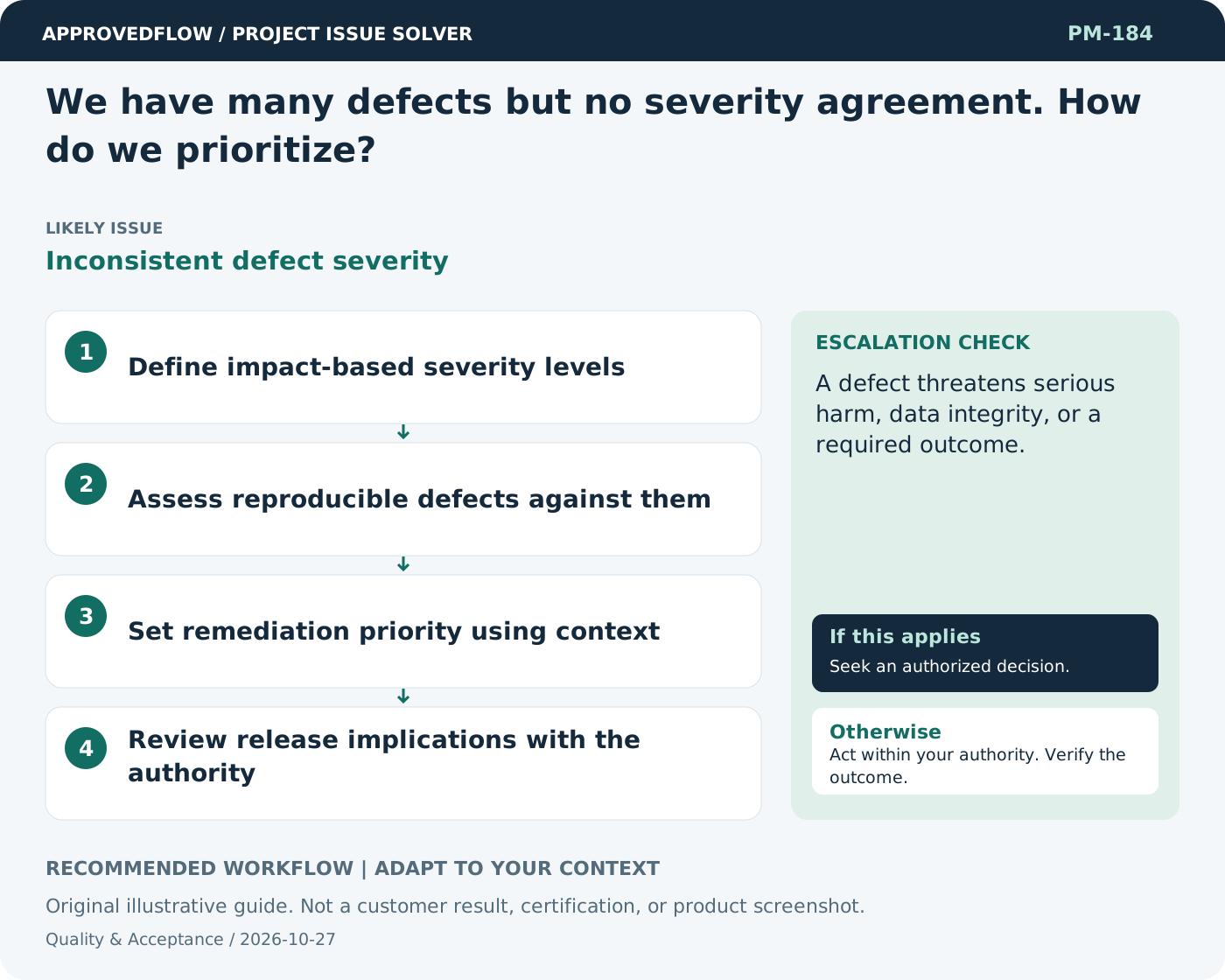
- Define impact-based severity levels
- Assess reproducible defects against them
- Set remediation priority using context
- Review release implications with the authority
When to escalate
Escalate when
A defect threatens serious harm, data integrity, or a required outcome.
Who decides
The acceptance authority and relevant quality owner
Example
A wrong financial total receives different treatment from a cosmetic alignment issue.
Mistake to avoid
Letting whoever reports a defect assign its final severity unchallenged.
Prevent a repeat
Check that closure evidence proves the agreed outcome instead of relying only on a completion percentage.
Suggested ApprovedFlow setup
- Tasks
- Documents
- Approvals
Attach acceptance criteria and test evidence to the deliverable or task, then record the authorized review decision. See the platform
Related cases
- Quality reviews find the same defects repeatedly. How do we improve prevention?Repeated defect causes
- Can we launch with known defects?Uncontrolled residual quality exposure
- Should defects always go into the next sprint?Context-free defect prioritization
- The product has many features but poor task completion. What should we prioritize?Feature output over user outcome