Should defects always go into the next sprint?
Context-free defect prioritizationPrioritize defects by consequence, urgency, and the team's obligations, not by a universal calendar rule. Serious incidents may require immediate response through the appropriate process.
What to do now
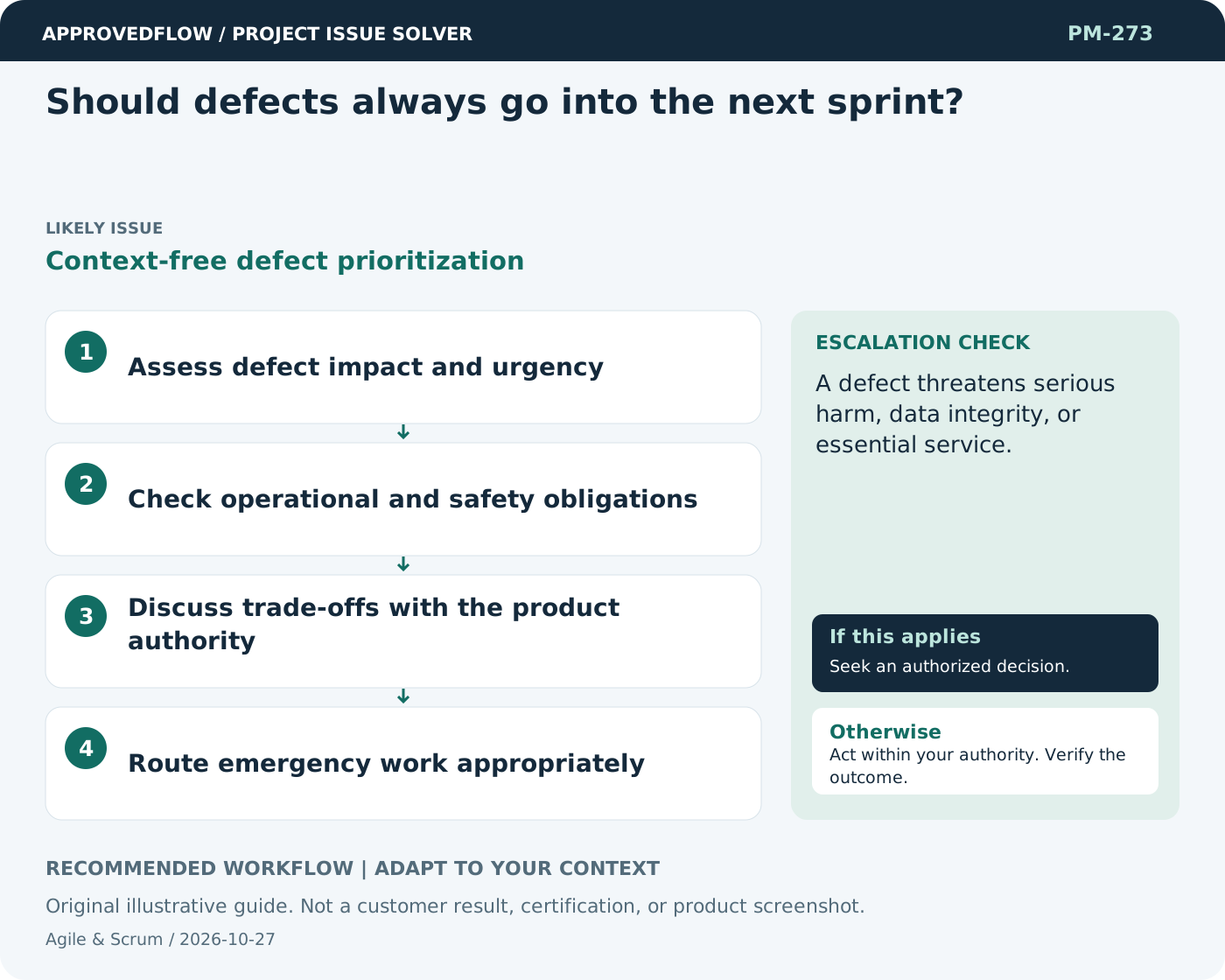
- Assess defect impact and urgency
- Check operational and safety obligations
- Discuss trade-offs with the product authority
- Route emergency work appropriately
When to escalate
Escalate when
A defect threatens serious harm, data integrity, or essential service.
Who decides
The relevant Scrum accountability or delivery owner
Example
A cosmetic defect waits while a transaction-integrity problem receives immediate authorized attention.
Mistake to avoid
Deferring a critical incident merely because the sprint has started.
Prevent a repeat
Inspect useful outcomes and feedback; apply Scrum-specific rules only when the team is actually using Scrum.
Suggested ApprovedFlow setup
- Tasks
- Documents
- Resources
Represent agreed work and evidence with enabled task features; do not imply native Scrum automation or certified Scrum compliance. See the platform
Related cases
- Our sprint review is only a slide presentation. What is missing?Weak product inspection
- We carry unfinished work into every sprint. What should we inspect?Persistent delivery overcommitment
- We have many defects but no severity agreement. How do we prioritize?Inconsistent defect severity
- Quality reviews find the same defects repeatedly. How do we improve prevention?Repeated defect causes