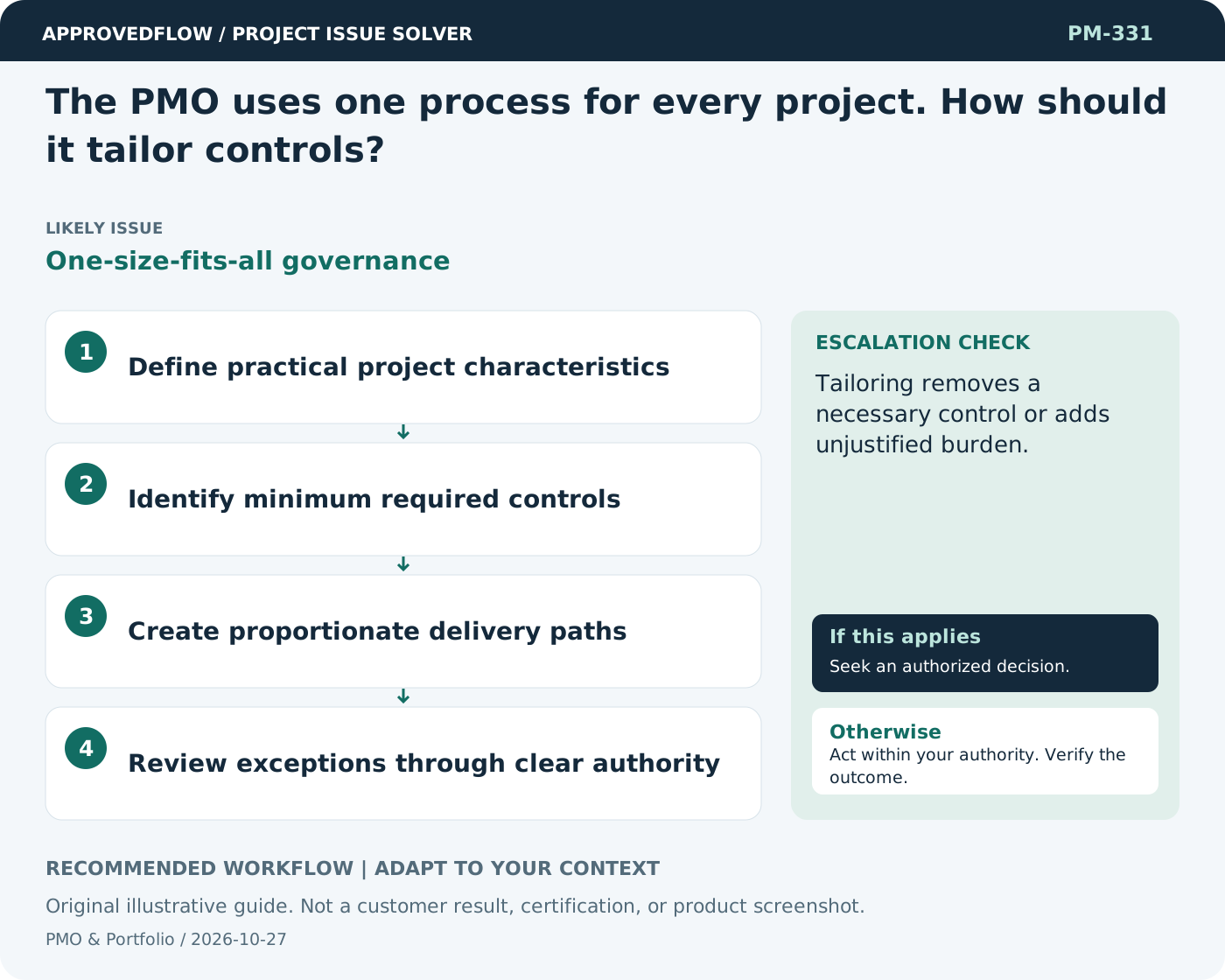
The PMO uses one process for every project. How should it tailor controls?
One-size-fits-all governanceScale controls according to consequence, complexity, uncertainty, and obligations. Small does not always mean low risk, and large does not justify every possible artifact.
What to do now
- Define practical project characteristics
- Identify minimum required controls
- Create proportionate delivery paths
- Review exceptions through clear authority
When to escalate
Escalate when
Tailoring removes a necessary control or adds unjustified burden.
Who decides
The portfolio decision authority
Example
A small security-sensitive change receives stronger assurance than a larger low-risk content update.
Mistake to avoid
Using budget size as the only measure of project risk.
Prevent a repeat
Review whether active commitments fit available capacity and current priorities rather than just tracking project counts.
Suggested ApprovedFlow setup
- Projects
- Resources
- Documents
- Approvals
Use project and capacity records to support portfolio decisions, then record approved priorities and consequences explicitly. See the platform
Related cases
- Every project is marked strategic. How do we prioritize meaningfully?Unselective strategic classification
- How do we measure PMO effectiveness?PMO activity-versus-outcome confusion
- Can one project use different methods in different workstreams?Tailored delivery coordination
- The team rates every risk as high. How can we prioritize?Undifferentiated risk assessment