Our runbook is long, but operators cannot use it. What should we change?
Untested operational documentationValidate the runbook by asking an operator unfamiliar with its authoring to perform a representative task in a safe environment. Replace background-heavy prose with clear prerequisites, actions, checks, and escalation boundaries. Keep ownership and review dates visible.
What to do now
- Select critical operating tasks
- Test instructions with an actual operator
- Correct missing prerequisites and ambiguous steps
- Assign maintenance ownership and review triggers
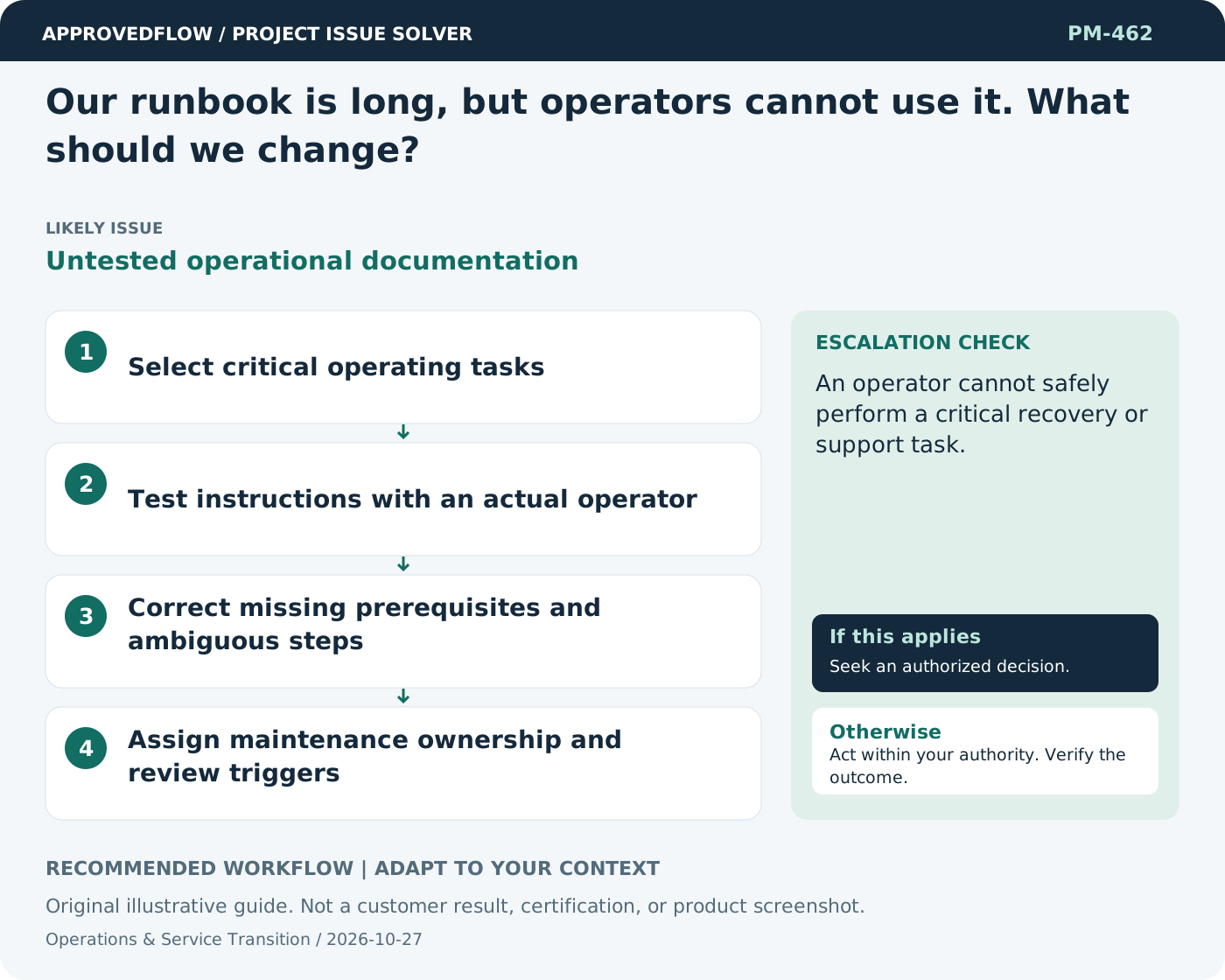
When to escalate
An operator cannot safely perform a critical recovery or support task.
The service owner and authorized operational decision maker
Example
A restart procedure is rewritten to include the health check that confirms recovery actually worked.
Mistake to avoid
Measuring runbook quality by page count.
Prevent a repeat
Test whether receiving teams can operate and recover the service without depending on informal project-team support.
Suggested ApprovedFlow setup
- Tasks
- Documents
- Approvals
Keep handover tasks, operating evidence and the acceptance decision linked to the project while retaining monitoring and incident control in the actual service tools. See the platform
Related cases
- Operations rejects the handover pack. How do we resolve it?Unagreed handover acceptance criteria
- The service level target sounds impressive but cannot be measured. What should change?Undefined service-level measurement
- We cannot tell whether this is a project or routine operational work. How should we organize it?Unclear work classification
- How do we validate a new project dashboard before launch?Untested management information