Who owns releases after the project developers leave?
Missing ongoing release ownershipAssign responsibility for change assessment, testing, deployment, approval, and recovery in the operating model. Ensure the receiving team has access, skills, and maintained instructions. A code handover without a workable release process leaves the service dependent on departed contributors.
What to do now
- Map the release and recovery activities
- Assign qualified ongoing owners
- Transfer access and test the release process
- Record support and approval responsibilities
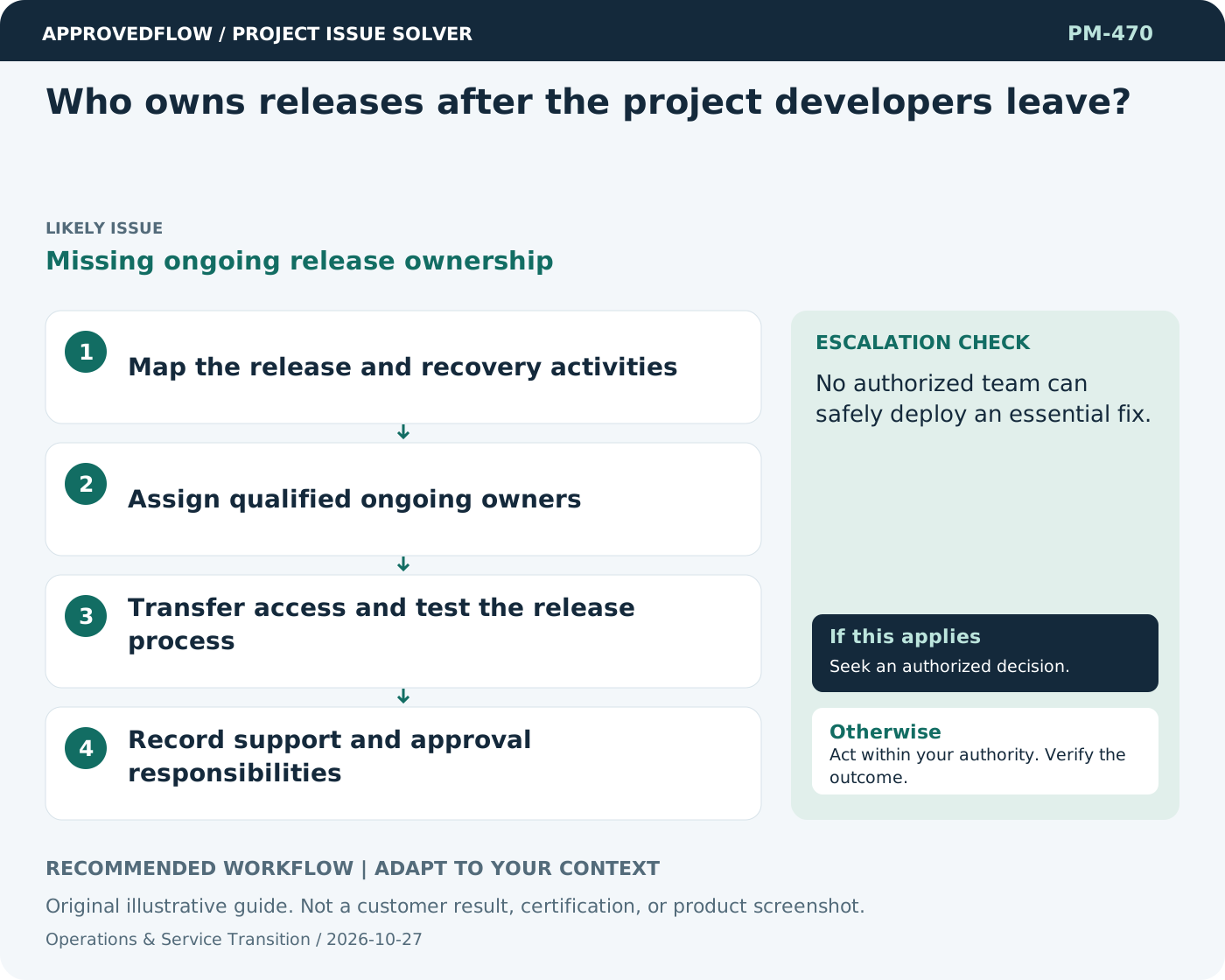
When to escalate
No authorized team can safely deploy an essential fix.
The service owner and authorized operational decision maker
Example
The operations team performs a supervised maintenance release before accepting the release responsibility.
Mistake to avoid
Assuming possession of source code is enough to maintain the service.
Prevent a repeat
Test whether receiving teams can operate and recover the service without depending on informal project-team support.
Suggested ApprovedFlow setup
- Tasks
- Documents
- Approvals
Keep handover tasks, operating evidence and the acceptance decision linked to the project while retaining monitoring and incident control in the actual service tools. See the platform
Related cases
- The operating budget was never included in the project. What now?Unfunded ongoing service cost
- Business data errors continue after launch. Who should fix them?Undefined operational data ownership
- The project ends before its benefits can be measured. Who owns the result?Missing post-project benefits ownership
- The project team owns the process, but will leave soon. Who takes over?Missing enduring process ownership