How do we know whether issue management is improving?
Issue metrics without outcomesMeasure resolution effectiveness as well as speed. Combine aging and response times with reopenings, recurrence, and business impact so fast but ineffective closure is not rewarded.
What to do now
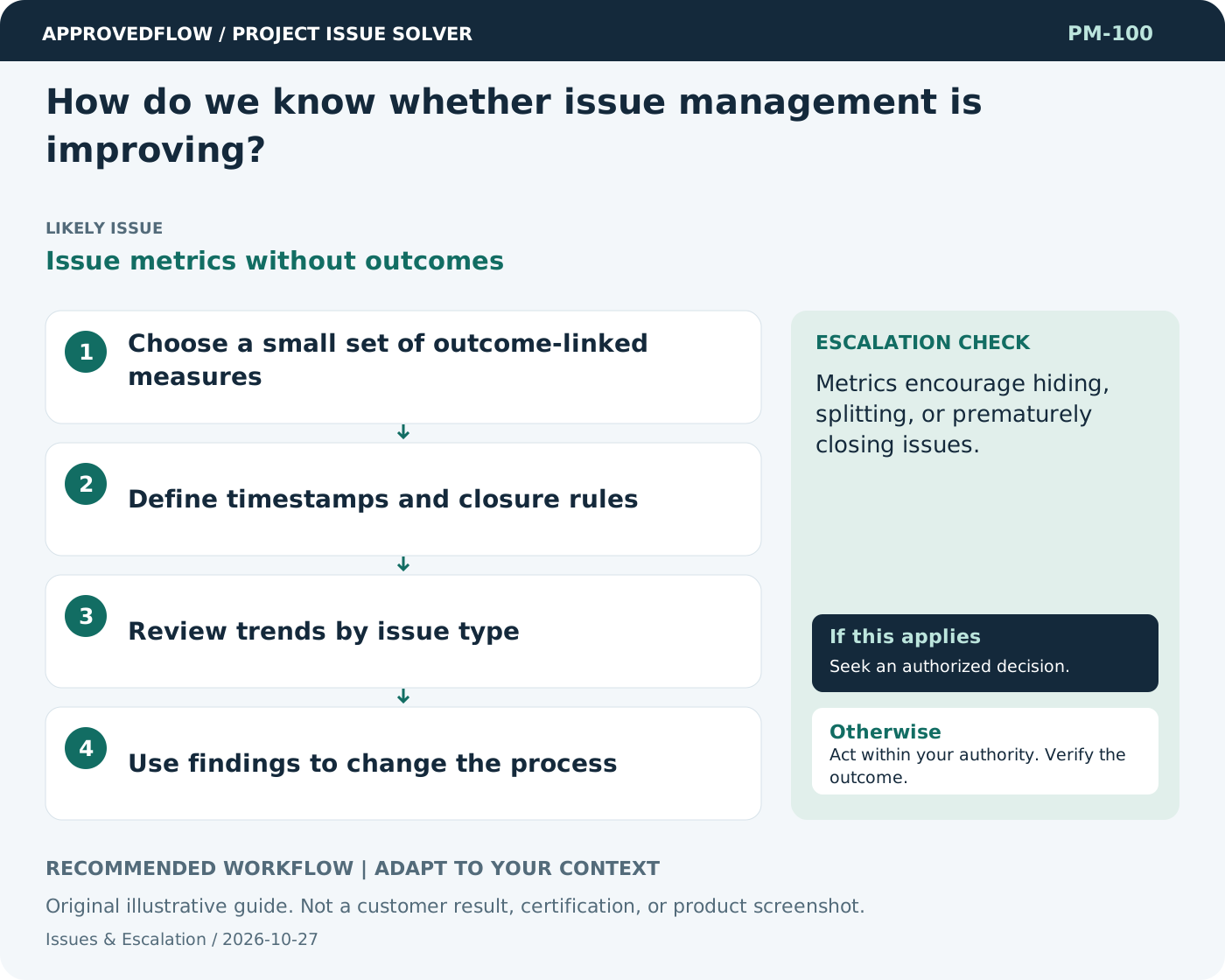
- Choose a small set of outcome-linked measures
- Define timestamps and closure rules
- Review trends by issue type
- Use findings to change the process
When to escalate
Escalate when
Metrics encourage hiding, splitting, or prematurely closing issues.
Who decides
The issue owner or delegated decision authority
Example
A team tracks fewer recurring failures alongside resolution time rather than celebrating a growing closure count.
Mistake to avoid
Treating the number of closed issues as the only success measure.
Prevent a repeat
Track unresolved decision age and verify the outcome before treating an issue as closed.
Suggested ApprovedFlow setup
- Tasks
- Documents
- Approvals
Record the issue and next action on an owned task, attach evidence, and route the unresolved decision to the proper authority. See the platform
Related cases
- Management wants an issue closed before the fix is verified. What should I report?Premature issue closure
- A blocked task has no linked issue. Is that important?Invisible blocker management
- How do I know whether a department is ready for rollout?Unmeasured business readiness
- Management wants an adoption percentage. What should I measure?Ambiguous adoption metric