How do we report a serious issue without alarming everyone?
Unclear incident communicationState what is known, what is not yet known, the current impact, and the next update. Calm communication comes from accuracy and a visible response, not from minimizing the problem.
What to do now
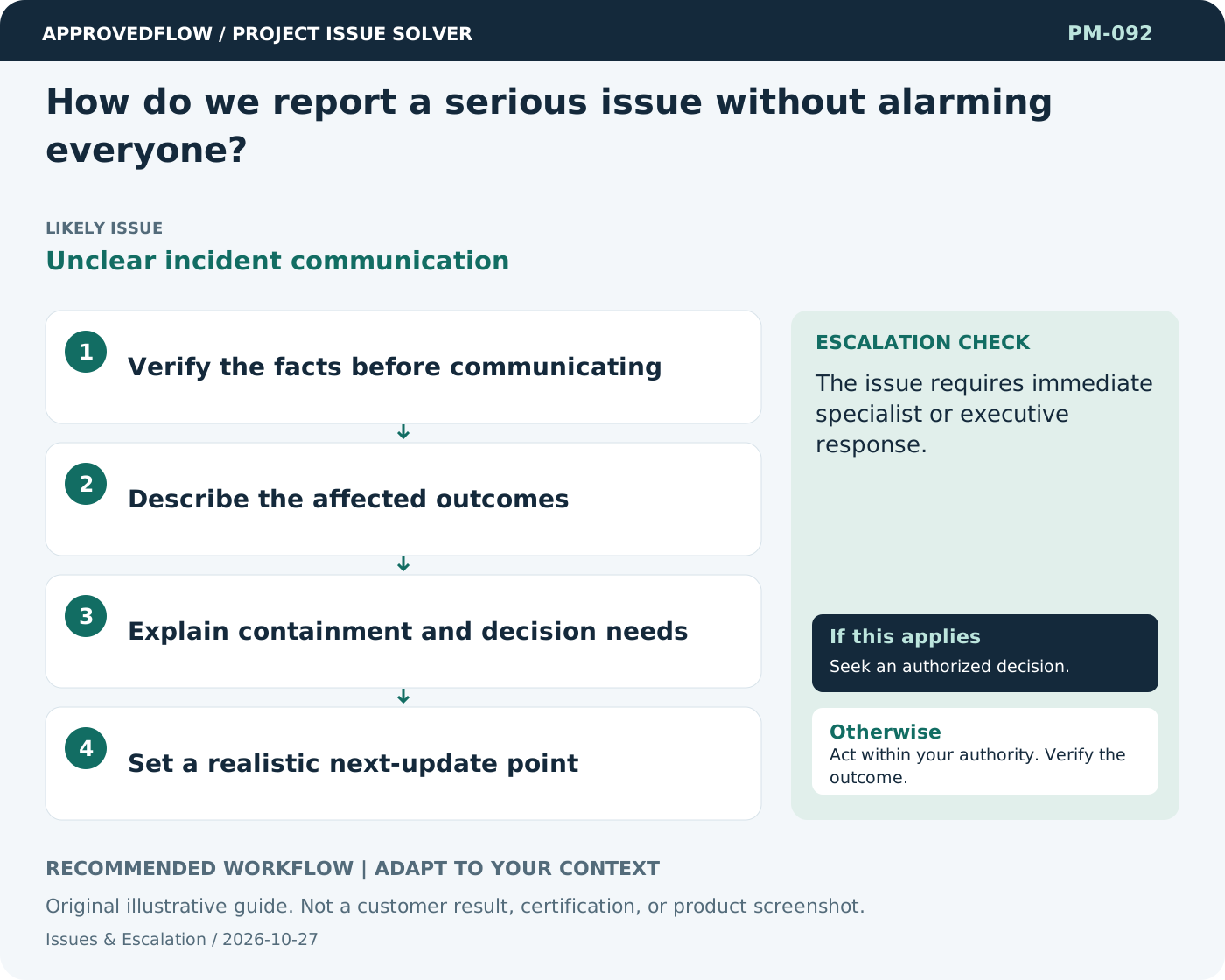
- Verify the facts before communicating
- Describe the affected outcomes
- Explain containment and decision needs
- Set a realistic next-update point
When to escalate
Escalate when
The issue requires immediate specialist or executive response.
Who decides
The issue owner or delegated decision authority
Example
A migration update explains which records failed validation and which operations remain unaffected.
Mistake to avoid
Using reassuring language that contradicts the evidence.
Prevent a repeat
Track unresolved decision age and verify the outcome before treating an issue as closed.
Suggested ApprovedFlow setup
- Tasks
- Documents
- Approvals
Record the issue and next action on an owned task, attach evidence, and route the unresolved decision to the proper authority. See the platform
Related cases
- When should I escalate a project issue?Unclear escalation boundary
- We log issues, but none get closed. What should change?Issue tracking without resolution
- A release introduces a serious defect. What should the team do first?Release incident response
- The project discovered a possible data breach. Should I send details to everyone?Controlled incident communication