Should we roll out to everyone or start with one department?
Rollout strategy uncertaintyCompare the operational risk, learning value, dependencies, and support capacity of each approach. A pilot is useful when it represents meaningful real work and can be safely contained. A broad rollout may be appropriate when fragmentation creates greater risk, but needs strong readiness evidence.
What to do now
- Map rollout dependencies and risks
- Assess the value of a representative pilot
- Check support and rollback capacity
- Approve the rollout sequence and success criteria
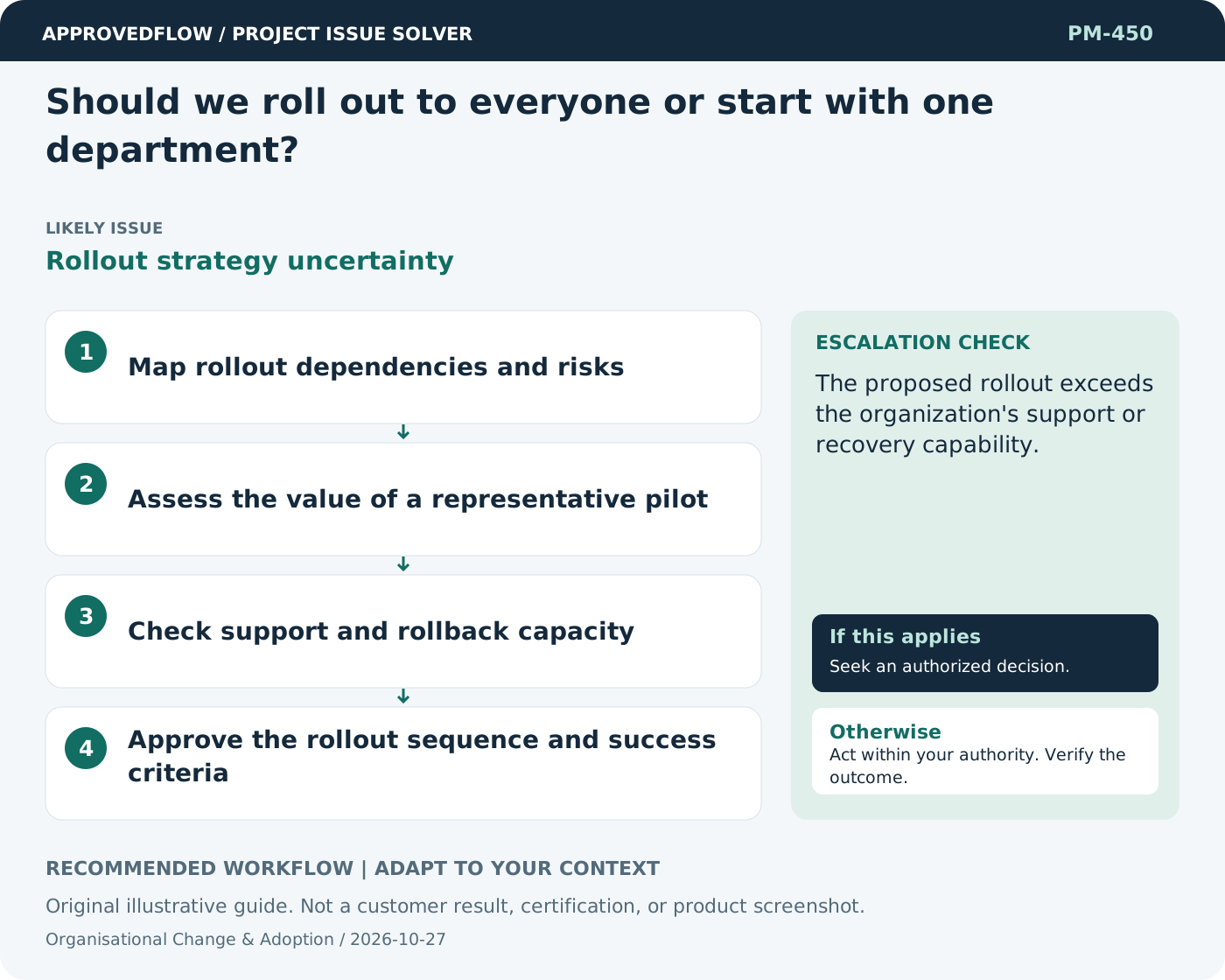
When to escalate
The proposed rollout exceeds the organization's support or recovery capability.
The business process owner and change sponsor
Example
A first department includes requesters and approvers so the pilot tests the complete workflow.
Mistake to avoid
Choosing a pilot that avoids every difficult use case.
Prevent a repeat
Measure successful use of the intended workflow and resolve recurring barriers instead of relying only on attendance or logins.
Suggested ApprovedFlow setup
- Tasks
- Documents
- Resources
Assign role-specific readiness and feedback actions, keep reviewed job aids with the project, and record accepted operating responsibilities. See the platform
Related cases
- How do I know whether a department is ready for rollout?Unmeasured business readiness
- A department manager refuses to adopt the new process. How should I respond?Unresolved local accountability concerns
- The schedule has no buffer. Should we add one?Unmanaged schedule uncertainty
- How should we report a finish-date range instead of one date?Uncertainty communication