We want to prove our AI feature works. What should we test?
Missing task-specific evaluationDefine success for the real user task before choosing metrics. Build a representative, appropriately protected test set with expected outcomes and meaningful failure cases. Evaluate correctness, unsupported claims, access boundaries, usability, and cost rather than relying only on impressive demonstrations.
What to do now
- Define task outcomes and unacceptable failures
- Create reviewed representative test examples
- Measure results and inspect failure patterns
- Set release criteria and retest after changes
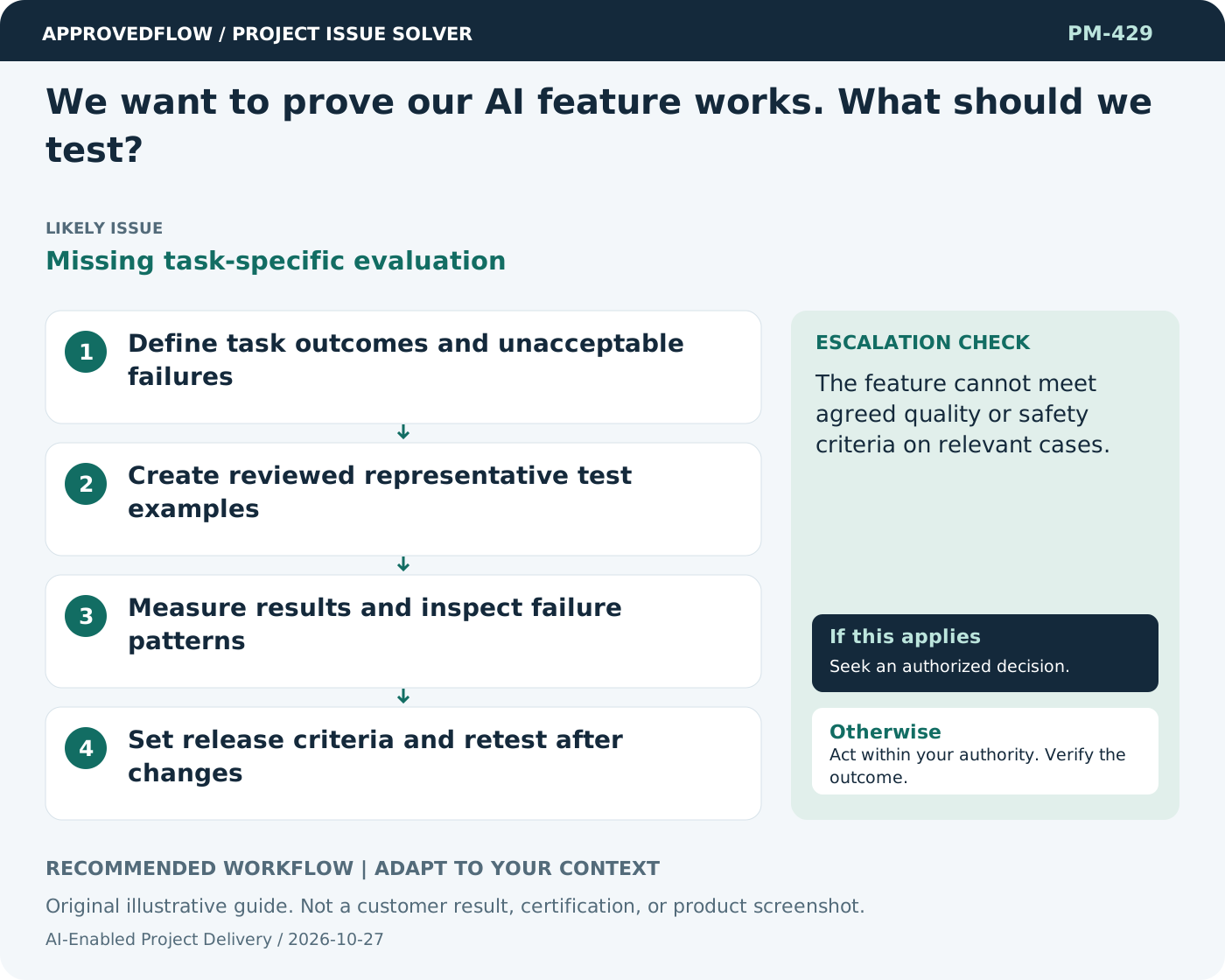
When to escalate
The feature cannot meet agreed quality or safety criteria on relevant cases.
The AI service owner and relevant authorized reviewer
Example
An extraction tool is tested on missing fields and contradictory dates, not just clean sample documents.
Mistake to avoid
Selecting only examples on which the demonstration already succeeds.
Prevent a repeat
Re-evaluate after changes to models, prompts, tools or source data; keep important decisions accountable to people.
Suggested ApprovedFlow setup
- Tasks
- Documents
- Approvals
Track evaluation and review tasks, and keep approved evidence with the work; do not claim the platform provides an unverified AI agent or automated diagnosis. See the platform
Related cases
- Our AI feature works in demos but users do not trust it. What should change?Poorly explained assistance and recovery
- AI usage costs are rising faster than adoption. What should we examine?Uncontrolled inference consumption
- Developers say the feature works, but users cannot complete the process. What is missing?Component success without user journey
- How do we prove every requirement was delivered and tested?Missing requirements traceability