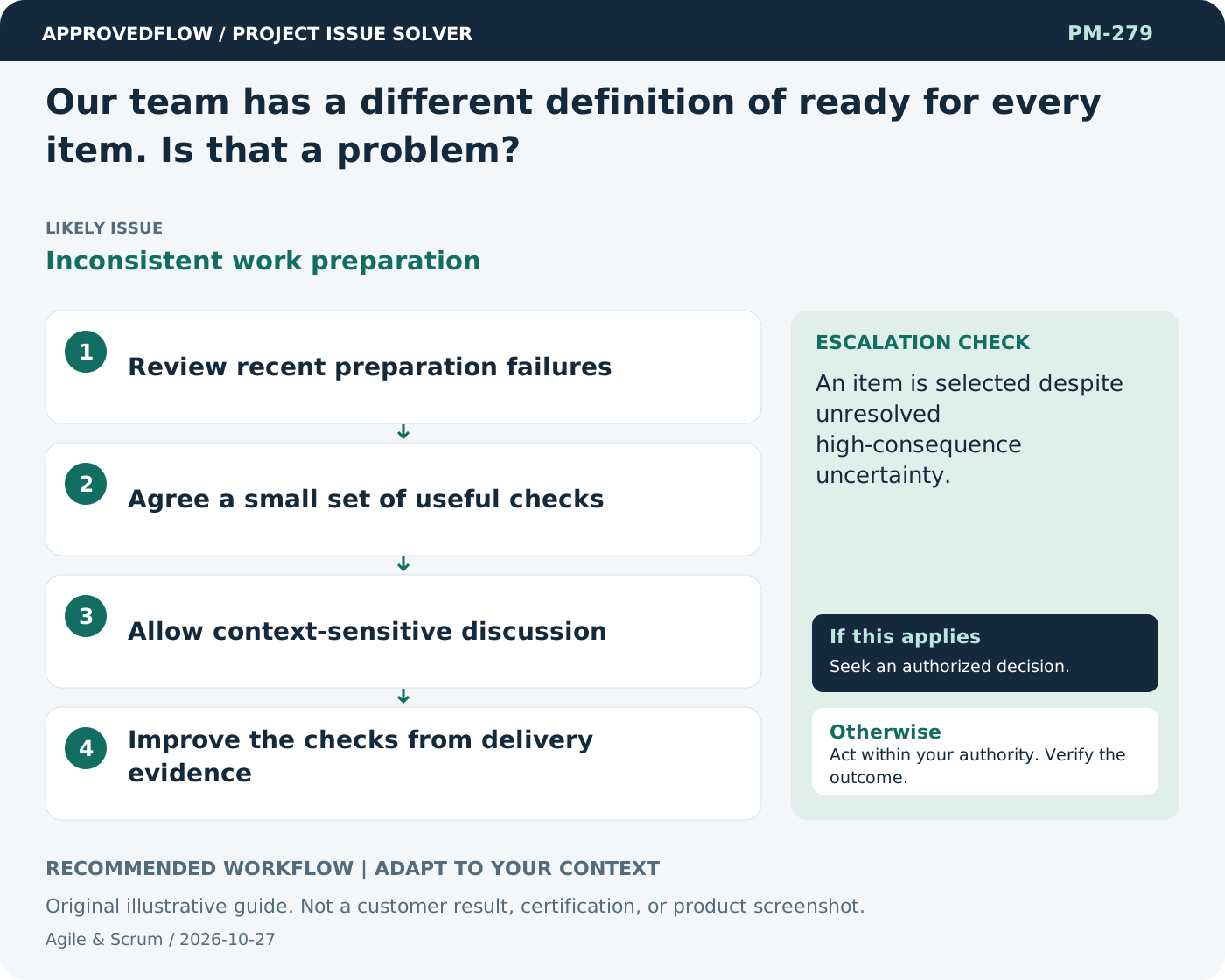
Our team has a different definition of ready for every item. Is that a problem?
Inconsistent work preparationAgree practical preparation expectations where they help, but do not turn them into a rigid gate that prevents useful collaboration. The aim is sufficient understanding for responsible selection, not perfect documentation.
What to do now
- Review recent preparation failures
- Agree a small set of useful checks
- Allow context-sensitive discussion
- Improve the checks from delivery evidence
When to escalate
An item is selected despite unresolved high-consequence uncertainty.
The relevant Scrum accountability or delivery owner
Example
The team checks purpose, examples, and dependencies before selecting work while allowing details to evolve.
Mistake to avoid
Treating a readiness checklist as a mandatory Scrum rule.
Prevent a repeat
Inspect useful outcomes and feedback; apply Scrum-specific rules only when the team is actually using Scrum.
Suggested ApprovedFlow setup
- Tasks
- Documents
- Resources
Represent agreed work and evidence with enabled task features; do not imply native Scrum automation or certified Scrum compliance. See the platform
Related cases
- We carry unfinished work into every sprint. What should we inspect?Persistent delivery overcommitment
- How do we use velocity without turning it into a target?Forecast metric misuse
- The supplier says ready, but our team cannot use the output. What is missing?Readiness definition mismatch
- The team has different standards for done. How do we align them?Inconsistent completion expectations