A metric improved after we changed its definition. Can we claim success?
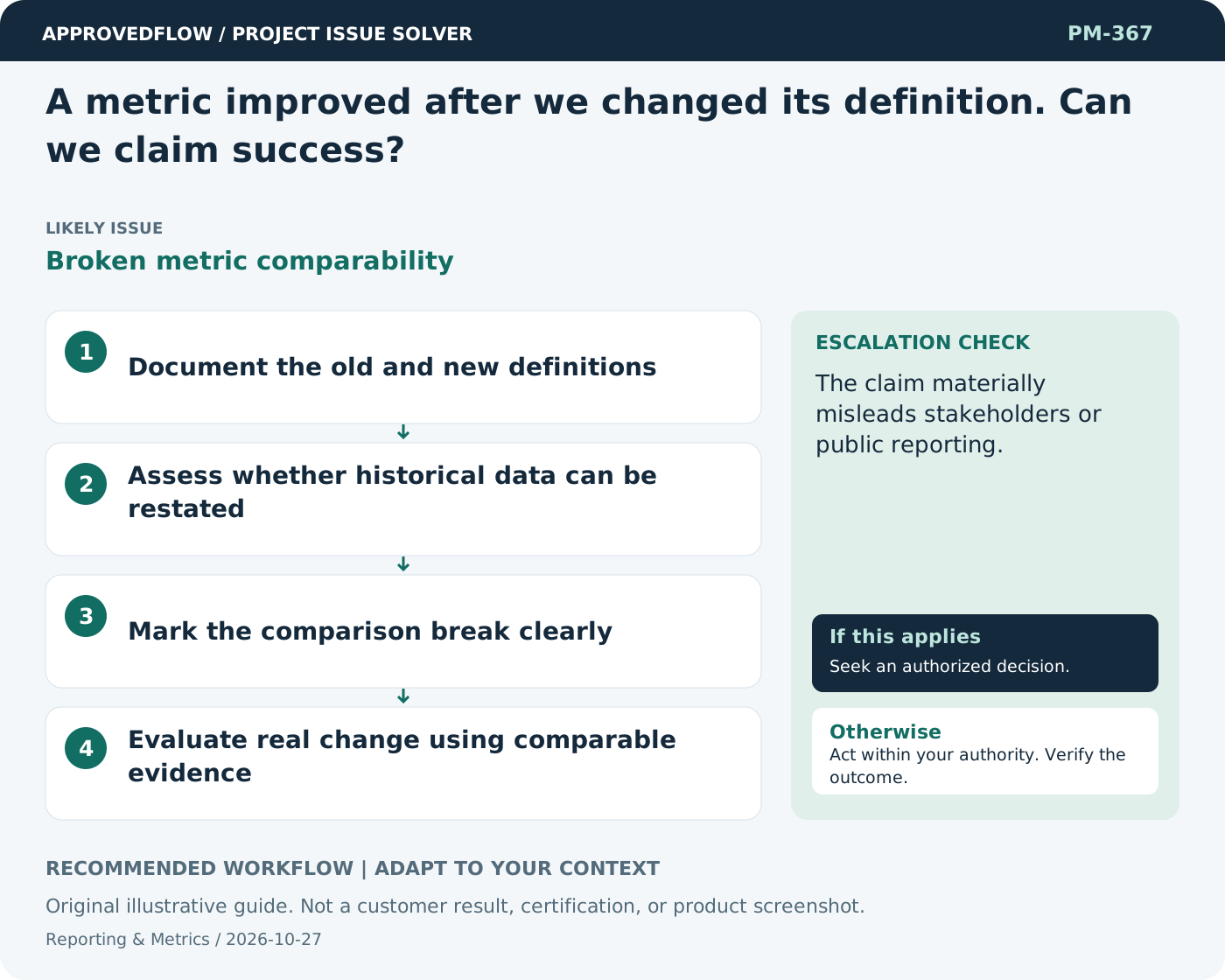
Broken metric comparabilitySeparate the effect of the definition change from actual performance change. Preserve the old definition and explain any restated series rather than presenting an artificial trend.
What to do now
- Document the old and new definitions
- Assess whether historical data can be restated
- Mark the comparison break clearly
- Evaluate real change using comparable evidence
When to escalate
Escalate when
The claim materially misleads stakeholders or public reporting.
Who decides
The metric owner and relevant decision maker
Example
A completion-rate chart marks the date when canceled requests were excluded from the calculation.
Mistake to avoid
Presenting a lower denominator as operational improvement.
Prevent a repeat
Check data freshness and meaning, and verify that the measure improves decisions rather than encouraging cosmetic progress.
Suggested ApprovedFlow setup
- Projects
- Tasks
- Timesheets
- Documents
Use the underlying named records and evidence when explaining a metric; validate any dashboard behavior against the current implementation. See the platform
Related cases
- How many project KPIs should we track?Metric overload
- How do we compare projects without rewarding easy work?Unfair performance comparison
- Adoption improved during launch, then declined. What should we do?Unsustained behavior change
- Our acceptance criteria change after delivery. What should we do?Moving acceptance boundary