How do we plan a portfolio when strategy changes frequently?
Unstable strategic demandUse explicit strategic priorities, staged commitments, and regular investment reviews. Preserve the cost of switching so each new direction is evaluated against work already in progress.
What to do now
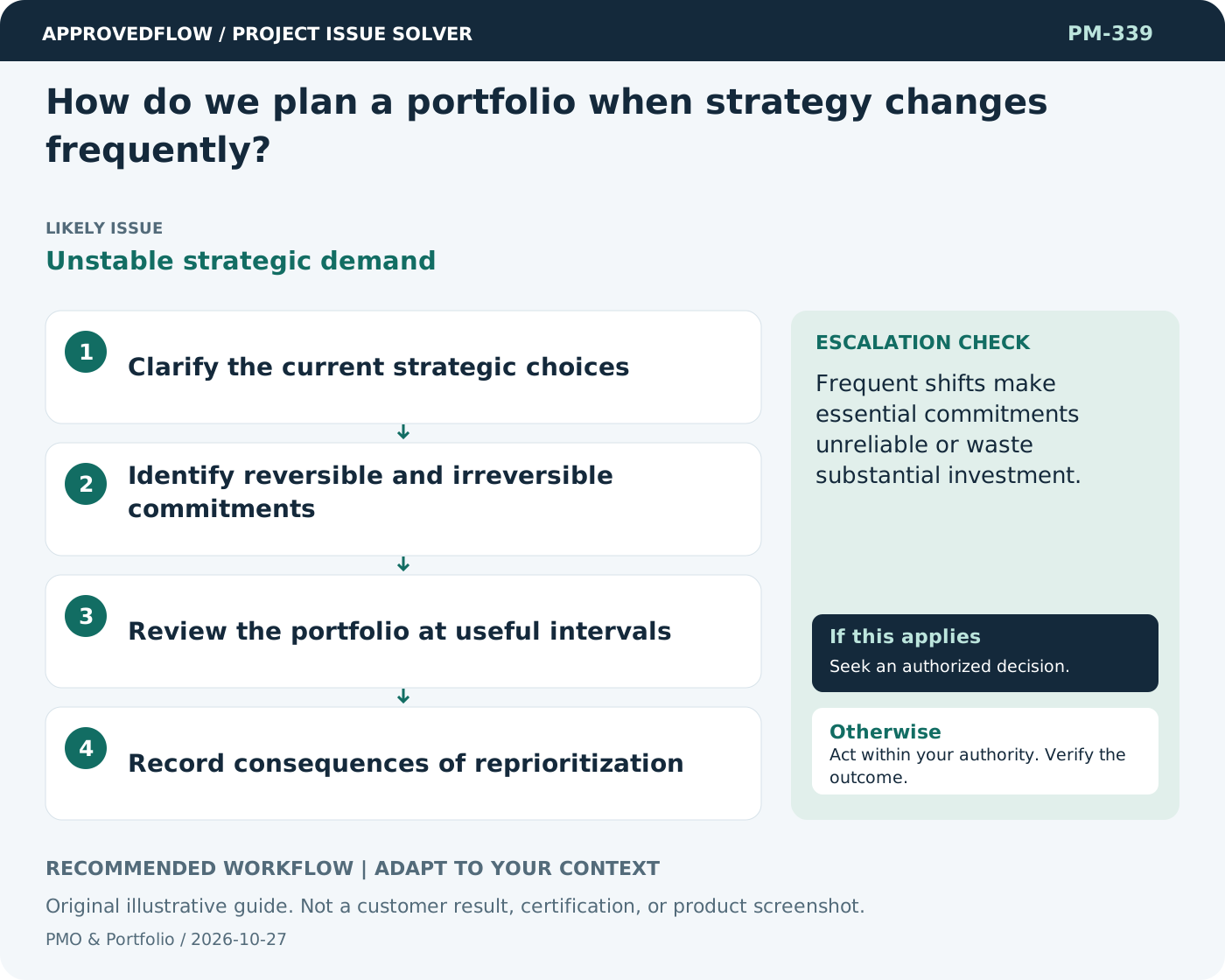
- Clarify the current strategic choices
- Identify reversible and irreversible commitments
- Review the portfolio at useful intervals
- Record consequences of reprioritization
When to escalate
Escalate when
Frequent shifts make essential commitments unreliable or waste substantial investment.
Who decides
The portfolio decision authority
Example
A portfolio changes near-term priorities only through an authorized review of capacity and consequences.
Mistake to avoid
Replanning everything after every informal executive comment.
Prevent a repeat
Review whether active commitments fit available capacity and current priorities rather than just tracking project counts.
Suggested ApprovedFlow setup
- Projects
- Resources
- Documents
- Approvals
Use project and capacity records to support portfolio decisions, then record approved priorities and consequences explicitly. See the platform
Related cases
- Every project is marked strategic. How do we prioritize meaningfully?Unselective strategic classification
- How do we maintain a useful project inventory?Unreliable portfolio baseline
- Our resource plan ignores support work. What should change?Missing operational demand
- Our sprint goal changes every few days. How should we respond?Unstable sprint purpose