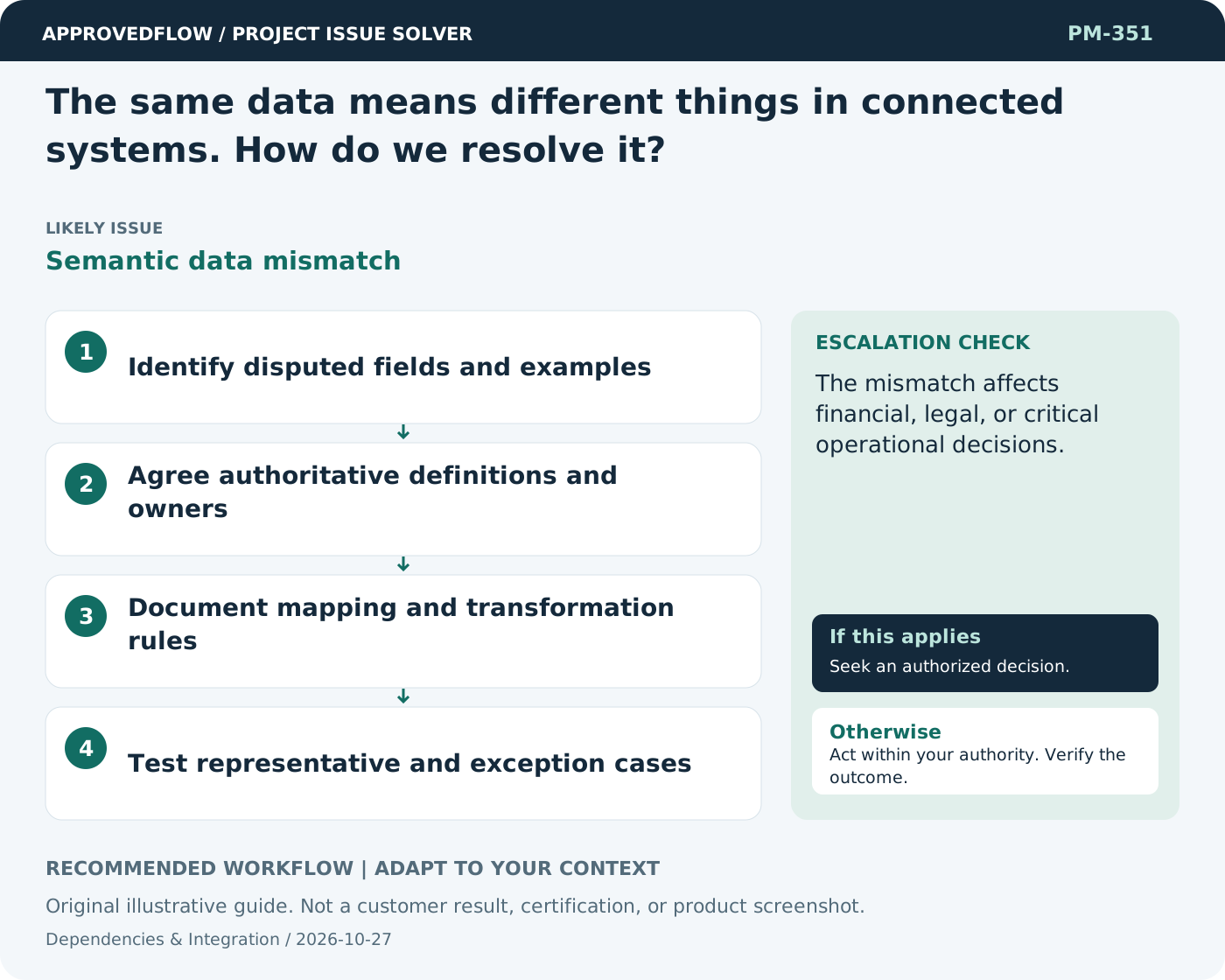
The same data means different things in connected systems. How do we resolve it?
Semantic data mismatchAgree meaning, ownership, valid values, and transformation rules before relying on the interface. Technical connectivity cannot fix inconsistent business definitions.
What to do now
- Identify disputed fields and examples
- Agree authoritative definitions and owners
- Document mapping and transformation rules
- Test representative and exception cases
When to escalate
Escalate when
The mismatch affects financial, legal, or critical operational decisions.
Who decides
The accountable integration or dependency owner
Example
Employee status is mapped carefully because active has different meanings in payroll and access systems.
Mistake to avoid
Assuming identical field names mean identical data.
Prevent a repeat
Verify dependency completion with the consuming team and test the integrated outcome early enough to act.
Suggested ApprovedFlow setup
- Tasks
- Documents
- Projects
Keep dependency owners, required evidence and dates with linked work records, confirming supported link behavior in the current build. See the platform
Related cases
- Our integration tests use unrealistic data. What should we improve?Unrepresentative integration evidence
- Integration has no single owner. Who should coordinate it?Unowned integrated outcome
- The project name means different things to different people. How do we align it?Ambiguous initiative definition
- How do we schedule integration between teams with different iteration lengths?Cadence integration mismatch