We have no clear product goal. What should guide the backlog?
Directionless backlog orderingEstablish a meaningful product outcome that helps compare competing work. Without a shared purpose, backlog order can become a queue of influential requests rather than a deliberate path to value.
What to do now
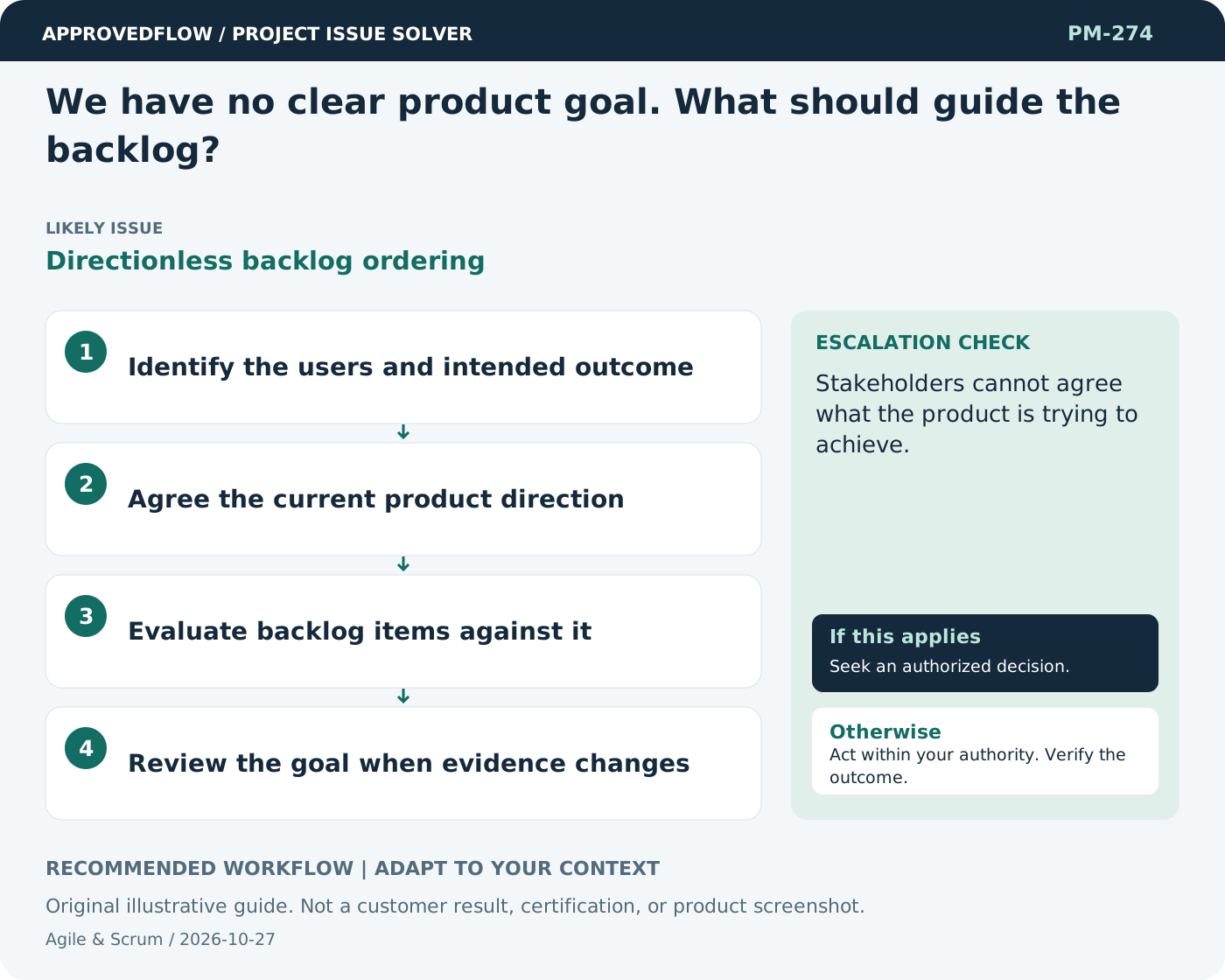
- Identify the users and intended outcome
- Agree the current product direction
- Evaluate backlog items against it
- Review the goal when evidence changes
When to escalate
Escalate when
Stakeholders cannot agree what the product is trying to achieve.
Who decides
The relevant Scrum accountability or delivery owner
Example
A service team orders work around reducing failed submissions rather than adding unrelated features.
Mistake to avoid
Prioritizing whichever request arrived most recently.
Prevent a repeat
Inspect useful outcomes and feedback; apply Scrum-specific rules only when the team is actually using Scrum.
Suggested ApprovedFlow setup
- Tasks
- Documents
- Resources
Represent agreed work and evidence with enabled task features; do not imply native Scrum automation or certified Scrum compliance. See the platform
Related cases
- The backlog contains hundreds of stale items. How do we clean it?Unmaintained product options
- Our sprint review is only a slide presentation. What is missing?Weak product inspection
- An urgent issue has no clear owner. What do we do now?Unowned urgent issue
- The project has no clear customer. Who should approve requirements?Undefined outcome ownership